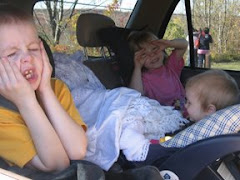
Back when I had my first child, 2000, the internet was not like today! No Facebook! There were some forums, etc, but most parenting advice still came from magazines, books, doctors, grandmothers, the Sears catalogue and our own instincts. Flash forward even just five years, and what a difference! Suddenly, we can get the opinions and expertise of thousands of strangers to guide us in our parenting journey. I noticed at the same time that parenting was becoming very commercialized. There were gadgets, toys, tools, apps, for every parenting need you can imagine. Look through a parenting magazine, and you'll learn through the advertising that you never need to hold your baby. Straight from carseat to bouncer to exersaucer to Jolly Jumper to crib to stroller. Swings came with speakers, heaters, vibrators, multi-directional and random movements to replicate being held. Everything you need to feed your baby can be bought at Babies R Us. Forget about the old ways, Grandma is ancient. Get with the new century.
While new health reports have changed the way alcohol and tobacco is advertised in Canada, similar health reports have not been able to touch the formula advertising industry. The "may cause" is too small. People don't want to read the "may cause" concerns, because millions of babies get formula, and they're all "fine".
Let's look at marketing in another industry.
You've decided you need a car. You open up the first magazine at the hairdresser's, and inside the front cover is a big spread for Ford. Wow, Ford is awesome. Look at all those models! You must go check out Fords! You flip through the rest of the magazine, notice there are some other car ads, but they're smaller, and not at the front and the info about safety and consumer satisfaction just doesn't catch your eye.
You go on Facebook and announce you're getting a Ford. Which one? You don't have a lot of money though. Several friends say "How awesome!" and "Congratulations!". Then "Get the biggest you can afford" or "get the cheapest; they're all the same anyway". Then, a few more speak up. "How about a Toyota? They have fewer need for repairs". You reply, "No thanks, I'm going to take good care of it so I won't need repairs, and my ex-boyfriend's sister's babysitter's cousin is a mechanic so I won't have to pay for repairs". Someone else says "If money is an issue, about about public transportation?" "No way, that's for poor people!". Someone else gives the little known idea of car-sharing. "WTF is that?! No way am I sharing a car. I might get residue from someone else's religion!".
You go to the Ford dealer and check out the cars. Such variety, such price ranges! How to choose?! Yes, your friend said they're basically all the same, so go with the cheapest. You do.
The problems start right away. You have to fill up with gas on the way home. You didn't think about that...you have only a few dollars. Gas runs out before the next pay day and what do you do? THen it needs an oil change and you figure you can do it yourself...but do something wrong and now it needs repairs. Then you start hearing a funny noise. You ignore it for awhile, but it doesn't go away. You can't get it over 80km/hr now.
You turn back to Facebook with your issues. Friends start off "IDK, my Ford is awesome" and "Could it be this? That? This? This? This?" and that's too overwhelming so you ignore it all. Someone suggests it could be cause it's a Ford and that was a bad choice. "You're not supporting me and I'm blocking you!". Then it gets worse...."should have bought a Toyota", "Bus passes can be written off your taxes", "I lost 30lb by walking everywhere".
Are these comments helpful? The writers probably think so. But to the poster, they're not. They're in denial. Ford was glossy, a big spread, obviously the best choice or it wouldn't have been at the front of the magazine! Why would you question it? They want your business, so they're not going to suck, are they?!
It is damn near impossible to give suggestions to others these days. "That's your opinion!" they say when you suggest no infant cereal is needed. "Babies are all different" they say when you suggest no cereal before six months. "My doctor said 4 months is fine" they say when you say the current recommendation is six months. You try to offer studies, health organizations official statements, and other data. You remind them that baby cereal is less than 100 years old and was developed specifically for malnourished babies--not average babies. They refuse to see alternatives because they believe the advertising and magazines. Formula and cereal wouldn't be sold so readily if it caused problems! They were fed cereal at 2 months and are perfectly healthy. It was good enough for their parents, it's good enough for their child.
On one hand, the internet has opened up a world of information most people could never have accessed before. Yet, there are so many people that have narrowed down their minds like never before. I don't get it. People should be more critical, more investigative, more open minded, more willing to change when new info shows otherwise....but yet it seems people are putting blinders on to science, research, history, and are only open to names/brands they recognize.
True story--mom asks for other mom's opinions on when to start cereal. You offer the latest statement made by Health Canada saying cereal is not needed. You get told that's your opinion and everyone's entitled to their own opinion, and it doesn't help the mom asking the question. WTF. Sure--it IS my opinion, based on experts doing years of research. Shouldn't research trump "I had it at 3 weeks and I'm fine"?
Another trend I hate...telling moms that they know best, they know their child better than the doctor and other moms, and do what they think is right. Why would a new mom automatically know what's right/best? Deciding to give cereal at 3 months is not an intrinsic, human response like wanting to hold a baby that's crying. Why would mom be asking if she knew what was right? People say "I knew my child was ready at 4 months!"...the biggest aspect to a baby's readiness for (any) food is the solidifying of the intestines and the production of digestive enzymes. How the heck do all these moms know this about their babies?
I was at an OB/GYN's office. They had a fancy tv screen with health info constantly changing. One section was on circumcision. It was all about what to expect, and the "pros". NOTHING contrary or negative was shown. I wonder what the circumcision rate of male babies born to moms at that practice is. I'd love to compare to an office where there is no circumcision information offered. Or, how about an OB/GYN's office that has reading material that is only pro-breastfeeding. If the only magazines available were things like "Natural Parenting". Would that have an impact? Once again, Health Canada says circumcision is not necessary. Why are doctors still promoting it? Oh...they get paid cash when they do it.
Why are young people letting marketing decide their parenting strategies? We all want what's best for our babies. But how can they really think Nestle has their baby's best interest in mind when their profit depends on making parents think their products are necessary?
Showing posts with label Health. Show all posts
Showing posts with label Health. Show all posts
Friday, June 12, 2015

Friday, May 1, 2015
Should I Worry?
I often see questions in forums/groups by moms wondering if they should worry about their child's speech. And I get SO frustrated at the responses.
He's fine!
He'll talk when he's ready.
Boys talk later than girls.
If he smiles, he doesn't have autism.
Some kids are thinkers, some are talkers.
He might not have anything to say.
Kids develop at their own speed.
Don't worry!
He's fine!
Once upon a time, I was that mom too. And all those answers did nothing but delay treatment. If you're not a SLP (Speech & Language Pathologist), you shouldn't be telling a mom her child is fine. If you're not a pediatrician or psychologist, don't be telling her he doesn't have autism. STOP making diagnosis for kids you've never met. Stop brushing her concerns off. He might be fine. He might not be fine.
When my first, Hugh, was little, he wasn't saying much. Well, quite often he did talk a lot, but it seemed disjointed, incomplete, chunky. I heard all those same lines. His daddy didn't talk till he was 4. My brother didn't talk well. Boys talk later was a popular one (my neighbour said that about Hugh, then three years later said girls talk later than boys!). When Hugh was 2 1/2, I was starting to worry. But I was a first time mom. Then I had a visit from a lactation consultant to help with Lucy who was a newborn. I've written about this visit before (but of course, can't find it right now). She mentioned that although speech wasn't her area of expertise, she felt Hugh had some issues and that perhaps an evaluation would be good. It's done through our Public Health office. It took a few months to get in, and he finally started speech therapy at 3years, 3 months old. He progress pretty rapidly, and finished in a year or so.
Lucy came along to all the appointments, of course. She was a girl, so she should talk sooner, right? She DID love to talk, however it was half babble, half words...she'd talk, and if she didn't know a word, she'd just babble until the next word in her sentence. At 2 1/2, she could tell you all the letter names, but barely put together sentences. She started therapy at 2y10m, with the same SLP. She had the most unusual "f" formation the therapist had ever seen in almost 20 years of work. I had NO clue. It took a LONG time to get rid of that issue, and she continued therapy until she was about 5-6 (she aged out of the Public Health program and started receiving SLT at school).
So, surely, by kid #3 (Megan), we'd get it right! We started sign language. Some people were against this,thinking the kid will sign instead of talk. That's rarely the case. I learned about the progression of sounds that infants make. Ever wonder why ALL kids' first words are momma, dada or baba and not milk, dog, or brown? Megan wasn't making any of the sounds she should have by six months. At 8 months, she had her first assessment. Kids who learn signs from birth, will usually start signing around 8-10 months. She didnt' make her first sign till 13 months, and the context was odd. One of the signs we always did was "more", but it was usually used with food ("more yoghurt?") or activity ("more swing?"). She used it when she went in a room of 8 dogs. Pointed to the dogs (one was ours) and signed "more". I knew that was significant!
Megan started speech therapy at 1y10m (22months). Some people say you can't do SLT if the child won't repeat words/sounds back to you. Not true at all. Kids often work better with a stranger. Some say there's no point in therapy if they're only saying a few words. Not true. Therapists will figure out WHY they're not saying much, and work to build on this. Is it physical? Is it language? Megan had both language and physical speech issues (also with "F", but different than Hugh and Lucy). Language took her a LONG time to understand.
Shortly before Megan started Junior Kindergarten, at 3y9.5m, we moved, and we were set up with SLT here, without having to go through the whole process. Megan received Public Health SLT during JK and at the end of JK was referred to the school board's SLP. It took nearly a year for that assessment. A year without any therapy. When they did that assessment, they said because she was missing her two front top teeth, they couldn't get a real idea of if she needed more therapy, so was denied.
Her speech eventually caught up, but her language has not. My mother once said talking to Megan is like talking to an ESL student (English as a second language). She's better now, but she often has a hard time with language, sentence structure, and using the right word. This carries over to her reading and writing.
When ever I read that a mother is concerned about her kid's speech, I write something like this:
Look up what sounds he should be making. Babies learn them in a certain order, and if he's skipped some, or his sounds aren't up to his age, that's a concern, more so than how many words. I didn't learn that until my THIRD kid was in SLT.
With my first, we were told "boys talk later/his father and uncle didn't talk till 3/he'll talk when ready" etc. No one except a SLP should be telling you he's fine. I wouldn't worry yet, but by 20 months, if you still are concerned call for an assessment. The process takes a while, and too many parents wait to long, and then their kid gets to be too old for the OHIP covered stuff, so then they go on the school board's wait list which also has a long wait. My first wasn't in SLT till 3y3m, the second kid was 2y10m and the third, 1y10m. That kid started having assessments at 8 months cause we knew by six months she wasn't making the right sounds. I'm not telling you to worry. I' not telling you to not worry. LOL. Just that speech and language learning is complicated, and the best thing to do is do some research (not just # of words) and have a professional assessment by a SLP, not strangers on a silent forum
Phoning to arrange an assessment NEVER hurts. What hurts, is listening to (well meaning) moms who say the things I wrote at the top. It could take months for the assessment to happen. In that time, the child might have suddenly found their voice. Or not. After the assessment, it can take months--even a year or more--to start therapy. In that time, the child might have found their voice. Or not. Once the child turns 5, they are referred to the school board SLP. That assessment can take a year to get. In that time, the child might have found their voice. Or not. The wait, after the assessment, can take another year.
Imagine now, if you delay that very first call. Just delay it a month, and depending on your child's age, they might miss out on SLT through Public Health entirely.
It is totally possible that you make that call, and when your assessment time comes, you're happily able to say "Not needed now". But imagine if you wait because "he must be a thinker and will talk when ready". Only....he doesn't.
An assessment NEVER hurts. Waiting CAN hurt. If in doubt, just phone. You'll be glad, no matter the outcome. Wait, and you might be very upset later on.
He's fine!
He'll talk when he's ready.
Boys talk later than girls.
If he smiles, he doesn't have autism.
Some kids are thinkers, some are talkers.
He might not have anything to say.
Kids develop at their own speed.
Don't worry!
He's fine!
Once upon a time, I was that mom too. And all those answers did nothing but delay treatment. If you're not a SLP (Speech & Language Pathologist), you shouldn't be telling a mom her child is fine. If you're not a pediatrician or psychologist, don't be telling her he doesn't have autism. STOP making diagnosis for kids you've never met. Stop brushing her concerns off. He might be fine. He might not be fine.
When my first, Hugh, was little, he wasn't saying much. Well, quite often he did talk a lot, but it seemed disjointed, incomplete, chunky. I heard all those same lines. His daddy didn't talk till he was 4. My brother didn't talk well. Boys talk later was a popular one (my neighbour said that about Hugh, then three years later said girls talk later than boys!). When Hugh was 2 1/2, I was starting to worry. But I was a first time mom. Then I had a visit from a lactation consultant to help with Lucy who was a newborn. I've written about this visit before (but of course, can't find it right now). She mentioned that although speech wasn't her area of expertise, she felt Hugh had some issues and that perhaps an evaluation would be good. It's done through our Public Health office. It took a few months to get in, and he finally started speech therapy at 3years, 3 months old. He progress pretty rapidly, and finished in a year or so.
Lucy came along to all the appointments, of course. She was a girl, so she should talk sooner, right? She DID love to talk, however it was half babble, half words...she'd talk, and if she didn't know a word, she'd just babble until the next word in her sentence. At 2 1/2, she could tell you all the letter names, but barely put together sentences. She started therapy at 2y10m, with the same SLP. She had the most unusual "f" formation the therapist had ever seen in almost 20 years of work. I had NO clue. It took a LONG time to get rid of that issue, and she continued therapy until she was about 5-6 (she aged out of the Public Health program and started receiving SLT at school).
So, surely, by kid #3 (Megan), we'd get it right! We started sign language. Some people were against this,thinking the kid will sign instead of talk. That's rarely the case. I learned about the progression of sounds that infants make. Ever wonder why ALL kids' first words are momma, dada or baba and not milk, dog, or brown? Megan wasn't making any of the sounds she should have by six months. At 8 months, she had her first assessment. Kids who learn signs from birth, will usually start signing around 8-10 months. She didnt' make her first sign till 13 months, and the context was odd. One of the signs we always did was "more", but it was usually used with food ("more yoghurt?") or activity ("more swing?"). She used it when she went in a room of 8 dogs. Pointed to the dogs (one was ours) and signed "more". I knew that was significant!
Megan started speech therapy at 1y10m (22months). Some people say you can't do SLT if the child won't repeat words/sounds back to you. Not true at all. Kids often work better with a stranger. Some say there's no point in therapy if they're only saying a few words. Not true. Therapists will figure out WHY they're not saying much, and work to build on this. Is it physical? Is it language? Megan had both language and physical speech issues (also with "F", but different than Hugh and Lucy). Language took her a LONG time to understand.
Shortly before Megan started Junior Kindergarten, at 3y9.5m, we moved, and we were set up with SLT here, without having to go through the whole process. Megan received Public Health SLT during JK and at the end of JK was referred to the school board's SLP. It took nearly a year for that assessment. A year without any therapy. When they did that assessment, they said because she was missing her two front top teeth, they couldn't get a real idea of if she needed more therapy, so was denied.
Her speech eventually caught up, but her language has not. My mother once said talking to Megan is like talking to an ESL student (English as a second language). She's better now, but she often has a hard time with language, sentence structure, and using the right word. This carries over to her reading and writing.
When ever I read that a mother is concerned about her kid's speech, I write something like this:
Look up what sounds he should be making. Babies learn them in a certain order, and if he's skipped some, or his sounds aren't up to his age, that's a concern, more so than how many words. I didn't learn that until my THIRD kid was in SLT.
With my first, we were told "boys talk later/his father and uncle didn't talk till 3/he'll talk when ready" etc. No one except a SLP should be telling you he's fine. I wouldn't worry yet, but by 20 months, if you still are concerned call for an assessment. The process takes a while, and too many parents wait to long, and then their kid gets to be too old for the OHIP covered stuff, so then they go on the school board's wait list which also has a long wait. My first wasn't in SLT till 3y3m, the second kid was 2y10m and the third, 1y10m. That kid started having assessments at 8 months cause we knew by six months she wasn't making the right sounds. I'm not telling you to worry. I' not telling you to not worry. LOL. Just that speech and language learning is complicated, and the best thing to do is do some research (not just # of words) and have a professional assessment by a SLP, not strangers on a silent forum
Phoning to arrange an assessment NEVER hurts. What hurts, is listening to (well meaning) moms who say the things I wrote at the top. It could take months for the assessment to happen. In that time, the child might have suddenly found their voice. Or not. After the assessment, it can take months--even a year or more--to start therapy. In that time, the child might have found their voice. Or not. Once the child turns 5, they are referred to the school board SLP. That assessment can take a year to get. In that time, the child might have found their voice. Or not. The wait, after the assessment, can take another year.
Imagine now, if you delay that very first call. Just delay it a month, and depending on your child's age, they might miss out on SLT through Public Health entirely.
It is totally possible that you make that call, and when your assessment time comes, you're happily able to say "Not needed now". But imagine if you wait because "he must be a thinker and will talk when ready". Only....he doesn't.
An assessment NEVER hurts. Waiting CAN hurt. If in doubt, just phone. You'll be glad, no matter the outcome. Wait, and you might be very upset later on.
Tuesday, April 28, 2015
Another Recall
Heinz has announced another recall of a jarred baby food, this time Sweet Potato and Beef Medley. Recommended for 8 months and up. Looking at the pictures, it looks like a puree but is probably lumpier.
My first thought is "Ewww. Who buys this for their baby?". Oh, wait...I probably did. Although I could cook a nice sweet potato, I never got smooth pureed meats.
My next thought is "Food before one is just for fun; breast milk is the primary source of nutrition." Well, we're supposed to say "Breast milk or formula" but statistics say more babies are formula fed at this age then breastfed. But if we're trying to make breastfeeding "normal", then people shouldn't be adding "or formula". It's already assumed, so let's leave it out.
However, formula is expensive and many parents want to get their kids on "solids" as quickly as possible. Current recommendations are no solids before six months, and then basically anything except raw honey, and if you have allergies in the family, avoid the allergens. This is not to replace breast milk though. It's in addition to.
A current "trend" is baby lead weaning. It's not weaning in the sense of taking two weeks to get your baby off the breast or bottle. It's more like baby lead "introduction" to solids. The idea is that you can offer bite sized pieces of real, human food that you would eat, and if your baby is ready, they will eat it. If they're not ready, they won't eat it.
Think back. Waaaaayy back. Back before the commercialization of parenting. What did mothers do? Take a piece of their food, squish it, flake it, chew it, etc and give it to their baby. They didn't have the option of pureed chicken or dried cereal in a box. Why have we fallen prey to the big companies that make us think we're wrong if we don't serve rice flakes or veal Parmesan that looks like something the cat barfed up?
I'm in some Frugal Parenting groups on Facebook. These are geared more to giving away unneeded items, but every day people ask questions about parenting, and not always with a frugal mindset. Like, "What age can I start cereal, baby is 3 months old now". As well as waiting till six months for the biological reasoning of stomach enzymes, I suggest that waiting till six months is also frugal because you can skip cereals and serve real foods. And you'll also save money on cleaning baby clothes LOL.
Yet so many parents are insistent their baby needs infant cereal! Pablum was created by the Hospital for Sick Children during the Great Depression for babies that were malnourished. It's less than 100 years old, a tiny speck in the millions of years of human evolution. Is your baby malnourished? Even if so, there are much better options. Rice, in particular is a crappy food, without much actual nutrition, and it has great negative socio-economic and environmental impacts on tender cultures around the world. These cereals are "fortified" so parents think that's a good thing. What that means is that the natural minerals and vitamins were stripped away during processing (this IS a processed food!) and (lab made versions) were added back in. The %RDA listed is not accurate because these minerals and vitamins are harder to absorb.
It's OKAY to skip baby cereal, and jarred foods, and those pouches. Don't be a media push over. If your great grandma didn't use it, you can survive without it too. Somethings might just make life easier, but it's not a "need". But is also okay to give cereal! I would stay away from rice and wheat though. Why start your baby out on a carb heavy diet when we know it's not healthy for adults? A little homemade oatmeal is nice though (once in a while).
 Does this look like a happy baby? Not really. I waited till six months to give Megan cereal (compared to just before 4 months with child #1). Although I knew it wasn't necessary, I fell for it anyway. However, I was in a real learning phase around then, thanks to the boom of parenting forums and the Internet. If I could do it over, I would.
 Compare this to two months later, and eating "real" food!
 What baby wouldn't rather gnaw on a cob of corn then have spoonfuls of mush forcibly put into their mouths?
My first thought is "Ewww. Who buys this for their baby?". Oh, wait...I probably did. Although I could cook a nice sweet potato, I never got smooth pureed meats.
My next thought is "Food before one is just for fun; breast milk is the primary source of nutrition." Well, we're supposed to say "Breast milk or formula" but statistics say more babies are formula fed at this age then breastfed. But if we're trying to make breastfeeding "normal", then people shouldn't be adding "or formula". It's already assumed, so let's leave it out.
However, formula is expensive and many parents want to get their kids on "solids" as quickly as possible. Current recommendations are no solids before six months, and then basically anything except raw honey, and if you have allergies in the family, avoid the allergens. This is not to replace breast milk though. It's in addition to.
A current "trend" is baby lead weaning. It's not weaning in the sense of taking two weeks to get your baby off the breast or bottle. It's more like baby lead "introduction" to solids. The idea is that you can offer bite sized pieces of real, human food that you would eat, and if your baby is ready, they will eat it. If they're not ready, they won't eat it.
Think back. Waaaaayy back. Back before the commercialization of parenting. What did mothers do? Take a piece of their food, squish it, flake it, chew it, etc and give it to their baby. They didn't have the option of pureed chicken or dried cereal in a box. Why have we fallen prey to the big companies that make us think we're wrong if we don't serve rice flakes or veal Parmesan that looks like something the cat barfed up?
I'm in some Frugal Parenting groups on Facebook. These are geared more to giving away unneeded items, but every day people ask questions about parenting, and not always with a frugal mindset. Like, "What age can I start cereal, baby is 3 months old now". As well as waiting till six months for the biological reasoning of stomach enzymes, I suggest that waiting till six months is also frugal because you can skip cereals and serve real foods. And you'll also save money on cleaning baby clothes LOL.
Yet so many parents are insistent their baby needs infant cereal! Pablum was created by the Hospital for Sick Children during the Great Depression for babies that were malnourished. It's less than 100 years old, a tiny speck in the millions of years of human evolution. Is your baby malnourished? Even if so, there are much better options. Rice, in particular is a crappy food, without much actual nutrition, and it has great negative socio-economic and environmental impacts on tender cultures around the world. These cereals are "fortified" so parents think that's a good thing. What that means is that the natural minerals and vitamins were stripped away during processing (this IS a processed food!) and (lab made versions) were added back in. The %RDA listed is not accurate because these minerals and vitamins are harder to absorb.
It's OKAY to skip baby cereal, and jarred foods, and those pouches. Don't be a media push over. If your great grandma didn't use it, you can survive without it too. Somethings might just make life easier, but it's not a "need". But is also okay to give cereal! I would stay away from rice and wheat though. Why start your baby out on a carb heavy diet when we know it's not healthy for adults? A little homemade oatmeal is nice though (once in a while).
Tuesday, April 14, 2015
Americanized Birth
Oh, America. You've given us lots of awesome stuff, and some not so awesome. Two of the saddest things have to be the infatuation with food, and the medicalization of birth.
I was watching "Outrageous Births: Tales from the Crib" on TLC. While a few of the stories are truly outrageous, so many are actually more like how birth should be happening. The problem though, is that people have become so far removed from "normal" birth, that what is normal is now considered "outrageous".
A woman was getting induced, two days past her due date because she was "overdue" and worried about the size since her last baby had been born a week early and was 7lb 14oz, and she didn't want to have a big baby! Due dates are estimates. The doctor uses a standardized due date "wheel" that is based on a 28 day cycle, with ovulation happening on day 14. Not that many women actually have this cycle! So the due date is actually considered an estimate. Doctors generally consider a 2 week period on either side of the due date to be "normal".
The average newborn weight is 7lb12oz-7lb14oz. At the end of pregnancy, a baby typically puts on 1/2lb per week. So, even if her first baby was early by a week, he would have been 8lb6oz by the due date. Not a "large" baby by any means.
The next few things really made me shake my head though. She gets checked, and it is determined she is 5cm. That means she's in active labour. Yet, the nurse says "Let's start the induction with pitocin to get this labour going." If the nurse doesn't understand the point of an induction, what hope does the patient have?
Okay, there was the small issue of a tornado heading towards the hospital. But the mom got an epidural and was unable to assist in her move to safety...they knew about the tornado when they gave the epidural. I don't know why they thought they needed to speed up the birth to "beat the tornado" since they don't have any control over either.
Anyway. Ladies. If your nurse says you're 5cm and they're going to induce you, ask for a new nurse.
I was watching "Outrageous Births: Tales from the Crib" on TLC. While a few of the stories are truly outrageous, so many are actually more like how birth should be happening. The problem though, is that people have become so far removed from "normal" birth, that what is normal is now considered "outrageous".
A woman was getting induced, two days past her due date because she was "overdue" and worried about the size since her last baby had been born a week early and was 7lb 14oz, and she didn't want to have a big baby! Due dates are estimates. The doctor uses a standardized due date "wheel" that is based on a 28 day cycle, with ovulation happening on day 14. Not that many women actually have this cycle! So the due date is actually considered an estimate. Doctors generally consider a 2 week period on either side of the due date to be "normal".
The average newborn weight is 7lb12oz-7lb14oz. At the end of pregnancy, a baby typically puts on 1/2lb per week. So, even if her first baby was early by a week, he would have been 8lb6oz by the due date. Not a "large" baby by any means.
The next few things really made me shake my head though. She gets checked, and it is determined she is 5cm. That means she's in active labour. Yet, the nurse says "Let's start the induction with pitocin to get this labour going." If the nurse doesn't understand the point of an induction, what hope does the patient have?
Okay, there was the small issue of a tornado heading towards the hospital. But the mom got an epidural and was unable to assist in her move to safety...they knew about the tornado when they gave the epidural. I don't know why they thought they needed to speed up the birth to "beat the tornado" since they don't have any control over either.
Anyway. Ladies. If your nurse says you're 5cm and they're going to induce you, ask for a new nurse.
Thursday, April 9, 2015
Say Wha?!
I was just channel surfing and paused on TLC, during an episode of "My 600lb Life". The patient was in to the visit the doctor for a pre-surgery approval appointment, and has had five months to lose some weight before being approved. She hadn't lost any weight and had to explain herself to the doctor. She claimed she was doing everything she was told, "I'm eating low carb, like you said. I even started making wheat bread myself so I could stick with it". You could almost hear the doctor giving himself an imaginary head slap. Her support person also looked dumbfounded and they both told her that wheat bread is still bread and is not low carb. She truly looked surprised.
Oh, people. Really?
Oh, people. Really?
Monday, March 3, 2014
Tuesday, February 18, 2014
We Interrupt The Cruise...
Life still goes on while I'm blogging, and I still want to blog about my life! Like, this past weekend! Here in Ontario, it was the Family Day long weekend. This usually corresponds with the week of my mom's birthday, so we usually try to get up there to visit. This year, we headed up on Saturday after Meg's skating, but took a different route...through Belleville, where we bought a new truck, LOL. As soon as we got to Bancroft, we went out to dinner with family. Great place, Cafe BC, in Birds Creek.
Sunday, we had plans to go skating on the pond, my dad had plowed a nice track that we walked on Saturday evening in the light of the big full moon. We were starting lunch, and I was slicing potatoes on a mandolin slicer. Yup. Took off a gook junk of skin and flesh! It was bleeding pretty bad and my dad found the missing chunk, cleaned it off, and placed it back on. I've never had stitches (due to injury), so I was unsure if I should go to the hospital, but there was so much blood! It was less painful than I thought it should be, but it was throbbing so much.
Rob took me to the small Bancroft hospital. There was one man waiting for the triage nurse to come, but he said to call them again since I seemed serious (there seems to be only two nurses so you have to use the phone to call them to triage!). She came down, saw that I wasn't really bleeding anymore, and triaged the man that was waiting. Eventually it was my turn, but that first nurse went on lunch and I got this older nurse. Did all the admitting stuff, then we had to go back to the front to get a chart made up, then sit and wait. Then get taken back, and sit and wait. Then get a tetanus shot. And wait.

The bleeding stopped and I was ready to just head home. The cut off wedge seemed to be sticking well, it was only moderately painful. I just wanted to get cleaned up and maybe get some Crazy Glue on it, and go! Then, an ambulance came in with a woman with a cardiac concern. Ugh, there goes my place in the triage list!
Fortunately, the doctor appeared in just a few minutes. At first, he said the flap would be unsaveable. Usually there isn't enough flesh to re-establish blood flow. I described to him what it was and the size, and it seemed like it might work. He started freezing the base of my thumb, and I commented that when I get dental freezing, I always need extra. He said not to worry, he was putting in plenty. I barely felt My thumb was swelling up from all fluid. He poked a bit and I said I could feel that, so he out a bit more in.
Then he ripped off the wedge. OMG. That hurt more than anything! He was really surprised! He said he'd use a different med and put it right around the wound. Oh man, that hurt too! I had to deep breathe through that! He said he'd be back in 15 minutes so that it has time to take effect.
During this 15 minutes, it started bleeding quite a bit. Like, a constant dripping.
 It didn't seem to be getting very numb. I was worried he'd just have to do the stitching up without it being numb. Finally, by the time the doctor came back and poked it, it did seem numb. He looked closely at the cut off piece, showing to Rob how the thicker part would be suitable for reattachment, but then it thins out. If he sewed on the lower, thicker part, he wouldn't be able to pull the upper portion together and have it all lay smooth and nice.
 He started stitching, but it was bleeding so much he decided to use a tourniquet! I could feel that! Apparently it could be left on for up to an hour and a half! The stitching wasn't working as the wound was wide but shallow and he couldn't pull it tight together.
He decided he would deepen the wound, make it all the same depth. I looked briefly as he was complaining about the crappy scalpel. Looks like my thumb will be about 1/4" narrower LOL. He even trimmed out some fat. There's fat in my thumb?!
 Four stitches. Look how pale my thumb is! The doctor left and said the nurse would come clean it and dress it. He told her to leave the tourniquet on till the dressing was on.
 The nurse had a hard time doing that, but got it done. Then the ambulance phone started going crazy and she didn't clean it up at all, not much after care instruction, just keep it dry and stitches out in 7-10 days.
It's been very painful, hurting much more than the initial pain from the wound. Even just walking up the stairs made it throb and hurt. Rob helped me have a shower on Monday morning, but it's the little things that are tricky. Scissors? Nope. Starting the truck today was really tricky. I made it through lunch time supervision today with a few modifications and the help of my student helpers. Once I can get some of the dressing off, life will be easier.

Update: I have a friend who's an EMT and he said I could undress it for bits at a time. I can't find the same tubular mesh but what I've done is cut off the outer layer , (dirty!and used a toilet paper tube to re-apply the tubular gauze, but I cut a hole so I could put it around my wrist instead d of trying to tape it down. My thumb is looking odd....misshapen! I took dome pictures, but google hasn't backed them up yet. Really annoying how that works
Sunday, we had plans to go skating on the pond, my dad had plowed a nice track that we walked on Saturday evening in the light of the big full moon. We were starting lunch, and I was slicing potatoes on a mandolin slicer. Yup. Took off a gook junk of skin and flesh! It was bleeding pretty bad and my dad found the missing chunk, cleaned it off, and placed it back on. I've never had stitches (due to injury), so I was unsure if I should go to the hospital, but there was so much blood! It was less painful than I thought it should be, but it was throbbing so much.
Rob took me to the small Bancroft hospital. There was one man waiting for the triage nurse to come, but he said to call them again since I seemed serious (there seems to be only two nurses so you have to use the phone to call them to triage!). She came down, saw that I wasn't really bleeding anymore, and triaged the man that was waiting. Eventually it was my turn, but that first nurse went on lunch and I got this older nurse. Did all the admitting stuff, then we had to go back to the front to get a chart made up, then sit and wait. Then get taken back, and sit and wait. Then get a tetanus shot. And wait.
The bleeding stopped and I was ready to just head home. The cut off wedge seemed to be sticking well, it was only moderately painful. I just wanted to get cleaned up and maybe get some Crazy Glue on it, and go! Then, an ambulance came in with a woman with a cardiac concern. Ugh, there goes my place in the triage list!
Fortunately, the doctor appeared in just a few minutes. At first, he said the flap would be unsaveable. Usually there isn't enough flesh to re-establish blood flow. I described to him what it was and the size, and it seemed like it might work. He started freezing the base of my thumb, and I commented that when I get dental freezing, I always need extra. He said not to worry, he was putting in plenty. I barely felt My thumb was swelling up from all fluid. He poked a bit and I said I could feel that, so he out a bit more in.
Then he ripped off the wedge. OMG. That hurt more than anything! He was really surprised! He said he'd use a different med and put it right around the wound. Oh man, that hurt too! I had to deep breathe through that! He said he'd be back in 15 minutes so that it has time to take effect.
During this 15 minutes, it started bleeding quite a bit. Like, a constant dripping.
He decided he would deepen the wound, make it all the same depth. I looked briefly as he was complaining about the crappy scalpel. Looks like my thumb will be about 1/4" narrower LOL. He even trimmed out some fat. There's fat in my thumb?!
It's been very painful, hurting much more than the initial pain from the wound. Even just walking up the stairs made it throb and hurt. Rob helped me have a shower on Monday morning, but it's the little things that are tricky. Scissors? Nope. Starting the truck today was really tricky. I made it through lunch time supervision today with a few modifications and the help of my student helpers. Once I can get some of the dressing off, life will be easier.
Update: I have a friend who's an EMT and he said I could undress it for bits at a time. I can't find the same tubular mesh but what I've done is cut off the outer layer , (dirty!and used a toilet paper tube to re-apply the tubular gauze, but I cut a hole so I could put it around my wrist instead d of trying to tape it down. My thumb is looking odd....misshapen! I took dome pictures, but google hasn't backed them up yet. Really annoying how that works
Friday, January 10, 2014
The Magic of Breast Milk for Adults
This article is copied from here. I cut and pasted it, but the pictures don't seem to have made it. Bold and italics were added by me :) I originally posted this on my knitting blog, December 17/06.
Milk Therapy
Breast-milk compounds could be a tonic for adult ills
Julie J. Rehmeyer
Catharina Svanborg thought that she already knew how remarkable breast milk is. The immunologist had logged hundreds of lab hours documenting ways in which human milk helps babies fight infections. But when the group decided to use cancerous lung cells to avoid the variability shown by normal cells in laboratory tests, Svanborg and her team at Lund University in Sweden were in for a surprise. They applied breast milk to the cancerous lung cells, and all the cells died. Breast milk killed cancer cells.
"From that moment on, we've been working with it," Svanborg says.
Svanborg's serendipitous discovery of human milk's anticancer power is remarkable, but other researchers have also been finding that breast milk can both protect against and heal a remarkable variety of ailments. Perhaps these properties shouldn't be surprising: Of the thousands of substances that people eat, breast milk is the only one that evolved under natural pressure to keep people healthy.
Research teams are now learning to exploit its tricks for purposes well beyond feeding babies. Components of breast milk are being developed as drugs that fight viruses and bacteria. A particular target is diarrhea, which kills about 2.2 million people every year, mostly children in developing countries. Other milk compounds may be added to food to improve digestion. Some milk components might fight medical conditions ranging from arthritis to septic shock.
Although some of these compounds are found in milk from other animals, others occur only in human milk, and the nonhuman versions are generally less potent in people. This presents a challenge, since human-breast milk is not available for sale. So, researchers are developing new sources for the compounds, including genetically modified bacteria, rice, goats, and cows.
The potential for therapies derived from milk is "enormous, absolutely tremendous," says Marian Kruzel, an immunologist at the University of Texas Medical School in Houston.
Good bugs and bad bugs
The protective properties of mother's milk have long been apparent. Breast-fed babies, for instance, get diarrhea half as often as infants who are fed formula do. Decades ago, scientists began wondering how breast milk stops the pathogens that cause diarrhea.
In the 1950s, Lars Hanson, an immunologist at Göteborg University in Sweden, started to solve the puzzle. He found that mothers produce antibodies in their milk and that way pass on to their babies immunities that the women had acquired over their lifetimes.
But the antibodies in breast milk didn't explain all the observations. For example, breast-fed babies have different bacteria in their guts than formula-fed babies do. The breast feeders harbor more of the beneficial, food-digesting bacteria, such as acidophilus and bifidus, as well as less of the coliform Escherichia coli and other germs that can make infants sick.
When scientists started analyzing breast milk, they found that the third-largest constituent of breast milk, making up about 1 percent by volume, is a mixture of indigestible sugars known as oligosaccharides. Many of these sugars occur only in human milk.
Initially, the scientists thought that these were useless by-products of milk production. But why would mothers expend so much energy creating compounds that their babies can't use?
In the past few years, scientists have solved this puzzle. David Newburg, of Massachusetts General Hospital in Charlestown and his colleagues genetically engineered mice to produce oligosaccharides in their milk. He then gave their pups campylobacter, a bacterium that causes diarrhea. The pups that drank oligosaccharides didn't get sick.
Unlike the antibodies that mothers pass along to their infants through breast milk, oligosaccharides can protect the baby from pathogens to which the mother has never been exposed.
For a pathogen to infect a person via the digestive tract, it first has to latch on to the sugars that line the gut wall. Oligosaccharides have binding sites that are identical to the ones on the gut-wall sugars, so the pathogens attach to the oligosaccharides instead of to the lining of the gut. Once bound to oligosaccharides, pathogens travel harmlessly through the intestinal tract.
Surprisingly, bacteria that aid digestion prosper in the presence of oligosaccharides. Bruce German, a nutritionist at the University of California, Davis, proposes that only the beneficial bacteria digest some of the oligosaccharides, thereby gaining an advantage over the harmful bacteria. This theory is controversial, however.
German says that the beneficial microbes' advantage is a natural consequence of the coevolution of breast milk and gut bacteria. Oligosaccharides occur in thousands of slightly different forms, and the precise mix of types of oligosaccharides varies from woman to woman. Those who produced breast milk with oligosaccharides that only beneficial bacteria can eat must have had an evolutionary advantage.
German notes that because of this evolutionary process, some bacteria in human digestive tracts are found nowhere else on Earth. "What milk did is recruit an entire life form to protect the infant," German says. "To me, that's pretty inspiring stuff."
German and other scientists want to leverage that protection for babies that aren't breast-fed and for adults too. Oligosaccharides might augment elderly people's weakened natural protection against pathogens. After people have taken strong antibiotics, the sugars could help them recolonize their digestive tracks with beneficial bacteria. Foreign travelers or military personnel who expect to be exposed to unfamiliar pathogens could take oligosaccharides as a preventive measure.
Newburg expects that as bacteria continue to develop resistance to antibiotics, oligosaccharides will be increasingly important for fighting pathogens. "This is a totally different type of defense against pathogens that mammals have been using for thousands of years, and it still works," Newburg says.
He suggests that bacteria can't evolve a resistance to oligosaccharides because if they change in such a way that they no longer bind to the oligosaccharide, they also can't bind to the cell wall to infect their targets. "The mechanisms for protection in milk are so exquisite," Newburg marvels.
Procuring a supply of oligosaccharides for preventive or therapeutic treatments presents a challenge. Newburg is working to genetically engineer E. coli bacteria to produce the sugars.
"What motivates me personally is the large number of babies in the Third World who have diarrhea," Newburg says. Oligosaccharides added to formula could protect babies who don't receive breast milk.
Bioengineering milk
Getting bacteria to produce human oligosaccharides would be only the first step toward Newburg's vision. For protection against infections, people would have to eat substantial amounts of oligosaccharides regularly. So, to make supplements for adults or for baby formula, bacteria would need to produce oligosaccharides in large quantities and at low cost.
ATTACK THWARTED. Bacteria that can cause pneumonia attack a throat cell by attaching to sugar chains on the cell. In a solution of oligosaccharides—indigestible sugars contained in breast milk—the pneumococci bind to the sugars and don't latch on to the throat cell.
On the other hand, genetic engineering of larger organisms has already produced inexpensive and abundant supplies of two other human-breast–milk compounds: lysozyme and lactoferrin.
In 1998, scientists genetically engineered a goat to excrete lysozyme in its milk, and in 2002, another team created one variety of rice that produces human lysozyme and another variety that yields human lactoferrin. Also in 2002, a team engineered a cow to produce human lactoferrin. As a result, researchers are for the first time performing large-scale clinical trials of lactoferrin and lysozyme.
Lactoferrin is a dazzlingly multitalented protein. In breast-fed babies, it can appropriately suppress inflammation or boost immune activity. It also fights viruses, bacteria, and fungi. Even after the protein has broken down in the gut, the fragments fight urinary-tract infections as they are expelled from the body.
Because lactoferrin lowers the immune system's inflammatory overreactions, it may be useful against arthritis, multiple sclerosis, and septic shock. In 1998, when researchers treated piglets with lactoferrin before inducing septic shock, the compound reduced mortality to less than one-fourth of that in untreated piglets. In 2001, another group showed that treating rats in septic shock with lactoferrin dramatically reduced blood-toxin concentrations.
The many claims for lactoferrin's capabilities "may look suspicious," admits Michal Zimecki, an immunologist at the Polish Academy of Sciences in Wroclaw. Lactoferrin "seems like a golden bullet, but it really is so."
Lysozyme is, by comparison, a one-trick pony: It chews up bacterial cell walls. However, its trick is fine-tuned. Lysozyme selectively destroys deleterious bacteria, usually leaving the beneficial ones unharmed.
At a clinic in Peru, Bo Lönnerdal, a nutritionist at the University of California, Davis, recently conducted a trial of a combination of lactoferrin and lysozyme against diarrhea. The standard treatment for acute diarrhea in children there is simple rehydration with a solution of sugar and salt.
Lönnerdal added his two compounds to the solution given to half the children treated. Those who received lactoferrin and lysozyme, he found, recovered more quickly and were less prone to a repeat bout of the disease. The study is scheduled to appear in an upcoming Journal of Pediatric Gastroenterology and Nutrition.
Killer milk
As outlandish as lactoferrin's potential may seem, it is perhaps even stranger to think that breast milk components could cure cancer.
Once Svanborg and her team had established that something in breast milk was killing human cancer cells in the lab, they isolated the assassin. It turned out to be the protein alpha-lactalbumin. But the compound becomes lethal only when exposed to acid, as it is in a stomach and was in the lab. The acid unfolds the alpha lactalbumin protein into a havoc-wreaking form.
Svanborg dubbed the acidified form of the protein HAMLET, for human alpha-lactalbumin made lethal to tumors.
Cancer cells take up far more HAMLET than healthy cells do. The huge quantities of unfolded proteins destroy the cancer cells.
Svanborg found that HAMLET killed 40 kinds of tumor cells in lab dishes. She has also studied the reactive compound in rats with human-cancer cells implanted in their brains. She used an invasive cancer called glioblastoma that usually kills people in less than a year. She injected HAMLET directly into the tumors of some of the rats, while others received injections of alpha-lactalbumin that hadn't been activated by acid.
After 7 weeks, the rats getting inactive protein bore tumors seven times, on average, as large as the tumors in the HAMLET-treated rats, the researchers reported in 2004.
Svanborg has also found that HAMLET reduces warts in people. Warts and tumors share the property of growing without respect to normal controls. HAMLET reduced the volume of more than 95 percent of the warts to which it was applied, whereas only 20 percent of warts treated with a placebo decreased in size.
Svanborg is currently concluding human trials of HAMLET for bladder cancer. She says that her results "look very good," and that the treatment produced no side effects. Pharmaceutical companies are now developing the activated protein for clinical use.
Hanson, the first scientist to isolate immune antibodies from breast milk, says that HAMLET is "quite a discovery," especially since it seems to be effective against so many kinds of cancer. He cautions, though, that "the crucial thing will be the clinical studies."
Whether or not breast milk turns out to be the source of a potent cancer therapy, its remarkable properties have led to a new view of its role. "My thinking on milk has changed totally," says Newburg. "I used to think of it as the best source of nutrients. Now, it's looking like milk is really designed to be protective."
Soon, that protection may extend to the rest of us.
Back to me!
How wonderful that 'modern' science is taking advantage of something as ancient and 'barbaric' as human milk. Too bad the protein has to be acidified before it can treat conditions such as cancer and warts (ssshhh....Rob has a couple warts, LOL). How can people NOT want to feed their human babies with human milk?! I just don't get it. There's not one single thing that makes formula 'better' than human milk, and it's not even considered equivalent. It's not a substitute for breastmilk, as so many think. Substituting implies equality, and formula is so far off from being equal. It's an alternative, and a poor one at that. Formula has gotten better in the past 150 years, and maybe adding these new compounds will improve it more. But gosh, why not just start with the good stuff anyway?
Milk Therapy
Breast-milk compounds could be a tonic for adult ills
Julie J. Rehmeyer
Catharina Svanborg thought that she already knew how remarkable breast milk is. The immunologist had logged hundreds of lab hours documenting ways in which human milk helps babies fight infections. But when the group decided to use cancerous lung cells to avoid the variability shown by normal cells in laboratory tests, Svanborg and her team at Lund University in Sweden were in for a surprise. They applied breast milk to the cancerous lung cells, and all the cells died. Breast milk killed cancer cells.
"From that moment on, we've been working with it," Svanborg says.
Svanborg's serendipitous discovery of human milk's anticancer power is remarkable, but other researchers have also been finding that breast milk can both protect against and heal a remarkable variety of ailments. Perhaps these properties shouldn't be surprising: Of the thousands of substances that people eat, breast milk is the only one that evolved under natural pressure to keep people healthy.
Research teams are now learning to exploit its tricks for purposes well beyond feeding babies. Components of breast milk are being developed as drugs that fight viruses and bacteria. A particular target is diarrhea, which kills about 2.2 million people every year, mostly children in developing countries. Other milk compounds may be added to food to improve digestion. Some milk components might fight medical conditions ranging from arthritis to septic shock.
Although some of these compounds are found in milk from other animals, others occur only in human milk, and the nonhuman versions are generally less potent in people. This presents a challenge, since human-breast milk is not available for sale. So, researchers are developing new sources for the compounds, including genetically modified bacteria, rice, goats, and cows.
The potential for therapies derived from milk is "enormous, absolutely tremendous," says Marian Kruzel, an immunologist at the University of Texas Medical School in Houston.
Good bugs and bad bugs
The protective properties of mother's milk have long been apparent. Breast-fed babies, for instance, get diarrhea half as often as infants who are fed formula do. Decades ago, scientists began wondering how breast milk stops the pathogens that cause diarrhea.
In the 1950s, Lars Hanson, an immunologist at Göteborg University in Sweden, started to solve the puzzle. He found that mothers produce antibodies in their milk and that way pass on to their babies immunities that the women had acquired over their lifetimes.
But the antibodies in breast milk didn't explain all the observations. For example, breast-fed babies have different bacteria in their guts than formula-fed babies do. The breast feeders harbor more of the beneficial, food-digesting bacteria, such as acidophilus and bifidus, as well as less of the coliform Escherichia coli and other germs that can make infants sick.
When scientists started analyzing breast milk, they found that the third-largest constituent of breast milk, making up about 1 percent by volume, is a mixture of indigestible sugars known as oligosaccharides. Many of these sugars occur only in human milk.
Initially, the scientists thought that these were useless by-products of milk production. But why would mothers expend so much energy creating compounds that their babies can't use?
In the past few years, scientists have solved this puzzle. David Newburg, of Massachusetts General Hospital in Charlestown and his colleagues genetically engineered mice to produce oligosaccharides in their milk. He then gave their pups campylobacter, a bacterium that causes diarrhea. The pups that drank oligosaccharides didn't get sick.
Unlike the antibodies that mothers pass along to their infants through breast milk, oligosaccharides can protect the baby from pathogens to which the mother has never been exposed.
For a pathogen to infect a person via the digestive tract, it first has to latch on to the sugars that line the gut wall. Oligosaccharides have binding sites that are identical to the ones on the gut-wall sugars, so the pathogens attach to the oligosaccharides instead of to the lining of the gut. Once bound to oligosaccharides, pathogens travel harmlessly through the intestinal tract.
Surprisingly, bacteria that aid digestion prosper in the presence of oligosaccharides. Bruce German, a nutritionist at the University of California, Davis, proposes that only the beneficial bacteria digest some of the oligosaccharides, thereby gaining an advantage over the harmful bacteria. This theory is controversial, however.
German says that the beneficial microbes' advantage is a natural consequence of the coevolution of breast milk and gut bacteria. Oligosaccharides occur in thousands of slightly different forms, and the precise mix of types of oligosaccharides varies from woman to woman. Those who produced breast milk with oligosaccharides that only beneficial bacteria can eat must have had an evolutionary advantage.
German notes that because of this evolutionary process, some bacteria in human digestive tracts are found nowhere else on Earth. "What milk did is recruit an entire life form to protect the infant," German says. "To me, that's pretty inspiring stuff."
German and other scientists want to leverage that protection for babies that aren't breast-fed and for adults too. Oligosaccharides might augment elderly people's weakened natural protection against pathogens. After people have taken strong antibiotics, the sugars could help them recolonize their digestive tracks with beneficial bacteria. Foreign travelers or military personnel who expect to be exposed to unfamiliar pathogens could take oligosaccharides as a preventive measure.
Newburg expects that as bacteria continue to develop resistance to antibiotics, oligosaccharides will be increasingly important for fighting pathogens. "This is a totally different type of defense against pathogens that mammals have been using for thousands of years, and it still works," Newburg says.
He suggests that bacteria can't evolve a resistance to oligosaccharides because if they change in such a way that they no longer bind to the oligosaccharide, they also can't bind to the cell wall to infect their targets. "The mechanisms for protection in milk are so exquisite," Newburg marvels.
Procuring a supply of oligosaccharides for preventive or therapeutic treatments presents a challenge. Newburg is working to genetically engineer E. coli bacteria to produce the sugars.
"What motivates me personally is the large number of babies in the Third World who have diarrhea," Newburg says. Oligosaccharides added to formula could protect babies who don't receive breast milk.
Bioengineering milk
Getting bacteria to produce human oligosaccharides would be only the first step toward Newburg's vision. For protection against infections, people would have to eat substantial amounts of oligosaccharides regularly. So, to make supplements for adults or for baby formula, bacteria would need to produce oligosaccharides in large quantities and at low cost.
ATTACK THWARTED. Bacteria that can cause pneumonia attack a throat cell by attaching to sugar chains on the cell. In a solution of oligosaccharides—indigestible sugars contained in breast milk—the pneumococci bind to the sugars and don't latch on to the throat cell.
On the other hand, genetic engineering of larger organisms has already produced inexpensive and abundant supplies of two other human-breast–milk compounds: lysozyme and lactoferrin.
In 1998, scientists genetically engineered a goat to excrete lysozyme in its milk, and in 2002, another team created one variety of rice that produces human lysozyme and another variety that yields human lactoferrin. Also in 2002, a team engineered a cow to produce human lactoferrin. As a result, researchers are for the first time performing large-scale clinical trials of lactoferrin and lysozyme.
Lactoferrin is a dazzlingly multitalented protein. In breast-fed babies, it can appropriately suppress inflammation or boost immune activity. It also fights viruses, bacteria, and fungi. Even after the protein has broken down in the gut, the fragments fight urinary-tract infections as they are expelled from the body.
Because lactoferrin lowers the immune system's inflammatory overreactions, it may be useful against arthritis, multiple sclerosis, and septic shock. In 1998, when researchers treated piglets with lactoferrin before inducing septic shock, the compound reduced mortality to less than one-fourth of that in untreated piglets. In 2001, another group showed that treating rats in septic shock with lactoferrin dramatically reduced blood-toxin concentrations.
The many claims for lactoferrin's capabilities "may look suspicious," admits Michal Zimecki, an immunologist at the Polish Academy of Sciences in Wroclaw. Lactoferrin "seems like a golden bullet, but it really is so."
Lysozyme is, by comparison, a one-trick pony: It chews up bacterial cell walls. However, its trick is fine-tuned. Lysozyme selectively destroys deleterious bacteria, usually leaving the beneficial ones unharmed.
At a clinic in Peru, Bo Lönnerdal, a nutritionist at the University of California, Davis, recently conducted a trial of a combination of lactoferrin and lysozyme against diarrhea. The standard treatment for acute diarrhea in children there is simple rehydration with a solution of sugar and salt.
Lönnerdal added his two compounds to the solution given to half the children treated. Those who received lactoferrin and lysozyme, he found, recovered more quickly and were less prone to a repeat bout of the disease. The study is scheduled to appear in an upcoming Journal of Pediatric Gastroenterology and Nutrition.
Killer milk
As outlandish as lactoferrin's potential may seem, it is perhaps even stranger to think that breast milk components could cure cancer.
Once Svanborg and her team had established that something in breast milk was killing human cancer cells in the lab, they isolated the assassin. It turned out to be the protein alpha-lactalbumin. But the compound becomes lethal only when exposed to acid, as it is in a stomach and was in the lab. The acid unfolds the alpha lactalbumin protein into a havoc-wreaking form.
Svanborg dubbed the acidified form of the protein HAMLET, for human alpha-lactalbumin made lethal to tumors.
Cancer cells take up far more HAMLET than healthy cells do. The huge quantities of unfolded proteins destroy the cancer cells.
Svanborg found that HAMLET killed 40 kinds of tumor cells in lab dishes. She has also studied the reactive compound in rats with human-cancer cells implanted in their brains. She used an invasive cancer called glioblastoma that usually kills people in less than a year. She injected HAMLET directly into the tumors of some of the rats, while others received injections of alpha-lactalbumin that hadn't been activated by acid.
After 7 weeks, the rats getting inactive protein bore tumors seven times, on average, as large as the tumors in the HAMLET-treated rats, the researchers reported in 2004.
Svanborg has also found that HAMLET reduces warts in people. Warts and tumors share the property of growing without respect to normal controls. HAMLET reduced the volume of more than 95 percent of the warts to which it was applied, whereas only 20 percent of warts treated with a placebo decreased in size.
Svanborg is currently concluding human trials of HAMLET for bladder cancer. She says that her results "look very good," and that the treatment produced no side effects. Pharmaceutical companies are now developing the activated protein for clinical use.
Hanson, the first scientist to isolate immune antibodies from breast milk, says that HAMLET is "quite a discovery," especially since it seems to be effective against so many kinds of cancer. He cautions, though, that "the crucial thing will be the clinical studies."
Whether or not breast milk turns out to be the source of a potent cancer therapy, its remarkable properties have led to a new view of its role. "My thinking on milk has changed totally," says Newburg. "I used to think of it as the best source of nutrients. Now, it's looking like milk is really designed to be protective."
Soon, that protection may extend to the rest of us.
Back to me!
How wonderful that 'modern' science is taking advantage of something as ancient and 'barbaric' as human milk. Too bad the protein has to be acidified before it can treat conditions such as cancer and warts (ssshhh....Rob has a couple warts, LOL). How can people NOT want to feed their human babies with human milk?! I just don't get it. There's not one single thing that makes formula 'better' than human milk, and it's not even considered equivalent. It's not a substitute for breastmilk, as so many think. Substituting implies equality, and formula is so far off from being equal. It's an alternative, and a poor one at that. Formula has gotten better in the past 150 years, and maybe adding these new compounds will improve it more. But gosh, why not just start with the good stuff anyway?
Wednesday, January 8, 2014
Scarlet Fever
Written Dec 13 2006:
(On December 8, Lucy had been feeling unwell in the morning, but fine for school).
Lucy was doing better, still coughing at night and in the morning but went to school Monday and Tuesday, we went to the Early Years Center Tuesday morning. Walked home from school yesterday, had popcorn. Then she laid down on the couch and went downhill. No dinner. Went to bed, but woke up so hot. She wouldn't take all her Motrin, even though she's usually a good medicine taker. This morning she threw up a couple times (probably from coughing), and I could see she was really sick now. Her sparkle was gone.
We went to the doctor's. We are not the type to run to the doctor's, and so, when we do, the kid is usually quite ill. Lucy laid down on the bed while we waited, and fell asleep. The doctor took her temp. and it was 40C! Yikes. So I felt bad I hadn't forced more Motrin on her. She gave her a double dose of Motrin right there in the office, told her to stay in bed with no TV (uh....sure), and gave us a prescription for antibiotics that she has to take every 4 hours. Not just 8 times/day type of thing, but every 4 hours night and day. She said she's really sick and might have a touch of pneumonia--there was some 'crackling' but it was inconsistent.
So I've got to drag a really sick girl out to Wal-Mart for medicine, and to pick up Huey after school. And Megan won't have her nap. I'm having a bad pain day, the sling I was trying to sew last night I goofed on, and Lucy's going to miss her first school concert.
Argh!!
December 15:
Someone stop the earth and let me off for a day. I need a rest.
Lucy had a red blotch on her face yesterday. Today, Huey wakes up complaining he's sick. And Lucy has a rash over her neck, chest, back, and some on her hands and arms. I read the sheet from her medicine; it says a rash can be a sign of allergic reaction. I call her doctor--not in today. The lady says to go to the ER. So much for having a doctor in a group practice. Lucy freaks about going to the hospital, but was a very good girl there. The doctor there does not confirm or dismiss the pneumonia diagnosis, but says the rash could be an allergic reaction, or it could be Scarlet Fever, based on her white tongue and enlarged tonsils. She took a swab, which won't be back until Tuesday, and like most things, the contagious period is mostly before the rash shows, and with SF, until on meds for 24 hours. We get a different prescription.
So we get home, to hear Megan screaming from her bed and Daddy cursing. Huey's throwing up, Megan was throwing her sippy cup in the toilet, and poor Daddy can't get a thing done :)
We're not going to the family Christmas party tomorrow. In some ways, it's a relief. I got rid of some stress earlier in the week by buying a gift game present instead of trying to madly knit one and hope it works. But it would have been a stressful time there anyway.
December 17 2006:
So, it's Sunday night. Whew. Hopefully all will be back to normal tomorrow.
Lucy still has the rash, which would lead one to believe it is Scarlet fever and not an allergic reaction. However, despite Megan's very runny nose, and Huey's tummy troubles (He feels everything in his tummy), neither of them have the rash. Lucy is feeling better, but still has quite an attitude problem! Megan is cranky a lot, Huey is irritable, I'm sleepy, and Daddy is going insane, having been home for four days!
December 20 2006:
Looking back, I see I never concluded the mystery of Lucy's illness. After my post on Friday I went to Wal-Mart to drop off the new prescription. They said it'd be an hour, so I went home. Went back almost an hour later, spent 10 minutes staring at all the cold remedies, pain relievers, etc for kids. Why do they make no-name acetaminophen for kids/infants, but not no-name ibuprofen? I went to get the prescription. Oh, it's not ready. Ummm, the computer's not saying 'where' it is (the computer can tell the clerk if it's started getting filled, sitting in the drawer, or whatever). So I sit on the bench while she 'just looks after this next person' and the next, and the next, and the never ending line of people after them. I butt in and ask again. Oh, yeah...still no clue. I waited on the hard wooden bench for 50 MINUTES AFTER IT WAS SUPPOSED TO BE READY! And I DIDN"T HAVE MY KNITTING!! ARGH!! Rob's totally pissed when I get home cause he had to stop working on the powder room again. I'm almost seeing double I'm so freakin tired. It was not fun!
On Monday afternoon the doctor's office phones, leaves a message to call back. So I did, and of course the lady says "Can I put you on hold?" and of course I said "Sure." Well, 10 minutes later I was still on hold. So I hung up and called back. For 10 minutes I got a busy signal. I was certain that when I finally got through they'd be closed, LOL.
The swab was positive for strep throat--the same bacteria that causes Scarlet Fever. AND, another girl in her class is suspected to have just had SF. So, we're going with that, and not an allergic reaction, which is good because she is hating the penicillin. But the cough is not a symptom of SF, so who knows.
No one else has the rash, but man, Megan is driving me batty. Poor sleep, up very early again. And she doesn't respond to any of the sleep 'remedies'! She starts the night out good--while I'm still up and having my 'child-free time' but by the time I get to sleep, she starts waking up way too frequently. Last night she was up at 1:30, nursed quite well and went back to sleep. But woke at 2:30 having a temper tantrum! I thought maybe it's the reflux again; there was corn in her dinner; maybe a burp....no! So I made a bottle and she drank 4 oz, which is pretty good for her, but why didn't she just nurse longer at 1:30? I was pretty much asleep then, LOL, it's hard to sleep while giving a bottle! Then she was up at 6:25!! Like, I mean, up for the day. Same thing yesterday. She had a short morning nap yesterday, and napped for the walk to school, but the rest of the day was totally miserable. Today I managed to keep her awake all morning (we didn't go out anywhere) and she was asleep in the truck before I even got Lucy in to take her to school! So, it's quiet here and I'm going to go have my coffee and watch my stupid soap opera :)
March 2012 (or 2011?):
Lucy gets sick and is put on amoxicillin. After about a week, we notice (while away in Bancroft at Mom and Dad's), that suddenly her cheeks and upper body are blotchy red. I take some pictures and show my doctor when we get home. Yes, Lucy is allergic to penicillin. So. What does this mean for the mysterious illness she had in December 2006? I don't know what the first medicine was, just that the second one was penicillin. At least, I think they switched meds when we went to the ER, I don't recall. It's possible that she had scarlet fever AND an allergic reaction. I have read that you get very swollen with SF, and she wasn't. But it would be strange that the first allergic reaction started so quickly when the next one (that we recall), took a week.
October 2012:
Lucy had a lump on a baby molar and we visited the dentist, who advised getting it removed. He was informed on Lucy's penicillin allergy, so he went over to the pharmacist in the drugstore across the hall to ask him. He came back over to speak with us, and recommended a different antibiotic, and said if she's allergic to that, there's not much else left for this sort of thing. She started taking it, and a week later, on Halloween, I noticed her ears and cheeks were red. Thinking it was just the wind, she went out trick or treating. When she got home, they were more red, AND her arms were blotchy. A trip to the doctors confirmed she's allergic to sulpha drugs too. Just recently, Rob's mom had an infection, and after a week on a sulpha drug, she developed a rash. So, now we use Biaxcin, we'll see how long this one works...there's been a couple prescriptions over the past two years and no rashes.
(On December 8, Lucy had been feeling unwell in the morning, but fine for school).
Lucy was doing better, still coughing at night and in the morning but went to school Monday and Tuesday, we went to the Early Years Center Tuesday morning. Walked home from school yesterday, had popcorn. Then she laid down on the couch and went downhill. No dinner. Went to bed, but woke up so hot. She wouldn't take all her Motrin, even though she's usually a good medicine taker. This morning she threw up a couple times (probably from coughing), and I could see she was really sick now. Her sparkle was gone.
We went to the doctor's. We are not the type to run to the doctor's, and so, when we do, the kid is usually quite ill. Lucy laid down on the bed while we waited, and fell asleep. The doctor took her temp. and it was 40C! Yikes. So I felt bad I hadn't forced more Motrin on her. She gave her a double dose of Motrin right there in the office, told her to stay in bed with no TV (uh....sure), and gave us a prescription for antibiotics that she has to take every 4 hours. Not just 8 times/day type of thing, but every 4 hours night and day. She said she's really sick and might have a touch of pneumonia--there was some 'crackling' but it was inconsistent.
So I've got to drag a really sick girl out to Wal-Mart for medicine, and to pick up Huey after school. And Megan won't have her nap. I'm having a bad pain day, the sling I was trying to sew last night I goofed on, and Lucy's going to miss her first school concert.
Argh!!
December 15:
Someone stop the earth and let me off for a day. I need a rest.
Lucy had a red blotch on her face yesterday. Today, Huey wakes up complaining he's sick. And Lucy has a rash over her neck, chest, back, and some on her hands and arms. I read the sheet from her medicine; it says a rash can be a sign of allergic reaction. I call her doctor--not in today. The lady says to go to the ER. So much for having a doctor in a group practice. Lucy freaks about going to the hospital, but was a very good girl there. The doctor there does not confirm or dismiss the pneumonia diagnosis, but says the rash could be an allergic reaction, or it could be Scarlet Fever, based on her white tongue and enlarged tonsils. She took a swab, which won't be back until Tuesday, and like most things, the contagious period is mostly before the rash shows, and with SF, until on meds for 24 hours. We get a different prescription.
So we get home, to hear Megan screaming from her bed and Daddy cursing. Huey's throwing up, Megan was throwing her sippy cup in the toilet, and poor Daddy can't get a thing done :)
We're not going to the family Christmas party tomorrow. In some ways, it's a relief. I got rid of some stress earlier in the week by buying a gift game present instead of trying to madly knit one and hope it works. But it would have been a stressful time there anyway.
December 17 2006:
So, it's Sunday night. Whew. Hopefully all will be back to normal tomorrow.
Lucy still has the rash, which would lead one to believe it is Scarlet fever and not an allergic reaction. However, despite Megan's very runny nose, and Huey's tummy troubles (He feels everything in his tummy), neither of them have the rash. Lucy is feeling better, but still has quite an attitude problem! Megan is cranky a lot, Huey is irritable, I'm sleepy, and Daddy is going insane, having been home for four days!
December 20 2006:
Looking back, I see I never concluded the mystery of Lucy's illness. After my post on Friday I went to Wal-Mart to drop off the new prescription. They said it'd be an hour, so I went home. Went back almost an hour later, spent 10 minutes staring at all the cold remedies, pain relievers, etc for kids. Why do they make no-name acetaminophen for kids/infants, but not no-name ibuprofen? I went to get the prescription. Oh, it's not ready. Ummm, the computer's not saying 'where' it is (the computer can tell the clerk if it's started getting filled, sitting in the drawer, or whatever). So I sit on the bench while she 'just looks after this next person' and the next, and the next, and the never ending line of people after them. I butt in and ask again. Oh, yeah...still no clue. I waited on the hard wooden bench for 50 MINUTES AFTER IT WAS SUPPOSED TO BE READY! And I DIDN"T HAVE MY KNITTING!! ARGH!! Rob's totally pissed when I get home cause he had to stop working on the powder room again. I'm almost seeing double I'm so freakin tired. It was not fun!
On Monday afternoon the doctor's office phones, leaves a message to call back. So I did, and of course the lady says "Can I put you on hold?" and of course I said "Sure." Well, 10 minutes later I was still on hold. So I hung up and called back. For 10 minutes I got a busy signal. I was certain that when I finally got through they'd be closed, LOL.
The swab was positive for strep throat--the same bacteria that causes Scarlet Fever. AND, another girl in her class is suspected to have just had SF. So, we're going with that, and not an allergic reaction, which is good because she is hating the penicillin. But the cough is not a symptom of SF, so who knows.
No one else has the rash, but man, Megan is driving me batty. Poor sleep, up very early again. And she doesn't respond to any of the sleep 'remedies'! She starts the night out good--while I'm still up and having my 'child-free time' but by the time I get to sleep, she starts waking up way too frequently. Last night she was up at 1:30, nursed quite well and went back to sleep. But woke at 2:30 having a temper tantrum! I thought maybe it's the reflux again; there was corn in her dinner; maybe a burp....no! So I made a bottle and she drank 4 oz, which is pretty good for her, but why didn't she just nurse longer at 1:30? I was pretty much asleep then, LOL, it's hard to sleep while giving a bottle! Then she was up at 6:25!! Like, I mean, up for the day. Same thing yesterday. She had a short morning nap yesterday, and napped for the walk to school, but the rest of the day was totally miserable. Today I managed to keep her awake all morning (we didn't go out anywhere) and she was asleep in the truck before I even got Lucy in to take her to school! So, it's quiet here and I'm going to go have my coffee and watch my stupid soap opera :)
March 2012 (or 2011?):
Lucy gets sick and is put on amoxicillin. After about a week, we notice (while away in Bancroft at Mom and Dad's), that suddenly her cheeks and upper body are blotchy red. I take some pictures and show my doctor when we get home. Yes, Lucy is allergic to penicillin. So. What does this mean for the mysterious illness she had in December 2006? I don't know what the first medicine was, just that the second one was penicillin. At least, I think they switched meds when we went to the ER, I don't recall. It's possible that she had scarlet fever AND an allergic reaction. I have read that you get very swollen with SF, and she wasn't. But it would be strange that the first allergic reaction started so quickly when the next one (that we recall), took a week.
October 2012:
Lucy had a lump on a baby molar and we visited the dentist, who advised getting it removed. He was informed on Lucy's penicillin allergy, so he went over to the pharmacist in the drugstore across the hall to ask him. He came back over to speak with us, and recommended a different antibiotic, and said if she's allergic to that, there's not much else left for this sort of thing. She started taking it, and a week later, on Halloween, I noticed her ears and cheeks were red. Thinking it was just the wind, she went out trick or treating. When she got home, they were more red, AND her arms were blotchy. A trip to the doctors confirmed she's allergic to sulpha drugs too. Just recently, Rob's mom had an infection, and after a week on a sulpha drug, she developed a rash. So, now we use Biaxcin, we'll see how long this one works...there's been a couple prescriptions over the past two years and no rashes.
Monday, December 2, 2013
B12?
Originally posted in November 2006 on my knitting blog.
I got a great book from the library, and I just wanted to share some of it. "Could it Be B12?" by Sally M. Pacholok, RN and Jeffrey J. Stuart, DO. Why did I get this book out?
I knew that B vitamin deficiency is quite common. On the back, there's a blurb...and the word 'autism' caught my eye. Before Huey started talking, there were suspicions of Austism. Then I see the word 'fertility'. No, I'm NOT trying. But you never know....I did have a miscarriage once, with no clear reason.
There is something in this book for just about anyone who has anything wrong with them. That's NOT to say that B12 deficiency is the cause for every malaise. But it is an easy thing to be deficient in, and easy to check. But doctors sometimes forget that easy and common should be starting places.
The first couple of chapters didn't do anything for me (Aging vs B12 def., Mental Illness, MS). Chapter 5 is about Strokes, Heart Disease, and other Vascular Problems.
I have high blood pressure, and high cholesterol, despite being a decent weight, a non-smoker who exercises, and eats a reasonably good diet. I know I have a genetic situation passed down from my Dad. I asked my internist about my risk for a young age heart 'incident'. He said my risk is no greater than anyone else's, and women don't have to worry till menopause. Now, he's a nice doctor and all, but I get the feeling he's checking off days until retirement. While I'm doing as much as I'm willing to reduce my risks, I'm not too sure about that no risk yet idea of his.
This book goes into detail about the connection between B12 and Homocysteine. I have heard that homocysteine is a factor in heart disease...but with everything else to consider, knew nothing else. I won't go into too much detail, but if you are deficient in Vit. B12, your homocysteine levels go up, and that is apparently a greater predictor of heart attack than cholesterol levels. Okay, I'll add this bit "Excess homocysteine causes your blood vessels to lose their elasticity, making it harder for them to dilate, and damaging their inner lining. That damage, in turn, allows cholesterol, collagen, and calcium to attach to the inner walls of your blood vessels, where they can form sticky deposits called antherosclerotic plaques. These plaques narrow your arteries, and drastically increase your risk of suffering deadly disorders...." Guess who's calling the doctor? Folic acid gets mentioned a lot in heart health discussions, but research is showing that you need both folic acid and B12 to lower homocysteine levels. It's recommended that anyone at risk for B12 deficiency and anyone in their list on page 86 (including pregnant women) get tested for homocysteine levels.
The next chapter is "Lost Children: When B12 Deficiency Causes Developmental Disabilities or Learning Problems". So, we all know Huey has a Pervasive Developmental Delay (PDD) called Sensory Integration Dysfunction. He's also showing signs of auditory dysfunction and has always been troubled with social skills issues. The first page of this chapter states "...it's often the most health-conscious mothers who put their children at greatest risk." (page 92). WHAT? A B12 deficient pregnant mother who breastfeeds, passes on a B12 deficiency to her child. Yes, most pregnant women take Folic Acid to lower their risk of Neural Tube Defects, but in order for folic acid to work, there has to be enough B12 around.
And only newly-absorbed vit. B12 readily crosses the placenta. So...a pregnant woman who is so nauseous that meat is mostly off the menu...(and I thought I had screwed him because I couldn't stand fish while pregnant so he's probably lacking in the Omegas as well). And breastfeeding while B12 deficient just results in a deficient child. B12 deficiency in infants shows when they lose their speech, social skills, and motor skills.
The women most at risk are vegans and vegetarians. While trying to be healthy in other ways, they can have such low levels of B12 that regular vitamins won't do any good. Vegan B12 supplements are made from plants, and the body doesn't recognize/use the ingredients as the same as animal protein B12, and these 'pseudo-vitamin B12' analogues may actually block the uptake of real B12 (which vegans/vegetarians aren't really getting anyway). The trouble is, Psuedo-B12 shows up as real B12 in blood tests. If you are a pregnant/nursing vegan/vegetarian, you should get a urine MMA regularly during pregnancy and nursing. And test your infant too. Even women with no risk factors can be starving her baby of B12. This is particularly true for infants who were not first-borns.
The good news is that an infant who gets tested positive for B12 def. will respond very quickly to treatment.
It's not just women who are at risk. Many children get put on veg. diets to improve their health. These children are now at high risk for B12 def. If they have been veg. for several years, just changing their diet will not replenish lost stores, even after numerous years. In fact, they may never reach optimal levels. These children need to have their urine MMA status checked regularly, and usually need B12 injections if high-dose oral supplements (ie--not a multi-vitamin) Flintstones vitamins contain 6 micrograms of B12, but 1000 micrograms are needed to correct a deficiency. That's a lot of Rubbles to swallow.
Other children at risk are those with Crohn's disease or any gastrointestinal disease ro surgery, any autoimmune disorder, celiac disease, gluten intolerance, iron deficiency, exposure to nitrous oxide...(and since reading "Wheat Belly" and realizing how crappy wheat is....)
There are also genetic conditions that affect the absorption of B12.
Now for the Autism/B12 connection. We all know that autism diagnosis rates are skyrocketing. Many theories abound. In Britain, it's the rapid decline of cold-water fish in the diet. In Japan, it's TV and video games. In the US, it's vaccines. Autism is actually a description rather than an actual diagnosis, because the cause (and there can be several) is rarely identified. Researchers are finding that many autistic children are improving with B12 injections, even if their MMA is within a 'normal' range. Pediatric B12 deficiency symptoms are also many autism symptoms. And many geriatric B12 def. symptoms are the same as autism.
The question is also asked, if there really is a link between vaccines with thimerosal (a preservative that is approximately 50% mercury) and autism, why don't all children who get the vaccines develop autism? Genetic predisposition is one factor. Another key piece of evidence is that when mercury is introduced into the body, B12 will bind to it in order to remove it. It's possible that the children who react adversely to mercury containing vaccines have undetected B12 deficiency or B12 defects, and their B12 def. is worsened when exposure to mercury causes additional stores to bind to the mercury and be removed from circulation. If a child has an undiagnosed inborn error of B12 metabolism, B12 transport defect, or just a deficiency.... (Also, since then, it's been found that Tylenol depletes the brain of gluthione, which is needed to remove heavy metals--such as those in vaccines. And doctors routinely recommend tylenol for babies, including prior to vaccines).
If you would like the list of Red Flags for B12 def. in infants, children and teenagers, let me know. It's on page 109.
Guess who's getting his MMA and homocysteine levels checked?
Still more to scare you. B12 and fertility. A deficiency in B12 can be associated with recurrent early fetal loss, reduced sperm counts and sperm motility. Before going for any expensive fertility treatments/testing, get both partners tested for urine MMA and homocysteine levels checked (high homocysteine levels have been linked with recurrent early miscarriage). There is also a the MTHRF gene that causes abnormally high homocysteine levels.
Now, the kicker. Are you at risk, and B12 and surgery chapters. I'm thinking...I've only ever had a D&C after a miscarriage (this was written before my breast reduction). But in reading that chapter--the risk is NOT the surgery, but the use of nitrous oxide. Apparently, the use of laughing gas short circuits the body's ability to use B12. Prior to getting pregnant with Huey I had a lot of dental work done. With laughing gas. While being told to not push for over 3 hours with Huey, I consumed a LOT of laughing gas (but who exactly, was laughing?). And recently Hugh had laughing gas at the dentist and I totally didn't remember this...
I got a great book from the library, and I just wanted to share some of it. "Could it Be B12?" by Sally M. Pacholok, RN and Jeffrey J. Stuart, DO. Why did I get this book out?
I knew that B vitamin deficiency is quite common. On the back, there's a blurb...and the word 'autism' caught my eye. Before Huey started talking, there were suspicions of Austism. Then I see the word 'fertility'. No, I'm NOT trying. But you never know....I did have a miscarriage once, with no clear reason.
There is something in this book for just about anyone who has anything wrong with them. That's NOT to say that B12 deficiency is the cause for every malaise. But it is an easy thing to be deficient in, and easy to check. But doctors sometimes forget that easy and common should be starting places.
The first couple of chapters didn't do anything for me (Aging vs B12 def., Mental Illness, MS). Chapter 5 is about Strokes, Heart Disease, and other Vascular Problems.
I have high blood pressure, and high cholesterol, despite being a decent weight, a non-smoker who exercises, and eats a reasonably good diet. I know I have a genetic situation passed down from my Dad. I asked my internist about my risk for a young age heart 'incident'. He said my risk is no greater than anyone else's, and women don't have to worry till menopause. Now, he's a nice doctor and all, but I get the feeling he's checking off days until retirement. While I'm doing as much as I'm willing to reduce my risks, I'm not too sure about that no risk yet idea of his.
This book goes into detail about the connection between B12 and Homocysteine. I have heard that homocysteine is a factor in heart disease...but with everything else to consider, knew nothing else. I won't go into too much detail, but if you are deficient in Vit. B12, your homocysteine levels go up, and that is apparently a greater predictor of heart attack than cholesterol levels. Okay, I'll add this bit "Excess homocysteine causes your blood vessels to lose their elasticity, making it harder for them to dilate, and damaging their inner lining. That damage, in turn, allows cholesterol, collagen, and calcium to attach to the inner walls of your blood vessels, where they can form sticky deposits called antherosclerotic plaques. These plaques narrow your arteries, and drastically increase your risk of suffering deadly disorders...." Guess who's calling the doctor? Folic acid gets mentioned a lot in heart health discussions, but research is showing that you need both folic acid and B12 to lower homocysteine levels. It's recommended that anyone at risk for B12 deficiency and anyone in their list on page 86 (including pregnant women) get tested for homocysteine levels.
The next chapter is "Lost Children: When B12 Deficiency Causes Developmental Disabilities or Learning Problems". So, we all know Huey has a Pervasive Developmental Delay (PDD) called Sensory Integration Dysfunction. He's also showing signs of auditory dysfunction and has always been troubled with social skills issues. The first page of this chapter states "...it's often the most health-conscious mothers who put their children at greatest risk." (page 92). WHAT? A B12 deficient pregnant mother who breastfeeds, passes on a B12 deficiency to her child. Yes, most pregnant women take Folic Acid to lower their risk of Neural Tube Defects, but in order for folic acid to work, there has to be enough B12 around.
And only newly-absorbed vit. B12 readily crosses the placenta. So...a pregnant woman who is so nauseous that meat is mostly off the menu...(and I thought I had screwed him because I couldn't stand fish while pregnant so he's probably lacking in the Omegas as well). And breastfeeding while B12 deficient just results in a deficient child. B12 deficiency in infants shows when they lose their speech, social skills, and motor skills.
The women most at risk are vegans and vegetarians. While trying to be healthy in other ways, they can have such low levels of B12 that regular vitamins won't do any good. Vegan B12 supplements are made from plants, and the body doesn't recognize/use the ingredients as the same as animal protein B12, and these 'pseudo-vitamin B12' analogues may actually block the uptake of real B12 (which vegans/vegetarians aren't really getting anyway). The trouble is, Psuedo-B12 shows up as real B12 in blood tests. If you are a pregnant/nursing vegan/vegetarian, you should get a urine MMA regularly during pregnancy and nursing. And test your infant too. Even women with no risk factors can be starving her baby of B12. This is particularly true for infants who were not first-borns.
The good news is that an infant who gets tested positive for B12 def. will respond very quickly to treatment.
It's not just women who are at risk. Many children get put on veg. diets to improve their health. These children are now at high risk for B12 def. If they have been veg. for several years, just changing their diet will not replenish lost stores, even after numerous years. In fact, they may never reach optimal levels. These children need to have their urine MMA status checked regularly, and usually need B12 injections if high-dose oral supplements (ie--not a multi-vitamin) Flintstones vitamins contain 6 micrograms of B12, but 1000 micrograms are needed to correct a deficiency. That's a lot of Rubbles to swallow.
Other children at risk are those with Crohn's disease or any gastrointestinal disease ro surgery, any autoimmune disorder, celiac disease, gluten intolerance, iron deficiency, exposure to nitrous oxide...(and since reading "Wheat Belly" and realizing how crappy wheat is....)
There are also genetic conditions that affect the absorption of B12.
Now for the Autism/B12 connection. We all know that autism diagnosis rates are skyrocketing. Many theories abound. In Britain, it's the rapid decline of cold-water fish in the diet. In Japan, it's TV and video games. In the US, it's vaccines. Autism is actually a description rather than an actual diagnosis, because the cause (and there can be several) is rarely identified. Researchers are finding that many autistic children are improving with B12 injections, even if their MMA is within a 'normal' range. Pediatric B12 deficiency symptoms are also many autism symptoms. And many geriatric B12 def. symptoms are the same as autism.
The question is also asked, if there really is a link between vaccines with thimerosal (a preservative that is approximately 50% mercury) and autism, why don't all children who get the vaccines develop autism? Genetic predisposition is one factor. Another key piece of evidence is that when mercury is introduced into the body, B12 will bind to it in order to remove it. It's possible that the children who react adversely to mercury containing vaccines have undetected B12 deficiency or B12 defects, and their B12 def. is worsened when exposure to mercury causes additional stores to bind to the mercury and be removed from circulation. If a child has an undiagnosed inborn error of B12 metabolism, B12 transport defect, or just a deficiency.... (Also, since then, it's been found that Tylenol depletes the brain of gluthione, which is needed to remove heavy metals--such as those in vaccines. And doctors routinely recommend tylenol for babies, including prior to vaccines).
If you would like the list of Red Flags for B12 def. in infants, children and teenagers, let me know. It's on page 109.
Guess who's getting his MMA and homocysteine levels checked?
Still more to scare you. B12 and fertility. A deficiency in B12 can be associated with recurrent early fetal loss, reduced sperm counts and sperm motility. Before going for any expensive fertility treatments/testing, get both partners tested for urine MMA and homocysteine levels checked (high homocysteine levels have been linked with recurrent early miscarriage). There is also a the MTHRF gene that causes abnormally high homocysteine levels.
Now, the kicker. Are you at risk, and B12 and surgery chapters. I'm thinking...I've only ever had a D&C after a miscarriage (this was written before my breast reduction). But in reading that chapter--the risk is NOT the surgery, but the use of nitrous oxide. Apparently, the use of laughing gas short circuits the body's ability to use B12. Prior to getting pregnant with Huey I had a lot of dental work done. With laughing gas. While being told to not push for over 3 hours with Huey, I consumed a LOT of laughing gas (but who exactly, was laughing?). And recently Hugh had laughing gas at the dentist and I totally didn't remember this...
Early Experience with Trolls
This post is originally from Nov 8/2006, and posted on my knitting blog. It's still sort of funny, so I thought I'd repost it here!
I posted to a Yahoo group I'm in about Lucy turning 4 (remember, this was 2006), and linked to here. That group is "Slightly Crunchy Attachment Parenting". Slightly Crunchy being of the 'granola head' mindset--organics, cloth diapers, minimal impact, etc--it's 'slightly' crunchy because not every one who attachment parents is a granola head extremist, hugging endangered trees on the weekend. Attachment parenting is a parenting philosophy that respects the needs of babies/children, by respecting/responding to their communication, breastfeeding, babywearing, co-sleeping...etc (someday I'll post more about it).
Just before I put my link on, a woman joined the group and started giving her opinions on fertility, conception, pregnancy, birth, and beyond. Very strong opinions, telling one member to not go to any of her doctor's appointments, not to listen to her husband...(I can't find what post she was replying to as she didn't include any of it). Women need to do it like it was done before modern medicine took over. One woman posted that modern medicine prevented her from dieing in childbirth and saved the life of her newborn, who was in the NICU, and she was recovering from a C-section the day before. That woman has been a member throughout this troubled pregnancy, and we are well aware of her situation. The new member had the nerve to tell her that that was crap and she wouldn't die, doctors lie.
So, I get a little 'in her face' about her lack of respect and disbelief that she thinks she knows more than that woman's doctors. She reads my entry about Lucy's birthstory, and writes back that she disagrees with my birth!! OMG!!
I was going to copy the ensuing discussion to here. She's so adamant about 'taking back birth' to the way it used to be, it's almost hilarious. But I'm going to wait till later...see what happens today (back in 2006...the messages were actually deleted from the group).
You want to know the real kicker about her? She's never had a baby. Is not even pregnant. Not even trying to get pregnant, not even planning on trying. Cracks me up.
We realized later that this woman was most likely a "troll"....looking for hot-button topics on the internet just to create a stir. Never do people change their minds about a topic when confronted in the ways that trolls do it. Never. But yet, they're still out there!
I posted to a Yahoo group I'm in about Lucy turning 4 (remember, this was 2006), and linked to here. That group is "Slightly Crunchy Attachment Parenting". Slightly Crunchy being of the 'granola head' mindset--organics, cloth diapers, minimal impact, etc--it's 'slightly' crunchy because not every one who attachment parents is a granola head extremist, hugging endangered trees on the weekend. Attachment parenting is a parenting philosophy that respects the needs of babies/children, by respecting/responding to their communication, breastfeeding, babywearing, co-sleeping...etc (someday I'll post more about it).
Just before I put my link on, a woman joined the group and started giving her opinions on fertility, conception, pregnancy, birth, and beyond. Very strong opinions, telling one member to not go to any of her doctor's appointments, not to listen to her husband...(I can't find what post she was replying to as she didn't include any of it). Women need to do it like it was done before modern medicine took over. One woman posted that modern medicine prevented her from dieing in childbirth and saved the life of her newborn, who was in the NICU, and she was recovering from a C-section the day before. That woman has been a member throughout this troubled pregnancy, and we are well aware of her situation. The new member had the nerve to tell her that that was crap and she wouldn't die, doctors lie.
So, I get a little 'in her face' about her lack of respect and disbelief that she thinks she knows more than that woman's doctors. She reads my entry about Lucy's birthstory, and writes back that she disagrees with my birth!! OMG!!
I was going to copy the ensuing discussion to here. She's so adamant about 'taking back birth' to the way it used to be, it's almost hilarious. But I'm going to wait till later...see what happens today (back in 2006...the messages were actually deleted from the group).
You want to know the real kicker about her? She's never had a baby. Is not even pregnant. Not even trying to get pregnant, not even planning on trying. Cracks me up.
We realized later that this woman was most likely a "troll"....looking for hot-button topics on the internet just to create a stir. Never do people change their minds about a topic when confronted in the ways that trolls do it. Never. But yet, they're still out there!
Monday, September 23, 2013
Hazardous Television
This was originally posted on Sept 22, 2006 on my knitting blog. I'm just moving posts over here so that my knitting blog is really a KNITTING blog :)
Is anyone else annoyed with "Bringing Home Baby" and "Baby Story" on TLC?
They should come with a disclaimer: "Following any/all of the parenting activities in this episode might put your baby in danger and play havoc with their health".
My big pet peeve: car seat safety. I know 8 out of 10 car seats are installed incorrectly. But if you watch "Bringing Home Baby" you might see more than 8 out of 10. For the past two days, both episodes showed the infant car seat in wrong for the trip home from the hospital. Primarily, they left the handle up. Don't people read the instruction books? What about the stickers that are right there, ON the car seat: "The handle must be in the DOWN position when used in a vehicle" or "The arrow must point this way when used in a vehicle" and if it's that way, the handle is down. On Wednesday, the mother was sitting RIGHT beside her baby in the backseat. Didn't she wonder what all the different stickers say? The handle was UP. The scary thing is....this mother is a lawyer! DOH! I also see chest clips too low, babies in snowsuits or swaddled under the straps, and convertible seats facing the rear that are not reclined enough. Argh.
But my BIGGEST pet peeve....the bottle feeding! The new episodes show a baby being bottlefed in the opening title sequence. So you see it in every episode. The statistics are now that just over 70% of newborns are breastfed. Bottle feeding is not only the un-normal, but also the uncommon, way to feed an infant. So why is it portrayed on TV as the "normal" way to feed?
So often the 'excuses' the mothers give are lame, indicating a lack of education or dedication: "My milk hasn't come in" (no one's milk has come in by day 2), "He's got a bit of jaundice" (giving a bottle of bovine breastmilk isn't the cure--more nursing or bili blankets work better), "Daddy wants to feed him too" (if Daddy works full time, how many feedings does that mean he can actually do? Out of 10 feedings, he might be around for 4---mainly middle of the night--not the greatest bonding time. Ever heard of a breast pump?). "It's not easy to breastfeed" (but it's not easy having kids with allergies, ear infections, asthma, diabetes, lower IQ, and cancer---and don't forget the increased chances of SIDS). Not to mention the increased cancer risks and other health issues to mom by bottle feeding.
There is no substitution for human milk. Formula (bovine breast milk, essentially) is more suited to feeding orphaned cows than it is for feeding human babies. Formula is so not the optional food for babies, that the World Health Organization lists it as the fourth option. It is better to have donated human milk than to use formula. There are human milk banks opening up in many places and mothers are willing to pay huge amounts to feed their babies with the food that the baby's body is designed to consume. There are Yahoo groups for women with milk to share, and parents looking for human milk. There are mothers that induce lactation to feed their adopted baby, or in one case I know--she induced lactation after nine years (that's years, not a typo) for her ex partner's newborn. Now that's love!
Now, I know there are some women who are going to cry "I tried, but it wasn't easy" or "I have to work" or "He didn't take to it" or "Bottles are more convenient". Those that get the most defensive about their position are usually suffering from hidden guilt. Having guilt means that you know, deep down, that you didn't do the right thing; make enough of an effort. Guilt is different from regret or remorse. You may feel regret that you didn't breastfeed, but not guilty. And that's fine! If you have that defensiveness/guilt and have any more children, then that guilt might be a good thing actually. If you really tried--consulted LCs, BF clinics, books, videos, used pumps, herbs, prescription medication, etc--and it still wasn't successful, then you shouldn't have any guilt (but unfortunately too many mothers have guilt about everything). For an awesome article on guilt and breastfeeding, check out 'Rev Jan's' website. However, we must keep in mind that each mom's level of "tried everything" is different. You can't try everything if you don't know about something. Making a mom feel bad because she didn't know about More Milk cookies, isn't helpful. Yes, even with the internet, a mom may not learn everything, nor be comfortable with trying everything, nor even have access (or support) to try everything. My "everything" may not be your "everything"....but is there a minimal "everything" that all moms should try?
My personal opinion, through 7 years of research and practice: Newborns under 6 weeks should only receive formula if there is a medical issue. Infants under six months should only receive formula under the guidance of a doctor. Free samples of formula at hospitals should be banned (some hospitals have made great gains in this area). Nestle and Enfamil (and any other company that has infractions) should be held accountable for breaking the WHO Breastfeeding protocol that they signed. Currently there is no punishment if a formula company signs and then does what they please anyway! Every workplace should have 'pumping rooms' like at Starbucks' head office. Doctors should go over the 100 reasons to breastfeed with a pregnant mom before delivery. The US program WIC (Women, Infants & Children) should not provide formula for babies under 2 months and should increase their support of breastfeeding. Over half of the formula sold in the United States is through the WIC program. Guess who pays for WIC? Taxpayers of course. New research into the "virgin gut" indicates that babies should have only breastmilk for the first 6 months, and that even powdered formula is not a good option because it's not sterile. Formula should go back to being the emergency food it was originally intended for. Our want of convenience is causing a health crisis.
The 70%+ breastfeeding rate is better than it was 20 years ago. But it should be higher, to match the number of women that can actually breastfeed, not just the ones that 'want' to breastfeed. However, much improvement needs to be made in sustaining this number over the first 6 months. It is currently recommend that babies receive nothing but human milk for the first 6 months, but only about 17% of babies are still breastfed at 6 months. That's lousy. Even my LC was surprised when I said I 'only' made it to 9 months with my first two. She thought it was awesome; I was disappointed.
So, I guess I can't call myself a 'closet lactivist' now, LOL.
Is anyone else annoyed with "Bringing Home Baby" and "Baby Story" on TLC?
They should come with a disclaimer: "Following any/all of the parenting activities in this episode might put your baby in danger and play havoc with their health".
My big pet peeve: car seat safety. I know 8 out of 10 car seats are installed incorrectly. But if you watch "Bringing Home Baby" you might see more than 8 out of 10. For the past two days, both episodes showed the infant car seat in wrong for the trip home from the hospital. Primarily, they left the handle up. Don't people read the instruction books? What about the stickers that are right there, ON the car seat: "The handle must be in the DOWN position when used in a vehicle" or "The arrow must point this way when used in a vehicle" and if it's that way, the handle is down. On Wednesday, the mother was sitting RIGHT beside her baby in the backseat. Didn't she wonder what all the different stickers say? The handle was UP. The scary thing is....this mother is a lawyer! DOH! I also see chest clips too low, babies in snowsuits or swaddled under the straps, and convertible seats facing the rear that are not reclined enough. Argh.
But my BIGGEST pet peeve....the bottle feeding! The new episodes show a baby being bottlefed in the opening title sequence. So you see it in every episode. The statistics are now that just over 70% of newborns are breastfed. Bottle feeding is not only the un-normal, but also the uncommon, way to feed an infant. So why is it portrayed on TV as the "normal" way to feed?
So often the 'excuses' the mothers give are lame, indicating a lack of education or dedication: "My milk hasn't come in" (no one's milk has come in by day 2), "He's got a bit of jaundice" (giving a bottle of bovine breastmilk isn't the cure--more nursing or bili blankets work better), "Daddy wants to feed him too" (if Daddy works full time, how many feedings does that mean he can actually do? Out of 10 feedings, he might be around for 4---mainly middle of the night--not the greatest bonding time. Ever heard of a breast pump?). "It's not easy to breastfeed" (but it's not easy having kids with allergies, ear infections, asthma, diabetes, lower IQ, and cancer---and don't forget the increased chances of SIDS). Not to mention the increased cancer risks and other health issues to mom by bottle feeding.
There is no substitution for human milk. Formula (bovine breast milk, essentially) is more suited to feeding orphaned cows than it is for feeding human babies. Formula is so not the optional food for babies, that the World Health Organization lists it as the fourth option. It is better to have donated human milk than to use formula. There are human milk banks opening up in many places and mothers are willing to pay huge amounts to feed their babies with the food that the baby's body is designed to consume. There are Yahoo groups for women with milk to share, and parents looking for human milk. There are mothers that induce lactation to feed their adopted baby, or in one case I know--she induced lactation after nine years (that's years, not a typo) for her ex partner's newborn. Now that's love!
Now, I know there are some women who are going to cry "I tried, but it wasn't easy" or "I have to work" or "He didn't take to it" or "Bottles are more convenient". Those that get the most defensive about their position are usually suffering from hidden guilt. Having guilt means that you know, deep down, that you didn't do the right thing; make enough of an effort. Guilt is different from regret or remorse. You may feel regret that you didn't breastfeed, but not guilty. And that's fine! If you have that defensiveness/guilt and have any more children, then that guilt might be a good thing actually. If you really tried--consulted LCs, BF clinics, books, videos, used pumps, herbs, prescription medication, etc--and it still wasn't successful, then you shouldn't have any guilt (but unfortunately too many mothers have guilt about everything). For an awesome article on guilt and breastfeeding, check out 'Rev Jan's' website. However, we must keep in mind that each mom's level of "tried everything" is different. You can't try everything if you don't know about something. Making a mom feel bad because she didn't know about More Milk cookies, isn't helpful. Yes, even with the internet, a mom may not learn everything, nor be comfortable with trying everything, nor even have access (or support) to try everything. My "everything" may not be your "everything"....but is there a minimal "everything" that all moms should try?
My personal opinion, through 7 years of research and practice: Newborns under 6 weeks should only receive formula if there is a medical issue. Infants under six months should only receive formula under the guidance of a doctor. Free samples of formula at hospitals should be banned (some hospitals have made great gains in this area). Nestle and Enfamil (and any other company that has infractions) should be held accountable for breaking the WHO Breastfeeding protocol that they signed. Currently there is no punishment if a formula company signs and then does what they please anyway! Every workplace should have 'pumping rooms' like at Starbucks' head office. Doctors should go over the 100 reasons to breastfeed with a pregnant mom before delivery. The US program WIC (Women, Infants & Children) should not provide formula for babies under 2 months and should increase their support of breastfeeding. Over half of the formula sold in the United States is through the WIC program. Guess who pays for WIC? Taxpayers of course. New research into the "virgin gut" indicates that babies should have only breastmilk for the first 6 months, and that even powdered formula is not a good option because it's not sterile. Formula should go back to being the emergency food it was originally intended for. Our want of convenience is causing a health crisis.
The 70%+ breastfeeding rate is better than it was 20 years ago. But it should be higher, to match the number of women that can actually breastfeed, not just the ones that 'want' to breastfeed. However, much improvement needs to be made in sustaining this number over the first 6 months. It is currently recommend that babies receive nothing but human milk for the first 6 months, but only about 17% of babies are still breastfed at 6 months. That's lousy. Even my LC was surprised when I said I 'only' made it to 9 months with my first two. She thought it was awesome; I was disappointed.
So, I guess I can't call myself a 'closet lactivist' now, LOL.
Friday, September 20, 2013
Health
Back in 2009, when we moved back to Whitby, I had a bit of a health crisis. I probably wrote about it---the tooth infection that lead to the discovery of thyroid lumps, weight gain, blood pressure up, cholesterol up, etc.
Let me go back to the real beginning. Long, long ago.
Growing up in the 70s, my mom was crunchy, granola-making, vitamin taker...my brother had troubles in school, so my mom was trying the Feingold diet and supplements with him. I had a hard time swallowing pills, especially the stinky B one. Used to hide them in the bench seat of our dinette. Still can't stand the smell! And the diet was horrid. There weren't many options back then, except to do it yourself...there was no Wonder Invisible bread, LOL.
Then, in the early 80s, my little brother was born. We were quite busy, there were more convenience foods, and the diet world was anti-fat. When I was about 16, my dad had a heart attack and later, a quad bypass. We started following the Heart & Stroke diet....low fat. We didn't seem to get healthier. I walked everywhere. I ate low fat. Yet, in my early 20s it was discovered that I had a poor cholesterol profile and slightly high blood pressure (though I was at an okay weight). I was told to walk more (I was a poor student, walking everywhere while carrying a load!), eat less meat (I was a poor student, meat wasn't high on my priority list), and to eat low fat. My weight continued to climb. It plateaued in my mid-20s, and stayed there until 2009, though my blood pressure went up and my cholesterol kept rising (and I was on meds for both). I just kept being told to lose weight, exercise more, eat low fat.
Spring of 2009, my weight started to climb. We were going through a stressful time, selling our house, moving to a new city (back home). Then the tooth infection hit, and an ultrasound showed lumps in my thyroid. Slightly under the threshold for biopsy though. My bloodwork was "normal", with no antibodies present. My cholesterol was high (8.1 in the Canadian scale). My blood pressure was high. Meds weren't bringing either down. I tried exercise programs. I even gave the Ornish diet a try--very low fat, whole grains, very complicated recipes that no one really liked and left us unsatisfied and I tended to cheat.
Then, late in the summer of 2011, one of the Yahoo knitting groups I'm in started to talk about diet. Someone who's life/health seemed similar to mine, mentioned being low carb, high fat. How the heck could THAT be healthy?! She recommended another group and some books for more info.
I joined the other Yahoo group and started learning, and questioning. Grains/bread/pasta are bad?! "But I eat "healthy" whole grains!" well, actually, I ate a lot of white crap, LOL. The Heart Association says to eat lots of grains (and back in the 80s, there wasn't a focus on whole grains). The government tells you to eat low fat! Eggs are evil! Skim milk is the answer! Jelly beans are great because they're fat free!! I really thought these guys in the LCHF group were crazy and an isolated group of people.
But I kept an open mind. I read, read, read. Wow. It really could be possible that eating all that pasta, bran flakes, whole wheat bread and fat-free candies, was affecting my health!!
I used to eat a measured bowl of bran flakes, with 10 chopped almonds, and a tablespoon of dried cranberries, for breakfast, at least 5 out of 7 days. With 2% milk. Lunch was a sandwich, usually on whole wheat, with lunch meat, cheese and lettuce. Or, if with the kids, I'd have Kraft Dinner, soup, etc. Dinner was a small piece of low fat meat, veggies, and a carb side--potato, noodles, rice, etc.
Switching to LCHF wasn't instant, quick, or easy. I wasn't just making substitutes (skim milk instead of 2%, whole grain instead of white). I was totally changing what I ate for most of my meals. It was daunting. I wasn't a fan of eggs. I didn't like "cooking" breakfast or lunch. Fatty foods made me gag. I like sweet things. My family certainly wouldn't change....I started with breakfast. I had always wanted to get more protein in the morning, so I switched to eggs, bacon, sausage, or hot flax cereal, most mornings. Lunch was hard. I started making mini salads with some left over meat and cheese, or a bunless hot dog, or protein shakes. Dinners were pretty easy, I just didn't eat the carb side, which made the kids happy as there was more for them.
As I was getting started with these changes, I went on that cruise. I thought it would be tough, but it was a great way to really get into LCHF. I could have eggs, bacon AND sausage for breakfast (and yes, I still had a couple home fries or hash browns!). For lunch, we loved going to the gourmet salad bar. Dinner was pretty easy too. The hard part was the dinner dessert and the little treats at the cafe. What was so motivating was how I felt. Usually, I needed to eat every two hours or I turn into a witch. Really. But with these high protein, low carb breakfasts, I did not need a morning snack, and often I wasn't yet hungry for lunch! Meanwhile, Rob, still eating a high volume, high carb breakfast, would need a a snack before lunch! And then after lunch he wanted a nap. I came home with no weight gain, and he had trouble buttoning his jeans :)
I threw myself into learning more as my weight quickly dropped off. By the time I was Christmas shopping, I kept getting light-headed and feeling like I would pass out. I took my blood pressure frequently, and the readings were quite low!! I had to stop my med cold turkey. My follow up blood work showed my cholesterol levels/ratios had greatly improved---without meds! This was the first time ever that my LDL had gone down! My GERD was gone. I was sleeping well. My joints weren't stiff in the morning, and I rarely had the acute neck and hip pain I used to have. I was a LCHF convert by 3 months.
Rather than take the time to list a bunch of resources (since barely anyone reads this LOL), if you have a question, let me know and I'll tell you what to check out. The best site to start would be "the Diet Doctor", and read Gary Taubes' "Why We Get Fat". Also, Dr William Davis' "Wheat Belly" is a fabulous book, except for his use of "calories", which after reading Taubes, you'll never use the word calorie again :)
Let me go back to the real beginning. Long, long ago.
Growing up in the 70s, my mom was crunchy, granola-making, vitamin taker...my brother had troubles in school, so my mom was trying the Feingold diet and supplements with him. I had a hard time swallowing pills, especially the stinky B one. Used to hide them in the bench seat of our dinette. Still can't stand the smell! And the diet was horrid. There weren't many options back then, except to do it yourself...there was no Wonder Invisible bread, LOL.
Then, in the early 80s, my little brother was born. We were quite busy, there were more convenience foods, and the diet world was anti-fat. When I was about 16, my dad had a heart attack and later, a quad bypass. We started following the Heart & Stroke diet....low fat. We didn't seem to get healthier. I walked everywhere. I ate low fat. Yet, in my early 20s it was discovered that I had a poor cholesterol profile and slightly high blood pressure (though I was at an okay weight). I was told to walk more (I was a poor student, walking everywhere while carrying a load!), eat less meat (I was a poor student, meat wasn't high on my priority list), and to eat low fat. My weight continued to climb. It plateaued in my mid-20s, and stayed there until 2009, though my blood pressure went up and my cholesterol kept rising (and I was on meds for both). I just kept being told to lose weight, exercise more, eat low fat.
Spring of 2009, my weight started to climb. We were going through a stressful time, selling our house, moving to a new city (back home). Then the tooth infection hit, and an ultrasound showed lumps in my thyroid. Slightly under the threshold for biopsy though. My bloodwork was "normal", with no antibodies present. My cholesterol was high (8.1 in the Canadian scale). My blood pressure was high. Meds weren't bringing either down. I tried exercise programs. I even gave the Ornish diet a try--very low fat, whole grains, very complicated recipes that no one really liked and left us unsatisfied and I tended to cheat.
Then, late in the summer of 2011, one of the Yahoo knitting groups I'm in started to talk about diet. Someone who's life/health seemed similar to mine, mentioned being low carb, high fat. How the heck could THAT be healthy?! She recommended another group and some books for more info.
I joined the other Yahoo group and started learning, and questioning. Grains/bread/pasta are bad?! "But I eat "healthy" whole grains!" well, actually, I ate a lot of white crap, LOL. The Heart Association says to eat lots of grains (and back in the 80s, there wasn't a focus on whole grains). The government tells you to eat low fat! Eggs are evil! Skim milk is the answer! Jelly beans are great because they're fat free!! I really thought these guys in the LCHF group were crazy and an isolated group of people.
But I kept an open mind. I read, read, read. Wow. It really could be possible that eating all that pasta, bran flakes, whole wheat bread and fat-free candies, was affecting my health!!
I used to eat a measured bowl of bran flakes, with 10 chopped almonds, and a tablespoon of dried cranberries, for breakfast, at least 5 out of 7 days. With 2% milk. Lunch was a sandwich, usually on whole wheat, with lunch meat, cheese and lettuce. Or, if with the kids, I'd have Kraft Dinner, soup, etc. Dinner was a small piece of low fat meat, veggies, and a carb side--potato, noodles, rice, etc.
Switching to LCHF wasn't instant, quick, or easy. I wasn't just making substitutes (skim milk instead of 2%, whole grain instead of white). I was totally changing what I ate for most of my meals. It was daunting. I wasn't a fan of eggs. I didn't like "cooking" breakfast or lunch. Fatty foods made me gag. I like sweet things. My family certainly wouldn't change....I started with breakfast. I had always wanted to get more protein in the morning, so I switched to eggs, bacon, sausage, or hot flax cereal, most mornings. Lunch was hard. I started making mini salads with some left over meat and cheese, or a bunless hot dog, or protein shakes. Dinners were pretty easy, I just didn't eat the carb side, which made the kids happy as there was more for them.
As I was getting started with these changes, I went on that cruise. I thought it would be tough, but it was a great way to really get into LCHF. I could have eggs, bacon AND sausage for breakfast (and yes, I still had a couple home fries or hash browns!). For lunch, we loved going to the gourmet salad bar. Dinner was pretty easy too. The hard part was the dinner dessert and the little treats at the cafe. What was so motivating was how I felt. Usually, I needed to eat every two hours or I turn into a witch. Really. But with these high protein, low carb breakfasts, I did not need a morning snack, and often I wasn't yet hungry for lunch! Meanwhile, Rob, still eating a high volume, high carb breakfast, would need a a snack before lunch! And then after lunch he wanted a nap. I came home with no weight gain, and he had trouble buttoning his jeans :)
I threw myself into learning more as my weight quickly dropped off. By the time I was Christmas shopping, I kept getting light-headed and feeling like I would pass out. I took my blood pressure frequently, and the readings were quite low!! I had to stop my med cold turkey. My follow up blood work showed my cholesterol levels/ratios had greatly improved---without meds! This was the first time ever that my LDL had gone down! My GERD was gone. I was sleeping well. My joints weren't stiff in the morning, and I rarely had the acute neck and hip pain I used to have. I was a LCHF convert by 3 months.
Rather than take the time to list a bunch of resources (since barely anyone reads this LOL), if you have a question, let me know and I'll tell you what to check out. The best site to start would be "the Diet Doctor", and read Gary Taubes' "Why We Get Fat". Also, Dr William Davis' "Wheat Belly" is a fabulous book, except for his use of "calories", which after reading Taubes, you'll never use the word calorie again :)
Wednesday, October 19, 2011
Update on Hugh
It's time for a little update on Hugh. The accident was on October 11. On October 13 I took him to see our family doctor (who he hadn't yet met) at the walk in clinic. She was somewhat more helpful than the hospital, although she didn't take the cast off to look at it. She did prescribe naproxen (a stronger version of Aleve) and prevacid (to protect his stomach from the naproxen).
These pictures are from just before we went to the walk in clinic, Oct 13.


These pictures are from October 14th:


These pictures are from October 17:


One thing we found out after this accident, is that Hugh has a wart problem on that right foot! I had no idea--he ALWAYS wears socks, so we don't see his feet. He had had one on his hand that got large and was hard to get rid of, and last year had one on his foot that was also difficult to treat. But he's got two huge plantar warts (which he says don't hurt), and MANY (10+?) smaller warts around the toes. I read that up to 90% of warts will just disappear, but I don't think the plantar warts will, and he's even got some bumps on his knee that look like mini-warts. My bigger concern though is WHY does he get so many, and no one else in the family (Lucy and Meg have each gotten one or two at a time, easily treatable) gets them that bad. I never get warts.
Friday, May 13, 2011
Things That Make Rob Go Whhaaaatt??
Rob is not an environmentalist. He'll burn pressure treated wood, plastic, and styrofoam in the fireplace, he constantly puts things in recycling that don't belong there, or put recyclables in the garbage. He hates the compost bins. While Rob does love the outdoors, he's not about to go chain himself to a tree, or put solar panels on the roof.
I'm not about to chain myself to a tree either, but my geography background involved learning about the environment here, and around the world, and how people and their environment interact. I have learned about the environmental plights of people around the world.
Recently, we were watching the news, and a story came on that I thought would be interesting. An area of Kenya was getting home water filters that would mean potable water without boiling it first. In order to boil water, women and children must first collect or buy firewood. This is a significant use of their time and meager financial resources. My first thoughts about eliminating the need to boil water is about the local environmental and financial savings, and of course about the health benefits to potable water (as unsafe water is a HUGE cause of illness and death). The announcer though, made comments regarding the significant reduction of CO2 emissions from less wood burned.
Of course, the next question is cost. The announcer said these families were getting the filters installed for free. Wowee. Who's footing the bill for this?! The world's largest producers of CO2 emissions. Yes, sirree bob! By buying into this program, these companies can ease their guilt and improve their social standing...while still producing just as much CO2 emissions!
On one hand, this is awesome. Getting some of the world's largest companies to use some of their profits to fund development projects around the world is great. Share the wealth. For sure. And this is a great device--minimal investment with outstanding results. But wouldn't it be great if those companies would also reduce their CO2 as well? Or just pay for these filters out of the goodness of their corporate hearts, not as a way to reduce their carbon footprint on PAPER only.
Edit to add: I forgot to include WHY Rob went "Whhhhaaaatt?!". LOL. Despite having been in manufacturing, and the plastics industry, and not particularly caring about the environment, local or foreign, even he could seen the absurdness of this venture. LOL.
I'm not about to chain myself to a tree either, but my geography background involved learning about the environment here, and around the world, and how people and their environment interact. I have learned about the environmental plights of people around the world.
Recently, we were watching the news, and a story came on that I thought would be interesting. An area of Kenya was getting home water filters that would mean potable water without boiling it first. In order to boil water, women and children must first collect or buy firewood. This is a significant use of their time and meager financial resources. My first thoughts about eliminating the need to boil water is about the local environmental and financial savings, and of course about the health benefits to potable water (as unsafe water is a HUGE cause of illness and death). The announcer though, made comments regarding the significant reduction of CO2 emissions from less wood burned.
Of course, the next question is cost. The announcer said these families were getting the filters installed for free. Wowee. Who's footing the bill for this?! The world's largest producers of CO2 emissions. Yes, sirree bob! By buying into this program, these companies can ease their guilt and improve their social standing...while still producing just as much CO2 emissions!
On one hand, this is awesome. Getting some of the world's largest companies to use some of their profits to fund development projects around the world is great. Share the wealth. For sure. And this is a great device--minimal investment with outstanding results. But wouldn't it be great if those companies would also reduce their CO2 as well? Or just pay for these filters out of the goodness of their corporate hearts, not as a way to reduce their carbon footprint on PAPER only.
Edit to add: I forgot to include WHY Rob went "Whhhhaaaatt?!". LOL. Despite having been in manufacturing, and the plastics industry, and not particularly caring about the environment, local or foreign, even he could seen the absurdness of this venture. LOL.
Subscribe to:
Posts (Atom)