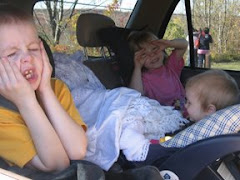
Back when I had my first child, 2000, the internet was not like today! No Facebook! There were some forums, etc, but most parenting advice still came from magazines, books, doctors, grandmothers, the Sears catalogue and our own instincts. Flash forward even just five years, and what a difference! Suddenly, we can get the opinions and expertise of thousands of strangers to guide us in our parenting journey. I noticed at the same time that parenting was becoming very commercialized. There were gadgets, toys, tools, apps, for every parenting need you can imagine. Look through a parenting magazine, and you'll learn through the advertising that you never need to hold your baby. Straight from carseat to bouncer to exersaucer to Jolly Jumper to crib to stroller. Swings came with speakers, heaters, vibrators, multi-directional and random movements to replicate being held. Everything you need to feed your baby can be bought at Babies R Us. Forget about the old ways, Grandma is ancient. Get with the new century.
While new health reports have changed the way alcohol and tobacco is advertised in Canada, similar health reports have not been able to touch the formula advertising industry. The "may cause" is too small. People don't want to read the "may cause" concerns, because millions of babies get formula, and they're all "fine".
Let's look at marketing in another industry.
You've decided you need a car. You open up the first magazine at the hairdresser's, and inside the front cover is a big spread for Ford. Wow, Ford is awesome. Look at all those models! You must go check out Fords! You flip through the rest of the magazine, notice there are some other car ads, but they're smaller, and not at the front and the info about safety and consumer satisfaction just doesn't catch your eye.
You go on Facebook and announce you're getting a Ford. Which one? You don't have a lot of money though. Several friends say "How awesome!" and "Congratulations!". Then "Get the biggest you can afford" or "get the cheapest; they're all the same anyway". Then, a few more speak up. "How about a Toyota? They have fewer need for repairs". You reply, "No thanks, I'm going to take good care of it so I won't need repairs, and my ex-boyfriend's sister's babysitter's cousin is a mechanic so I won't have to pay for repairs". Someone else says "If money is an issue, about about public transportation?" "No way, that's for poor people!". Someone else gives the little known idea of car-sharing. "WTF is that?! No way am I sharing a car. I might get residue from someone else's religion!".
You go to the Ford dealer and check out the cars. Such variety, such price ranges! How to choose?! Yes, your friend said they're basically all the same, so go with the cheapest. You do.
The problems start right away. You have to fill up with gas on the way home. You didn't think about that...you have only a few dollars. Gas runs out before the next pay day and what do you do? THen it needs an oil change and you figure you can do it yourself...but do something wrong and now it needs repairs. Then you start hearing a funny noise. You ignore it for awhile, but it doesn't go away. You can't get it over 80km/hr now.
You turn back to Facebook with your issues. Friends start off "IDK, my Ford is awesome" and "Could it be this? That? This? This? This?" and that's too overwhelming so you ignore it all. Someone suggests it could be cause it's a Ford and that was a bad choice. "You're not supporting me and I'm blocking you!". Then it gets worse...."should have bought a Toyota", "Bus passes can be written off your taxes", "I lost 30lb by walking everywhere".
Are these comments helpful? The writers probably think so. But to the poster, they're not. They're in denial. Ford was glossy, a big spread, obviously the best choice or it wouldn't have been at the front of the magazine! Why would you question it? They want your business, so they're not going to suck, are they?!
It is damn near impossible to give suggestions to others these days. "That's your opinion!" they say when you suggest no infant cereal is needed. "Babies are all different" they say when you suggest no cereal before six months. "My doctor said 4 months is fine" they say when you say the current recommendation is six months. You try to offer studies, health organizations official statements, and other data. You remind them that baby cereal is less than 100 years old and was developed specifically for malnourished babies--not average babies. They refuse to see alternatives because they believe the advertising and magazines. Formula and cereal wouldn't be sold so readily if it caused problems! They were fed cereal at 2 months and are perfectly healthy. It was good enough for their parents, it's good enough for their child.
On one hand, the internet has opened up a world of information most people could never have accessed before. Yet, there are so many people that have narrowed down their minds like never before. I don't get it. People should be more critical, more investigative, more open minded, more willing to change when new info shows otherwise....but yet it seems people are putting blinders on to science, research, history, and are only open to names/brands they recognize.
True story--mom asks for other mom's opinions on when to start cereal. You offer the latest statement made by Health Canada saying cereal is not needed. You get told that's your opinion and everyone's entitled to their own opinion, and it doesn't help the mom asking the question. WTF. Sure--it IS my opinion, based on experts doing years of research. Shouldn't research trump "I had it at 3 weeks and I'm fine"?
Another trend I hate...telling moms that they know best, they know their child better than the doctor and other moms, and do what they think is right. Why would a new mom automatically know what's right/best? Deciding to give cereal at 3 months is not an intrinsic, human response like wanting to hold a baby that's crying. Why would mom be asking if she knew what was right? People say "I knew my child was ready at 4 months!"...the biggest aspect to a baby's readiness for (any) food is the solidifying of the intestines and the production of digestive enzymes. How the heck do all these moms know this about their babies?
I was at an OB/GYN's office. They had a fancy tv screen with health info constantly changing. One section was on circumcision. It was all about what to expect, and the "pros". NOTHING contrary or negative was shown. I wonder what the circumcision rate of male babies born to moms at that practice is. I'd love to compare to an office where there is no circumcision information offered. Or, how about an OB/GYN's office that has reading material that is only pro-breastfeeding. If the only magazines available were things like "Natural Parenting". Would that have an impact? Once again, Health Canada says circumcision is not necessary. Why are doctors still promoting it? Oh...they get paid cash when they do it.
Why are young people letting marketing decide their parenting strategies? We all want what's best for our babies. But how can they really think Nestle has their baby's best interest in mind when their profit depends on making parents think their products are necessary?
Showing posts with label breastfeeding. Show all posts
Showing posts with label breastfeeding. Show all posts
Friday, June 12, 2015

Tuesday, April 28, 2015
Another Recall
Heinz has announced another recall of a jarred baby food, this time Sweet Potato and Beef Medley. Recommended for 8 months and up. Looking at the pictures, it looks like a puree but is probably lumpier.
My first thought is "Ewww. Who buys this for their baby?". Oh, wait...I probably did. Although I could cook a nice sweet potato, I never got smooth pureed meats.
My next thought is "Food before one is just for fun; breast milk is the primary source of nutrition." Well, we're supposed to say "Breast milk or formula" but statistics say more babies are formula fed at this age then breastfed. But if we're trying to make breastfeeding "normal", then people shouldn't be adding "or formula". It's already assumed, so let's leave it out.
However, formula is expensive and many parents want to get their kids on "solids" as quickly as possible. Current recommendations are no solids before six months, and then basically anything except raw honey, and if you have allergies in the family, avoid the allergens. This is not to replace breast milk though. It's in addition to.
A current "trend" is baby lead weaning. It's not weaning in the sense of taking two weeks to get your baby off the breast or bottle. It's more like baby lead "introduction" to solids. The idea is that you can offer bite sized pieces of real, human food that you would eat, and if your baby is ready, they will eat it. If they're not ready, they won't eat it.
Think back. Waaaaayy back. Back before the commercialization of parenting. What did mothers do? Take a piece of their food, squish it, flake it, chew it, etc and give it to their baby. They didn't have the option of pureed chicken or dried cereal in a box. Why have we fallen prey to the big companies that make us think we're wrong if we don't serve rice flakes or veal Parmesan that looks like something the cat barfed up?
I'm in some Frugal Parenting groups on Facebook. These are geared more to giving away unneeded items, but every day people ask questions about parenting, and not always with a frugal mindset. Like, "What age can I start cereal, baby is 3 months old now". As well as waiting till six months for the biological reasoning of stomach enzymes, I suggest that waiting till six months is also frugal because you can skip cereals and serve real foods. And you'll also save money on cleaning baby clothes LOL.
Yet so many parents are insistent their baby needs infant cereal! Pablum was created by the Hospital for Sick Children during the Great Depression for babies that were malnourished. It's less than 100 years old, a tiny speck in the millions of years of human evolution. Is your baby malnourished? Even if so, there are much better options. Rice, in particular is a crappy food, without much actual nutrition, and it has great negative socio-economic and environmental impacts on tender cultures around the world. These cereals are "fortified" so parents think that's a good thing. What that means is that the natural minerals and vitamins were stripped away during processing (this IS a processed food!) and (lab made versions) were added back in. The %RDA listed is not accurate because these minerals and vitamins are harder to absorb.
It's OKAY to skip baby cereal, and jarred foods, and those pouches. Don't be a media push over. If your great grandma didn't use it, you can survive without it too. Somethings might just make life easier, but it's not a "need". But is also okay to give cereal! I would stay away from rice and wheat though. Why start your baby out on a carb heavy diet when we know it's not healthy for adults? A little homemade oatmeal is nice though (once in a while).
 Does this look like a happy baby? Not really. I waited till six months to give Megan cereal (compared to just before 4 months with child #1). Although I knew it wasn't necessary, I fell for it anyway. However, I was in a real learning phase around then, thanks to the boom of parenting forums and the Internet. If I could do it over, I would.
 Compare this to two months later, and eating "real" food!
 What baby wouldn't rather gnaw on a cob of corn then have spoonfuls of mush forcibly put into their mouths?
My first thought is "Ewww. Who buys this for their baby?". Oh, wait...I probably did. Although I could cook a nice sweet potato, I never got smooth pureed meats.
My next thought is "Food before one is just for fun; breast milk is the primary source of nutrition." Well, we're supposed to say "Breast milk or formula" but statistics say more babies are formula fed at this age then breastfed. But if we're trying to make breastfeeding "normal", then people shouldn't be adding "or formula". It's already assumed, so let's leave it out.
However, formula is expensive and many parents want to get their kids on "solids" as quickly as possible. Current recommendations are no solids before six months, and then basically anything except raw honey, and if you have allergies in the family, avoid the allergens. This is not to replace breast milk though. It's in addition to.
A current "trend" is baby lead weaning. It's not weaning in the sense of taking two weeks to get your baby off the breast or bottle. It's more like baby lead "introduction" to solids. The idea is that you can offer bite sized pieces of real, human food that you would eat, and if your baby is ready, they will eat it. If they're not ready, they won't eat it.
Think back. Waaaaayy back. Back before the commercialization of parenting. What did mothers do? Take a piece of their food, squish it, flake it, chew it, etc and give it to their baby. They didn't have the option of pureed chicken or dried cereal in a box. Why have we fallen prey to the big companies that make us think we're wrong if we don't serve rice flakes or veal Parmesan that looks like something the cat barfed up?
I'm in some Frugal Parenting groups on Facebook. These are geared more to giving away unneeded items, but every day people ask questions about parenting, and not always with a frugal mindset. Like, "What age can I start cereal, baby is 3 months old now". As well as waiting till six months for the biological reasoning of stomach enzymes, I suggest that waiting till six months is also frugal because you can skip cereals and serve real foods. And you'll also save money on cleaning baby clothes LOL.
Yet so many parents are insistent their baby needs infant cereal! Pablum was created by the Hospital for Sick Children during the Great Depression for babies that were malnourished. It's less than 100 years old, a tiny speck in the millions of years of human evolution. Is your baby malnourished? Even if so, there are much better options. Rice, in particular is a crappy food, without much actual nutrition, and it has great negative socio-economic and environmental impacts on tender cultures around the world. These cereals are "fortified" so parents think that's a good thing. What that means is that the natural minerals and vitamins were stripped away during processing (this IS a processed food!) and (lab made versions) were added back in. The %RDA listed is not accurate because these minerals and vitamins are harder to absorb.
It's OKAY to skip baby cereal, and jarred foods, and those pouches. Don't be a media push over. If your great grandma didn't use it, you can survive without it too. Somethings might just make life easier, but it's not a "need". But is also okay to give cereal! I would stay away from rice and wheat though. Why start your baby out on a carb heavy diet when we know it's not healthy for adults? A little homemade oatmeal is nice though (once in a while).
Tuesday, January 14, 2014
Carry Me!
I thought I'd share this article from Today's Parent. I'm cleaning out my emails of things I've saved; I might as well post them here so others can enjoy/learn!
Again, bold and italics are added by me!
This was originally published on Dec 19, 2006, on my knitting blog
Carry Me!Good for you, good for your baby. So why don't we do it more?
By Teresa Pitman
Lenore Kilmartin is convinced that carrying her baby saved his life. "OK, maybe the doctors who did the surgery also had something to do with it, she concedes. "But I have no doubts that being carried around helped him."
Liam, her fifth child, seemed healthy and normal at birth. Kilmartin took care of him just as she had her older children, carrying him in a sling or soft carrier most of the day while she did housework, went shopping and helped her other children.
"He did seem a little quieter than the others, but I thought that was just his personality," she comments. "He nursed frequently but for short times; and that was easy to do with the sling."
During a visit to the doctor when Liam was five months old, Kilmartin was shocked to discover that he had a serious heart defect. They went straight from their family doctor's office to a paediatric heart specialist. The diagnosis? Liam had four holes in his heart and would need surgery to repair them.
"The doctor asked me, 'Didn't you notice his lips turning blue when he cried?' " Kilmartin recalls. "And I realized that he really never cried. He was always close to me, so if he started to fuss or squirm around, I could quickly shift his position or burp him or nurse him if that was what he wanted. He really never got to the point of crying hard."
The doctor was also very impressed by Liam's weight gain. "Most babies with heart problems like Liam's, because they tire so easily, have problems gaining weight," Kilmartin explained. "But Liam never tired himself out with crying, so his weight gain was very good. That meant he went into his surgery in good shape."
He also made a rapid recovery --heading home six days after the operation. "I tucked him back into the sling and he continued to do well," Kilmartin says.
Being carried has also been shown to be helpful to tiny premature babies. With these infants, it's often called 'kangaroo care' because it mimics the way mother kangaroos carry their babies in a pouch until the joey is more mature. The system originated in Colombia, South America, but research shows that when premature babies are carried in an upright position, skin to skin with their parents, they gain weight better, maintain body temperature and have better breathing and heart rates. Just as important, the parents feel a stronger attachment to the babies they have carried, and are less likely to abuse or neglect them.
Carrying may be good for babies with health problems, but what about normal, healthy infants? Is it a good idea, or will it spoil the baby?
Happy or Spoiled?
Harvey Karp, a California paediatrician and author of The Happiest Baby on the Block, suggests we should consider that all babies are really born “prematurely” — at least compared to most other newborn animals.
"It's as though we made a contract with our babies," he explains. "Human babies have large brains that continue to grow through the first years, and in order for the baby's head to fit through the mother's pelvis, it needs to be born while it is still pretty undeveloped. So the deal was, the baby promised to come out early and we promised to imitate a uterus. That means giving the baby the constant contact, movement and soothing sounds that would be part of the uterine environment."
Karp adds: "The problem is that some parents are trying to wiggle out of the agreement. And babies let us know they're not happy with us not keeping our part of the bargain the only way they can; by crying."
Ronald Barr, professor of paediatrics at the University of British Columbia, says the link between carrying and reduced crying is very clear. He first discovered this in a 1986 study, where an extra two hours of carrying each day reduced the overall amount of crying by 43 percent.
Carrying a baby seems to make some other aspects of caregiving easier, which may reduce crying as well, says Barr. For example, the !Kung San in Africa ; who carry their infants almost all the time, respond to every fret or whimper the baby makes within 10 seconds. That's a lot easier to do when the baby is right there with you, not a wailing sound from upstairs heard through a baby monitor.
How important that quick response is may depend somewhat on your baby's temperament. Barr cites research which showed that babies who were described as irritable or sensitive and intense in their responses cried much less when their parents responded to them immediately and appropriately. Speed was important -- if it took a long time for someone to arrive, these irritable infants became very hard to soothe.
Despite the clear benefits of carrying, Barr's research shows that, in North America at least, babies are now being carried less, not more. There is good data to show that our babies are spending more time in car seats and strollers, and less time in body contact with parents.
Recent research by Barr, not yet published, looked at five-month-old babies in the province of Quebec. Barr recorded the total amount of contact time the babies had with their parents or caregivers over a period of 24 hours. This included feeding, diaper changing, dressing, bathing, carrying and holding -- and the average was six hours. "That seems very low to me," says Barr.
And it is much lower than in many countries around the world. Cathy Baldizon, a mother of two boys who formerly worked with CARE, says that when her family was living in Guatemala, the Mayan women carried their babies almost all the time, tied to their bodies with large shawls. One day I was looking at a book that had photos of Asian women carrying their babies tied in shawls, Baldizon recalls. I showed the pictures to my Guatemalan friends, pointing out that these women carried their babies just like they did. Their reaction was puzzlement: "What's the big deal? Don't all mothers carry their babies this way?" The idea that a mother wouldnÂ’t carry her baby was just unimaginable to them.
So why don't more Canadian parents carry their babies? Barr says: "I think it is almost a side effect of the campaign to get babies into car seats in cars, which has been very successful. It just seems convenient to parents to move the baby around in the car seat even when they arenÂ’t in the car, now that the seats have handles or can be popped into a stroller."
Tonya Brock, the mother of two-year-old Lindsay and four-year-old Jason, says: "It's the spoiling thing. I think people are worried that their babies wonÂ’t ever become independent or be able to separate if they carry them too much when they are babies. Certainly a lot of people said that to me when I was carrying Jason and Lindsay."
Barr has heard similar comments. "Whenever I talk about the !Kung San people and how they carry their babies constantly and respond to them immediately, the first question I get is "Don't they all grow up to be wimps?" The answer to that is a very clear NO! There is no way you can consider these people to be wimps! Just to give one example: the !Kung San mothers give birth without any help and without crying out from pain. There are many more examples of their strengths.
Barr also mentions a study done by Marjorie Elias, which compared babies of La Leche League leaders in the Boston area to other mothers. Barr says, She found that the babies in the LLL group --who were carried more, responded to more quickly and nursed more frequently --did not become more demanding or cry more as they got older. They did not show any more "spoiled" behaviours than the control group.
Brock has also had people tell her, "The baby looks so uncomfortable," when they saw Jason or Lindsay curled up in the sling. Once when she was walking quickly through an airport and carrying Lindsay, a woman stopped her and said, "You're going to make your baby sick by jiggling her so much."
Joan Grusec, professor of psychology at the University of Toronto, says parents shouldn't worry about spoiling babies. "Babies most often cry because they are distressed in some way," Grusec explains, "and physical contact is soothing and beneficial. The spoiling comes when the crying is deliberately used as a way of getting something else, such as attention. This is more likely to happen as children grow older. But carrying a baby in arms, a sling or soft carrier is a good idea -- it provides both comfort and stimulation for the baby."
The Carrying Continuum
Grusec adds that, in general, our culture doesn't encourage parents to carry babies. She points out that "different cultures have different goals." Close body contact for infants tends to be prevalent in cultures that value group harmony and interdependence. Other cultures value separation and autonomy — and Canada seems to fit into the second category.
"North American parents tend to use more visual contact and play with objects, and this is seen as facilitating greater separation," Grusec explains.
Of course, Canadian society is by no means a homogeneous mixture, like a purreed soup. We're more like a stew with a variety of different foods, so we have some parents who carry their babies a lot because of their cultural background or philosophy of parenting, others who carry them some of the time, and others who rarely take them in arms. These parents may have different aspirations for their children, different child-rearing goals. As Grusec says: Parents are comfortable with different things. There are many ways of raising children (including whether or not to carry them) and, within reasonable limits, most things work."
Baby's temperament
The baby's temperament may be a factor too in determining whether or not the baby gets carried. If carrying is the best -- or only -- way to soothe your crying baby, you may end up doing it a lot even if it wasn,t part of your planned approach to parenting. Tonya Brock says that easygoing Lindsay would probably be fine with less carrying, but Jason was a different story. "He was very fussy as a baby --not only did he need to be carried, but he needed me to keep moving," she recalls. "Carrying him was the only way we could both be happy."
When Brock returned to work seven months after Jason's birth, she spent quite a bit of time searching for a daycare provider who would continue to carry Jason. "I think the fact that Chantelle was willing to hold him made a big difference in how he adjusted to being in daycare," Brock says.
Sometimes carrying is just the practical way to go. With Jason a very active toddler when Lindsay was born, Brock found a carrier for her daughter was a very practical accessory. "It left my hands free to get work done, and I didn't have to worry about leaving her behind to chase after Jason."
So should parents carry their babies more? Barr has a lot of trouble with the word 'should.'
All other things being equal, the more body contact time you have with your baby, the better," he says. "If you can carry your baby more, you will both benefit because your baby will cry and fuss a lot less. But I also recognize that people may have important reasons that prevent them from carrying their babies, and so it can be a trade-off. The baby who is carried less will cry more, but will grow up just fine."
In the end, Brock and Kilmartin both say they carried their babies "because it felt right." Brock adds: "There is something about the feel of their little bodies and the way they mould themselves to you and relax. It's just such a good feeling.
The babies think so too.
Carrying Your Baby: The Practical Side
The right carrier can save your back and free up your hands. You might have to do a little experimenting to find one you really like. Ask friends if you can try theirs out before investing a lot of money and be sure to check second-hand stores.
Slings are popular and are great for discreet breastfeeding; or consider a wrap, which is a long piece of cloth that can be wrapped in different ways to hold your baby in place.
Try to find someone who can show you how to use your carrier in different positions. You'll soon learn which your baby prefers.
When's a good time to carry your baby? Anytime. But if your baby is fussy at a particular time of day such as the evening, it seems to work better to start carrying the baby an hour or two before he gets fussy.
Back to me:
I've known since Huey was born about the bonding/less crying aspects of babywearing. But once Megan was born, the convenience of it has been the best advantage. Yes, Megan does need a lot of attention; she is definitely high needs. Being able to 'wear' her comfortably for long periods of time has been a huge advantage. When I see parents struggling to chase one kid while carrying a heavy carseat, or manoeuvring a stroller through the small shops in town, or up to the children's room on the third floor of the library, I smile to myself and go on my merry way. But NONE of these women approach me. I get lots of questions from grandmothers, mothers past the toddler stage, and the occasional 'granola-ish' mother. Little kids love to see Megan being worn, and grandmothers are the next big lovers.
I wouldn't lug a carseat or stroller around now, even if I had a outrageously priced one with all the bells and whistles. My baby is safe when worn, I never have to worry about losing the stroller, someone stealing it or bags in the bottom, I can go where I want, no one whacks my baby in the face with a briefcase or dangling cigarette. These points alone would sell me on babywearing.
But it's the way she sinks into me and puts her head on my chest and tells me in her own way that everything is finally right, that keeps me doing it!
Friday, January 10, 2014
The Magic of Breast Milk for Adults
This article is copied from here. I cut and pasted it, but the pictures don't seem to have made it. Bold and italics were added by me :) I originally posted this on my knitting blog, December 17/06.
Milk Therapy
Breast-milk compounds could be a tonic for adult ills
Julie J. Rehmeyer
Catharina Svanborg thought that she already knew how remarkable breast milk is. The immunologist had logged hundreds of lab hours documenting ways in which human milk helps babies fight infections. But when the group decided to use cancerous lung cells to avoid the variability shown by normal cells in laboratory tests, Svanborg and her team at Lund University in Sweden were in for a surprise. They applied breast milk to the cancerous lung cells, and all the cells died. Breast milk killed cancer cells.
"From that moment on, we've been working with it," Svanborg says.
Svanborg's serendipitous discovery of human milk's anticancer power is remarkable, but other researchers have also been finding that breast milk can both protect against and heal a remarkable variety of ailments. Perhaps these properties shouldn't be surprising: Of the thousands of substances that people eat, breast milk is the only one that evolved under natural pressure to keep people healthy.
Research teams are now learning to exploit its tricks for purposes well beyond feeding babies. Components of breast milk are being developed as drugs that fight viruses and bacteria. A particular target is diarrhea, which kills about 2.2 million people every year, mostly children in developing countries. Other milk compounds may be added to food to improve digestion. Some milk components might fight medical conditions ranging from arthritis to septic shock.
Although some of these compounds are found in milk from other animals, others occur only in human milk, and the nonhuman versions are generally less potent in people. This presents a challenge, since human-breast milk is not available for sale. So, researchers are developing new sources for the compounds, including genetically modified bacteria, rice, goats, and cows.
The potential for therapies derived from milk is "enormous, absolutely tremendous," says Marian Kruzel, an immunologist at the University of Texas Medical School in Houston.
Good bugs and bad bugs
The protective properties of mother's milk have long been apparent. Breast-fed babies, for instance, get diarrhea half as often as infants who are fed formula do. Decades ago, scientists began wondering how breast milk stops the pathogens that cause diarrhea.
In the 1950s, Lars Hanson, an immunologist at Göteborg University in Sweden, started to solve the puzzle. He found that mothers produce antibodies in their milk and that way pass on to their babies immunities that the women had acquired over their lifetimes.
But the antibodies in breast milk didn't explain all the observations. For example, breast-fed babies have different bacteria in their guts than formula-fed babies do. The breast feeders harbor more of the beneficial, food-digesting bacteria, such as acidophilus and bifidus, as well as less of the coliform Escherichia coli and other germs that can make infants sick.
When scientists started analyzing breast milk, they found that the third-largest constituent of breast milk, making up about 1 percent by volume, is a mixture of indigestible sugars known as oligosaccharides. Many of these sugars occur only in human milk.
Initially, the scientists thought that these were useless by-products of milk production. But why would mothers expend so much energy creating compounds that their babies can't use?
In the past few years, scientists have solved this puzzle. David Newburg, of Massachusetts General Hospital in Charlestown and his colleagues genetically engineered mice to produce oligosaccharides in their milk. He then gave their pups campylobacter, a bacterium that causes diarrhea. The pups that drank oligosaccharides didn't get sick.
Unlike the antibodies that mothers pass along to their infants through breast milk, oligosaccharides can protect the baby from pathogens to which the mother has never been exposed.
For a pathogen to infect a person via the digestive tract, it first has to latch on to the sugars that line the gut wall. Oligosaccharides have binding sites that are identical to the ones on the gut-wall sugars, so the pathogens attach to the oligosaccharides instead of to the lining of the gut. Once bound to oligosaccharides, pathogens travel harmlessly through the intestinal tract.
Surprisingly, bacteria that aid digestion prosper in the presence of oligosaccharides. Bruce German, a nutritionist at the University of California, Davis, proposes that only the beneficial bacteria digest some of the oligosaccharides, thereby gaining an advantage over the harmful bacteria. This theory is controversial, however.
German says that the beneficial microbes' advantage is a natural consequence of the coevolution of breast milk and gut bacteria. Oligosaccharides occur in thousands of slightly different forms, and the precise mix of types of oligosaccharides varies from woman to woman. Those who produced breast milk with oligosaccharides that only beneficial bacteria can eat must have had an evolutionary advantage.
German notes that because of this evolutionary process, some bacteria in human digestive tracts are found nowhere else on Earth. "What milk did is recruit an entire life form to protect the infant," German says. "To me, that's pretty inspiring stuff."
German and other scientists want to leverage that protection for babies that aren't breast-fed and for adults too. Oligosaccharides might augment elderly people's weakened natural protection against pathogens. After people have taken strong antibiotics, the sugars could help them recolonize their digestive tracks with beneficial bacteria. Foreign travelers or military personnel who expect to be exposed to unfamiliar pathogens could take oligosaccharides as a preventive measure.
Newburg expects that as bacteria continue to develop resistance to antibiotics, oligosaccharides will be increasingly important for fighting pathogens. "This is a totally different type of defense against pathogens that mammals have been using for thousands of years, and it still works," Newburg says.
He suggests that bacteria can't evolve a resistance to oligosaccharides because if they change in such a way that they no longer bind to the oligosaccharide, they also can't bind to the cell wall to infect their targets. "The mechanisms for protection in milk are so exquisite," Newburg marvels.
Procuring a supply of oligosaccharides for preventive or therapeutic treatments presents a challenge. Newburg is working to genetically engineer E. coli bacteria to produce the sugars.
"What motivates me personally is the large number of babies in the Third World who have diarrhea," Newburg says. Oligosaccharides added to formula could protect babies who don't receive breast milk.
Bioengineering milk
Getting bacteria to produce human oligosaccharides would be only the first step toward Newburg's vision. For protection against infections, people would have to eat substantial amounts of oligosaccharides regularly. So, to make supplements for adults or for baby formula, bacteria would need to produce oligosaccharides in large quantities and at low cost.
ATTACK THWARTED. Bacteria that can cause pneumonia attack a throat cell by attaching to sugar chains on the cell. In a solution of oligosaccharides—indigestible sugars contained in breast milk—the pneumococci bind to the sugars and don't latch on to the throat cell.
On the other hand, genetic engineering of larger organisms has already produced inexpensive and abundant supplies of two other human-breast–milk compounds: lysozyme and lactoferrin.
In 1998, scientists genetically engineered a goat to excrete lysozyme in its milk, and in 2002, another team created one variety of rice that produces human lysozyme and another variety that yields human lactoferrin. Also in 2002, a team engineered a cow to produce human lactoferrin. As a result, researchers are for the first time performing large-scale clinical trials of lactoferrin and lysozyme.
Lactoferrin is a dazzlingly multitalented protein. In breast-fed babies, it can appropriately suppress inflammation or boost immune activity. It also fights viruses, bacteria, and fungi. Even after the protein has broken down in the gut, the fragments fight urinary-tract infections as they are expelled from the body.
Because lactoferrin lowers the immune system's inflammatory overreactions, it may be useful against arthritis, multiple sclerosis, and septic shock. In 1998, when researchers treated piglets with lactoferrin before inducing septic shock, the compound reduced mortality to less than one-fourth of that in untreated piglets. In 2001, another group showed that treating rats in septic shock with lactoferrin dramatically reduced blood-toxin concentrations.
The many claims for lactoferrin's capabilities "may look suspicious," admits Michal Zimecki, an immunologist at the Polish Academy of Sciences in Wroclaw. Lactoferrin "seems like a golden bullet, but it really is so."
Lysozyme is, by comparison, a one-trick pony: It chews up bacterial cell walls. However, its trick is fine-tuned. Lysozyme selectively destroys deleterious bacteria, usually leaving the beneficial ones unharmed.
At a clinic in Peru, Bo Lönnerdal, a nutritionist at the University of California, Davis, recently conducted a trial of a combination of lactoferrin and lysozyme against diarrhea. The standard treatment for acute diarrhea in children there is simple rehydration with a solution of sugar and salt.
Lönnerdal added his two compounds to the solution given to half the children treated. Those who received lactoferrin and lysozyme, he found, recovered more quickly and were less prone to a repeat bout of the disease. The study is scheduled to appear in an upcoming Journal of Pediatric Gastroenterology and Nutrition.
Killer milk
As outlandish as lactoferrin's potential may seem, it is perhaps even stranger to think that breast milk components could cure cancer.
Once Svanborg and her team had established that something in breast milk was killing human cancer cells in the lab, they isolated the assassin. It turned out to be the protein alpha-lactalbumin. But the compound becomes lethal only when exposed to acid, as it is in a stomach and was in the lab. The acid unfolds the alpha lactalbumin protein into a havoc-wreaking form.
Svanborg dubbed the acidified form of the protein HAMLET, for human alpha-lactalbumin made lethal to tumors.
Cancer cells take up far more HAMLET than healthy cells do. The huge quantities of unfolded proteins destroy the cancer cells.
Svanborg found that HAMLET killed 40 kinds of tumor cells in lab dishes. She has also studied the reactive compound in rats with human-cancer cells implanted in their brains. She used an invasive cancer called glioblastoma that usually kills people in less than a year. She injected HAMLET directly into the tumors of some of the rats, while others received injections of alpha-lactalbumin that hadn't been activated by acid.
After 7 weeks, the rats getting inactive protein bore tumors seven times, on average, as large as the tumors in the HAMLET-treated rats, the researchers reported in 2004.
Svanborg has also found that HAMLET reduces warts in people. Warts and tumors share the property of growing without respect to normal controls. HAMLET reduced the volume of more than 95 percent of the warts to which it was applied, whereas only 20 percent of warts treated with a placebo decreased in size.
Svanborg is currently concluding human trials of HAMLET for bladder cancer. She says that her results "look very good," and that the treatment produced no side effects. Pharmaceutical companies are now developing the activated protein for clinical use.
Hanson, the first scientist to isolate immune antibodies from breast milk, says that HAMLET is "quite a discovery," especially since it seems to be effective against so many kinds of cancer. He cautions, though, that "the crucial thing will be the clinical studies."
Whether or not breast milk turns out to be the source of a potent cancer therapy, its remarkable properties have led to a new view of its role. "My thinking on milk has changed totally," says Newburg. "I used to think of it as the best source of nutrients. Now, it's looking like milk is really designed to be protective."
Soon, that protection may extend to the rest of us.
Back to me!
How wonderful that 'modern' science is taking advantage of something as ancient and 'barbaric' as human milk. Too bad the protein has to be acidified before it can treat conditions such as cancer and warts (ssshhh....Rob has a couple warts, LOL). How can people NOT want to feed their human babies with human milk?! I just don't get it. There's not one single thing that makes formula 'better' than human milk, and it's not even considered equivalent. It's not a substitute for breastmilk, as so many think. Substituting implies equality, and formula is so far off from being equal. It's an alternative, and a poor one at that. Formula has gotten better in the past 150 years, and maybe adding these new compounds will improve it more. But gosh, why not just start with the good stuff anyway?
Milk Therapy
Breast-milk compounds could be a tonic for adult ills
Julie J. Rehmeyer
Catharina Svanborg thought that she already knew how remarkable breast milk is. The immunologist had logged hundreds of lab hours documenting ways in which human milk helps babies fight infections. But when the group decided to use cancerous lung cells to avoid the variability shown by normal cells in laboratory tests, Svanborg and her team at Lund University in Sweden were in for a surprise. They applied breast milk to the cancerous lung cells, and all the cells died. Breast milk killed cancer cells.
"From that moment on, we've been working with it," Svanborg says.
Svanborg's serendipitous discovery of human milk's anticancer power is remarkable, but other researchers have also been finding that breast milk can both protect against and heal a remarkable variety of ailments. Perhaps these properties shouldn't be surprising: Of the thousands of substances that people eat, breast milk is the only one that evolved under natural pressure to keep people healthy.
Research teams are now learning to exploit its tricks for purposes well beyond feeding babies. Components of breast milk are being developed as drugs that fight viruses and bacteria. A particular target is diarrhea, which kills about 2.2 million people every year, mostly children in developing countries. Other milk compounds may be added to food to improve digestion. Some milk components might fight medical conditions ranging from arthritis to septic shock.
Although some of these compounds are found in milk from other animals, others occur only in human milk, and the nonhuman versions are generally less potent in people. This presents a challenge, since human-breast milk is not available for sale. So, researchers are developing new sources for the compounds, including genetically modified bacteria, rice, goats, and cows.
The potential for therapies derived from milk is "enormous, absolutely tremendous," says Marian Kruzel, an immunologist at the University of Texas Medical School in Houston.
Good bugs and bad bugs
The protective properties of mother's milk have long been apparent. Breast-fed babies, for instance, get diarrhea half as often as infants who are fed formula do. Decades ago, scientists began wondering how breast milk stops the pathogens that cause diarrhea.
In the 1950s, Lars Hanson, an immunologist at Göteborg University in Sweden, started to solve the puzzle. He found that mothers produce antibodies in their milk and that way pass on to their babies immunities that the women had acquired over their lifetimes.
But the antibodies in breast milk didn't explain all the observations. For example, breast-fed babies have different bacteria in their guts than formula-fed babies do. The breast feeders harbor more of the beneficial, food-digesting bacteria, such as acidophilus and bifidus, as well as less of the coliform Escherichia coli and other germs that can make infants sick.
When scientists started analyzing breast milk, they found that the third-largest constituent of breast milk, making up about 1 percent by volume, is a mixture of indigestible sugars known as oligosaccharides. Many of these sugars occur only in human milk.
Initially, the scientists thought that these were useless by-products of milk production. But why would mothers expend so much energy creating compounds that their babies can't use?
In the past few years, scientists have solved this puzzle. David Newburg, of Massachusetts General Hospital in Charlestown and his colleagues genetically engineered mice to produce oligosaccharides in their milk. He then gave their pups campylobacter, a bacterium that causes diarrhea. The pups that drank oligosaccharides didn't get sick.
Unlike the antibodies that mothers pass along to their infants through breast milk, oligosaccharides can protect the baby from pathogens to which the mother has never been exposed.
For a pathogen to infect a person via the digestive tract, it first has to latch on to the sugars that line the gut wall. Oligosaccharides have binding sites that are identical to the ones on the gut-wall sugars, so the pathogens attach to the oligosaccharides instead of to the lining of the gut. Once bound to oligosaccharides, pathogens travel harmlessly through the intestinal tract.
Surprisingly, bacteria that aid digestion prosper in the presence of oligosaccharides. Bruce German, a nutritionist at the University of California, Davis, proposes that only the beneficial bacteria digest some of the oligosaccharides, thereby gaining an advantage over the harmful bacteria. This theory is controversial, however.
German says that the beneficial microbes' advantage is a natural consequence of the coevolution of breast milk and gut bacteria. Oligosaccharides occur in thousands of slightly different forms, and the precise mix of types of oligosaccharides varies from woman to woman. Those who produced breast milk with oligosaccharides that only beneficial bacteria can eat must have had an evolutionary advantage.
German notes that because of this evolutionary process, some bacteria in human digestive tracts are found nowhere else on Earth. "What milk did is recruit an entire life form to protect the infant," German says. "To me, that's pretty inspiring stuff."
German and other scientists want to leverage that protection for babies that aren't breast-fed and for adults too. Oligosaccharides might augment elderly people's weakened natural protection against pathogens. After people have taken strong antibiotics, the sugars could help them recolonize their digestive tracks with beneficial bacteria. Foreign travelers or military personnel who expect to be exposed to unfamiliar pathogens could take oligosaccharides as a preventive measure.
Newburg expects that as bacteria continue to develop resistance to antibiotics, oligosaccharides will be increasingly important for fighting pathogens. "This is a totally different type of defense against pathogens that mammals have been using for thousands of years, and it still works," Newburg says.
He suggests that bacteria can't evolve a resistance to oligosaccharides because if they change in such a way that they no longer bind to the oligosaccharide, they also can't bind to the cell wall to infect their targets. "The mechanisms for protection in milk are so exquisite," Newburg marvels.
Procuring a supply of oligosaccharides for preventive or therapeutic treatments presents a challenge. Newburg is working to genetically engineer E. coli bacteria to produce the sugars.
"What motivates me personally is the large number of babies in the Third World who have diarrhea," Newburg says. Oligosaccharides added to formula could protect babies who don't receive breast milk.
Bioengineering milk
Getting bacteria to produce human oligosaccharides would be only the first step toward Newburg's vision. For protection against infections, people would have to eat substantial amounts of oligosaccharides regularly. So, to make supplements for adults or for baby formula, bacteria would need to produce oligosaccharides in large quantities and at low cost.
ATTACK THWARTED. Bacteria that can cause pneumonia attack a throat cell by attaching to sugar chains on the cell. In a solution of oligosaccharides—indigestible sugars contained in breast milk—the pneumococci bind to the sugars and don't latch on to the throat cell.
On the other hand, genetic engineering of larger organisms has already produced inexpensive and abundant supplies of two other human-breast–milk compounds: lysozyme and lactoferrin.
In 1998, scientists genetically engineered a goat to excrete lysozyme in its milk, and in 2002, another team created one variety of rice that produces human lysozyme and another variety that yields human lactoferrin. Also in 2002, a team engineered a cow to produce human lactoferrin. As a result, researchers are for the first time performing large-scale clinical trials of lactoferrin and lysozyme.
Lactoferrin is a dazzlingly multitalented protein. In breast-fed babies, it can appropriately suppress inflammation or boost immune activity. It also fights viruses, bacteria, and fungi. Even after the protein has broken down in the gut, the fragments fight urinary-tract infections as they are expelled from the body.
Because lactoferrin lowers the immune system's inflammatory overreactions, it may be useful against arthritis, multiple sclerosis, and septic shock. In 1998, when researchers treated piglets with lactoferrin before inducing septic shock, the compound reduced mortality to less than one-fourth of that in untreated piglets. In 2001, another group showed that treating rats in septic shock with lactoferrin dramatically reduced blood-toxin concentrations.
The many claims for lactoferrin's capabilities "may look suspicious," admits Michal Zimecki, an immunologist at the Polish Academy of Sciences in Wroclaw. Lactoferrin "seems like a golden bullet, but it really is so."
Lysozyme is, by comparison, a one-trick pony: It chews up bacterial cell walls. However, its trick is fine-tuned. Lysozyme selectively destroys deleterious bacteria, usually leaving the beneficial ones unharmed.
At a clinic in Peru, Bo Lönnerdal, a nutritionist at the University of California, Davis, recently conducted a trial of a combination of lactoferrin and lysozyme against diarrhea. The standard treatment for acute diarrhea in children there is simple rehydration with a solution of sugar and salt.
Lönnerdal added his two compounds to the solution given to half the children treated. Those who received lactoferrin and lysozyme, he found, recovered more quickly and were less prone to a repeat bout of the disease. The study is scheduled to appear in an upcoming Journal of Pediatric Gastroenterology and Nutrition.
Killer milk
As outlandish as lactoferrin's potential may seem, it is perhaps even stranger to think that breast milk components could cure cancer.
Once Svanborg and her team had established that something in breast milk was killing human cancer cells in the lab, they isolated the assassin. It turned out to be the protein alpha-lactalbumin. But the compound becomes lethal only when exposed to acid, as it is in a stomach and was in the lab. The acid unfolds the alpha lactalbumin protein into a havoc-wreaking form.
Svanborg dubbed the acidified form of the protein HAMLET, for human alpha-lactalbumin made lethal to tumors.
Cancer cells take up far more HAMLET than healthy cells do. The huge quantities of unfolded proteins destroy the cancer cells.
Svanborg found that HAMLET killed 40 kinds of tumor cells in lab dishes. She has also studied the reactive compound in rats with human-cancer cells implanted in their brains. She used an invasive cancer called glioblastoma that usually kills people in less than a year. She injected HAMLET directly into the tumors of some of the rats, while others received injections of alpha-lactalbumin that hadn't been activated by acid.
After 7 weeks, the rats getting inactive protein bore tumors seven times, on average, as large as the tumors in the HAMLET-treated rats, the researchers reported in 2004.
Svanborg has also found that HAMLET reduces warts in people. Warts and tumors share the property of growing without respect to normal controls. HAMLET reduced the volume of more than 95 percent of the warts to which it was applied, whereas only 20 percent of warts treated with a placebo decreased in size.
Svanborg is currently concluding human trials of HAMLET for bladder cancer. She says that her results "look very good," and that the treatment produced no side effects. Pharmaceutical companies are now developing the activated protein for clinical use.
Hanson, the first scientist to isolate immune antibodies from breast milk, says that HAMLET is "quite a discovery," especially since it seems to be effective against so many kinds of cancer. He cautions, though, that "the crucial thing will be the clinical studies."
Whether or not breast milk turns out to be the source of a potent cancer therapy, its remarkable properties have led to a new view of its role. "My thinking on milk has changed totally," says Newburg. "I used to think of it as the best source of nutrients. Now, it's looking like milk is really designed to be protective."
Soon, that protection may extend to the rest of us.
Back to me!
How wonderful that 'modern' science is taking advantage of something as ancient and 'barbaric' as human milk. Too bad the protein has to be acidified before it can treat conditions such as cancer and warts (ssshhh....Rob has a couple warts, LOL). How can people NOT want to feed their human babies with human milk?! I just don't get it. There's not one single thing that makes formula 'better' than human milk, and it's not even considered equivalent. It's not a substitute for breastmilk, as so many think. Substituting implies equality, and formula is so far off from being equal. It's an alternative, and a poor one at that. Formula has gotten better in the past 150 years, and maybe adding these new compounds will improve it more. But gosh, why not just start with the good stuff anyway?
Monday, December 2, 2013
Early Experience with Trolls
This post is originally from Nov 8/2006, and posted on my knitting blog. It's still sort of funny, so I thought I'd repost it here!
I posted to a Yahoo group I'm in about Lucy turning 4 (remember, this was 2006), and linked to here. That group is "Slightly Crunchy Attachment Parenting". Slightly Crunchy being of the 'granola head' mindset--organics, cloth diapers, minimal impact, etc--it's 'slightly' crunchy because not every one who attachment parents is a granola head extremist, hugging endangered trees on the weekend. Attachment parenting is a parenting philosophy that respects the needs of babies/children, by respecting/responding to their communication, breastfeeding, babywearing, co-sleeping...etc (someday I'll post more about it).
Just before I put my link on, a woman joined the group and started giving her opinions on fertility, conception, pregnancy, birth, and beyond. Very strong opinions, telling one member to not go to any of her doctor's appointments, not to listen to her husband...(I can't find what post she was replying to as she didn't include any of it). Women need to do it like it was done before modern medicine took over. One woman posted that modern medicine prevented her from dieing in childbirth and saved the life of her newborn, who was in the NICU, and she was recovering from a C-section the day before. That woman has been a member throughout this troubled pregnancy, and we are well aware of her situation. The new member had the nerve to tell her that that was crap and she wouldn't die, doctors lie.
So, I get a little 'in her face' about her lack of respect and disbelief that she thinks she knows more than that woman's doctors. She reads my entry about Lucy's birthstory, and writes back that she disagrees with my birth!! OMG!!
I was going to copy the ensuing discussion to here. She's so adamant about 'taking back birth' to the way it used to be, it's almost hilarious. But I'm going to wait till later...see what happens today (back in 2006...the messages were actually deleted from the group).
You want to know the real kicker about her? She's never had a baby. Is not even pregnant. Not even trying to get pregnant, not even planning on trying. Cracks me up.
We realized later that this woman was most likely a "troll"....looking for hot-button topics on the internet just to create a stir. Never do people change their minds about a topic when confronted in the ways that trolls do it. Never. But yet, they're still out there!
I posted to a Yahoo group I'm in about Lucy turning 4 (remember, this was 2006), and linked to here. That group is "Slightly Crunchy Attachment Parenting". Slightly Crunchy being of the 'granola head' mindset--organics, cloth diapers, minimal impact, etc--it's 'slightly' crunchy because not every one who attachment parents is a granola head extremist, hugging endangered trees on the weekend. Attachment parenting is a parenting philosophy that respects the needs of babies/children, by respecting/responding to their communication, breastfeeding, babywearing, co-sleeping...etc (someday I'll post more about it).
Just before I put my link on, a woman joined the group and started giving her opinions on fertility, conception, pregnancy, birth, and beyond. Very strong opinions, telling one member to not go to any of her doctor's appointments, not to listen to her husband...(I can't find what post she was replying to as she didn't include any of it). Women need to do it like it was done before modern medicine took over. One woman posted that modern medicine prevented her from dieing in childbirth and saved the life of her newborn, who was in the NICU, and she was recovering from a C-section the day before. That woman has been a member throughout this troubled pregnancy, and we are well aware of her situation. The new member had the nerve to tell her that that was crap and she wouldn't die, doctors lie.
So, I get a little 'in her face' about her lack of respect and disbelief that she thinks she knows more than that woman's doctors. She reads my entry about Lucy's birthstory, and writes back that she disagrees with my birth!! OMG!!
I was going to copy the ensuing discussion to here. She's so adamant about 'taking back birth' to the way it used to be, it's almost hilarious. But I'm going to wait till later...see what happens today (back in 2006...the messages were actually deleted from the group).
You want to know the real kicker about her? She's never had a baby. Is not even pregnant. Not even trying to get pregnant, not even planning on trying. Cracks me up.
We realized later that this woman was most likely a "troll"....looking for hot-button topics on the internet just to create a stir. Never do people change their minds about a topic when confronted in the ways that trolls do it. Never. But yet, they're still out there!
Monday, November 18, 2013
Megan's Birth(day)

I got pregnant at the end of February 2005, and I emailed Rob saying "You have 35 weeks to buy a new truck". LOL. By week 5 I was terribly nauseous and that lasted until week 14. I even gave up coffee! Then I was terribly sick for two weeks with a sinus infection (this also happened at the same time that I was pregnant with Lucy). Then my arthritis flared up. And stayed flared up until delivery. It was a very painful pregnancy. My family doctor said "Take an Advil". I said "That doesn't work". She said "Take two". I finally got Tylenol with codeine, but that didn't help either. I had the same OB as with Lucy, Dr. C. and he just kept saying "Take it easy". Then he started to add "Don't do so much". That got me concerned, but I don't have anyone here to take over what I couldn't do, and Rob wouldn't, so I trudged on.
By around 24 weeks, I looked quite big--even though I had started at my lowest pre-pregnancy weight ever. I started having extreme heartburn/reflux again, and around week 36 finally got a prescription which worked wonders. The baby wasn't a very active baby, and if I went to the hospital every time Dr. C said "If you don't feel anything in 4 hours..." I'd be there almost every day (I don't think I ever bothered to go). But every night at 10pm when I got into bed, baby would wake up and have hiccups!
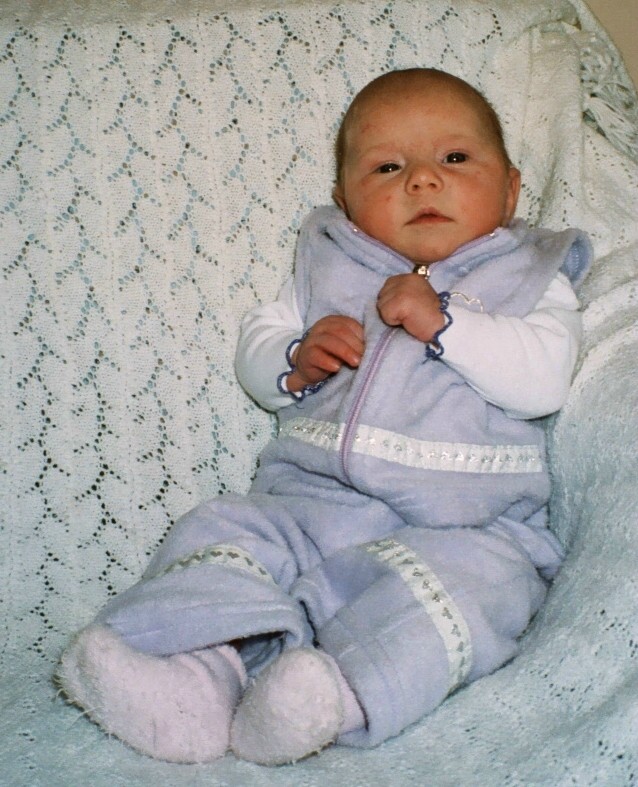
By the end of my pregnancy I was actually a little on the small side and people would be surprised that I had only weeks to go. My blood pressure had been so low this time that it was surprising to be smaller--high blood pressure is linked to smaller babies. I had one late ultrasound though that said I was within one week of EDD for size and was supposed to have another one but never did. I was just in so much pain that I actually wanted to get it done with.
At around 38 weeks I told Dr. C. that although I disagree with 'inductions of convenience' or before the EDD, I just couldn't take much more. Luckily my blood pressure was starting to go up and I had actually lost weight so that was reason enough to schedule an induction.
Rob and I went to the hospital early (8am, LOL) on Thursday November 17. He drove through the downtown instead of the by-pass, and went so slowly I was getting mad--we were late! I got put in a room and Dr. C came to do the induction (Cervadil again). He said I was already 2cm. I wasn't surprised--I had been having pains that felt like they were in my cervix, but weren't 'being kicked' pains. I had to stay in bed with the monitors for a while. The nurse was getting frustrated because baby was not active. She made me drink lots of water and juice but baby stayed calm. Finally I got to get up and walked around knitting. The head nurse was also a knitter and she went and found me a gown that has a pocket on the front, to hold the yarn :) I do have a picture, but it's not digital. The weather was a lot like today...blizzard one minute, sunny the next, but it was very cold. I had never wanted to be stuck in the hospital for labours, but there I was.

Not much was happening again. Around 2:30 it started to pick up and I started to have to focus a little. But no pain. They checked me and said I was 4cm. They knew about the quickness of Lucy's birth and were hoping I'd deliver before shift ended at 4. At 3, I was feeling the same way, so they said I could use the Jacuzzi. I had wanted to use it before, but it never happened. Oh, it was so nice! I have a picture of me in it too, but not digital. Apparently I stayed in it for an hour :) The contractions pretty much went away. Occasionally I could feel some 'tightening' but no pain. My arthritis had made me very concerned about dealing with the traditional (well, traditional in the sense of 'modern' medicine) delivery positions, but I was actually feeling quite good that day, and the tub certainly helped.
At 4pm they said I had to get out because Dr. C wanted to check me.
He said I was still only 4-5cm, and they were concerned because baby's heartrate was not variating with the contractions. He said he was going to break my water and put a scalp monitor on. I didn't want my water broken at only 4-5cm--like they did with Huey's birth because I knew it would make it a lot more difficult to cope (I wouldn't say 'painful'. You create what you fear.). But we went ahead. He seemed to take forever, and was NOT very gentle!
Dr. C stood up and said he was going to the ER for an emergency and would be back soon. The nurses said 'absolutely not; you are not leaving this ward, she's going quick'. That was the last coherent thing I remembered.
I was suddenly so overwhelmed with contractions that I thought I was going crazy. They did hurt and I was mad I was stuck in the bed which was so uncomfortable, not conducive for good labour but yet, I couldn't move. I really wish I had had a doula, or a labour nurse who would have stuck their face in mine and kept me together.
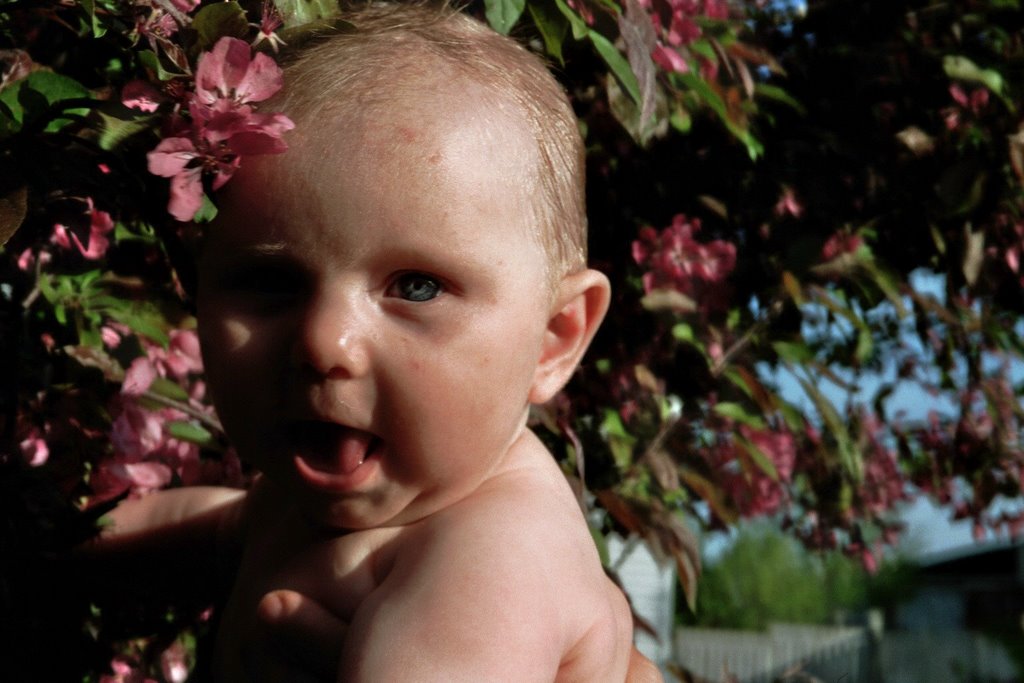 Rob kept asking if I was okay! Dude! Not! With Huey, he had been in such a bad position, that I never felt the contractions in the front, I only ever felt like someone was kicking me in the butt with steel toe boots. I don't recall transition at all with him. With Lucy, we were alone, and I thought I was just going into active labour. This time, I didn't know what the H*ll was going on.
At 4:15 they gave me a shot of Demerol. This relaxed me between contractions but then I was unprepared for the onset of the contraction. I wanted up, but couldn't even open my eyes. If they had gotten me up/out of bed right after my water had been broken, I would have been better able to deal with it and focus, but the nurses were too busy chatting, and really, it all happened so fast, I don't think anyone really knew it was going to go like that.

At 4:30 I felt the urge to push, but they had me hold off for a few more minutes. I was a little uncomfortable in the position but I knew there was no other option there. I remember thinking that no one was helping me with the pushing. I had said I didn't want a cheering squad counting down from 10 with each contraction, but I really felt like I wasn't doing it 'right'. In the past, I had thought that women who scream during pushing were just not 'focused', but here's what happened with me.
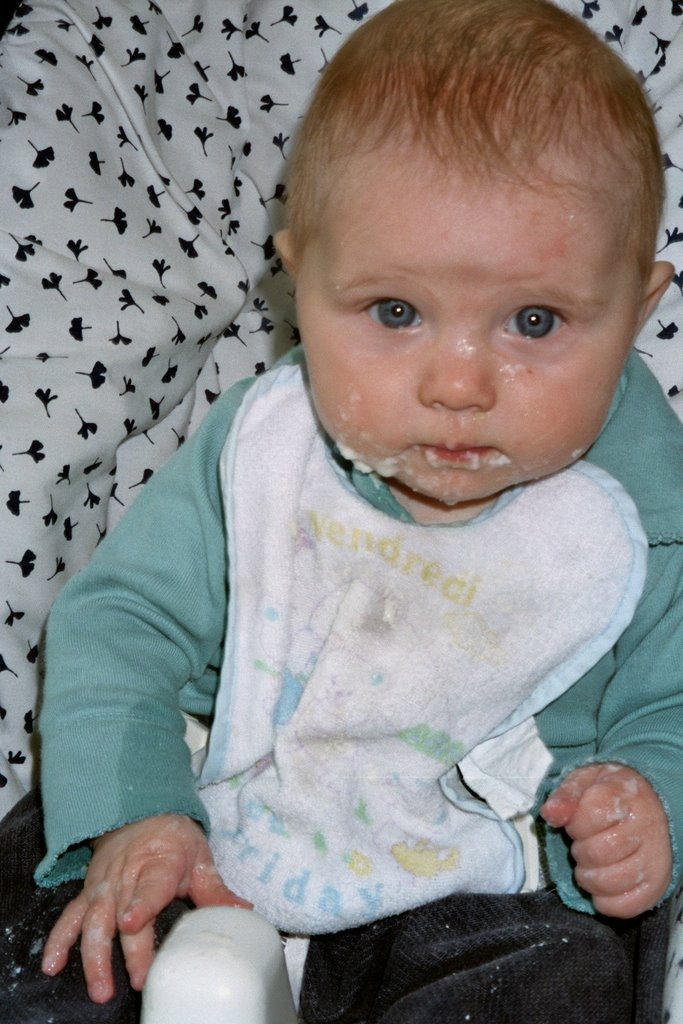 The Demerol made me loopy and spaced out. Then SMACK a contraction. Took a few moments to clue in and focus. At the end of the contraction, that focused energy has to go somewhere. Hence, the end of contraction yell. There still wasn't "pain" but a whole heck of a lot of pressure, LOL. I remember putting my hand down there to apply some counterpressure, but was pushed out of the way.
Megan Anne popped out at 4:47pm. She was only 6lb 9oz. So tiny!!
Once again, immediate relief and recovery! But I was so shocked she was a girl! I kept saying it over and over again "It's a girl? I had a girl?" Sometimes now, I'm still surprised, LOL. Especially since in the early days, she looked exactly like Huey!
The doctor said I needed an IV and I said no, why now? But he insisted. The nurse couldn't get it in and he took over, putting it in my right hand. I couldn't bend my hand to eat dinner! The next day though I had a huge bruise on my left hand that took awhile to disappear.
When Rob phoned home, apparently Huey was not too thrilled to hear it was a girl. But when Grandma and Grandad brought him (and Lucy) to the hospital...the look of absolute adoration on his face was priceless. He was smitten! I think he was mostly happy to know that it wasn't another 'Lucy' to wreck his stuff, that this little bundle was not at all what he thought a 'new baby' was going to be :)

It was fairly quiet at the hospital, but I was surprised at the treatment I got (or, rather, didn't' get) by the nurses. With the other births, I had been told to ask for help before getting out of bed the first time. So, by the time the IV bag was empty, I needed to go to the bathroom. The nurse seemed ticked off--she asked if I was dizzy or lightheaded, and I said no. She asked "So why do you need help?" Ummm...because the IV is empty, and I was told previously to ask for help. The other times, the nurses were great helping with the post-baby ....maternal accessories, LOL. This time, she pretty much just turned on the light!
I don't remember with which baby it was (Lucy or Megan), but I was holding her in the rocking chair, in the dark, with the door open. Just relaxing. This one nurse comes in, flips on the lights, and says "What are you doing in the dark? She could choke and turn blue and you wouldn't notice!". Ummmm...like, if I were asleep I would notice?

Megan was very sleepy, probably because of the Demerol so close to her birth. I didn't know what to do, LOL. I tried waking her up after two hours to feed, but she wouldn't. One nurse came in and said, just let her sleep. Going up to 4 hours once, would be fine. But I couldn't sleep because I figured she'd be up soon, LOL. Other nurses came in and were mad I hadn't filled out the 'eaten/pee/poop' sheet in enough detail. I had written 'about 5 minutes' for the nursing. She wanted to know exactly how long Megan had nursed. Exactly how wet was the diaper. The other nurses were like...you've done it before, just do what you need to.
After the nurse left to go sign in and hang up her coat, someone from finance/billing, came and pulled Rob to the door to discuss something about the insurance not covering the room. I was freaking, being left alone, and Rob was like "Do you not hear what's going on in here? My wife's about to give birth. Go away". LOL.
 My family doctor came in the morning and checked her out. Dr. C. came around lunch and said I could go home at 5pm--it had to be 24 hours after birth. It was so cold!
Because she was so calm/placid/sleepy I woke her every two hours to nurse. I never got too engorged (no pain this time) but man, did I leak :) The day after I got home though, all my pelvic joints were hurting. We went to IKEA and Megan had her first outing in her pouch. It was so nice, except for all the pain I was suddenly in. It's likely that the endorphins released during labour masked my arthritis pain and allowed my joints to be more flexible and moved too much. The pain I was having was different than the pregnancy arthritis pain, but I hadn't had it after Lucy's birth. It took awhile to feel 'back together'.
On the Monday after her birth we went to the family doctor's for a weigh in and she was actually up in weight. On Tuesday we went to the breastfeeding clinic and the nurses there noted she was quite jaundiced--which the doctor had said she wasn't. But there is a difference between 'breastmilk jaundice' and 'regular' jaundice. It took awhile for her yellowness to disappear.
Megan stayed very calm and non-responsive for a while. That's not to say she didn't cry! She just didn't respond to things like the stove buzzer, the dog barking, or dropped pot lids. We were concerned about her hearing, even though she had passed the tests. She loved her pouch, spending a lot of each day in it. Around 3 weeks she started with the reflux. Around 8 weeks, she 'woke up' and by 12 weeks was the typical newborn. She put on weight really well at the beginning, but by 5 months had slowed down. I never really did a 'naked baby' photo shoot because I kept waiting for her to get all chubby and round.

She weighed in just before her first birthday at 18lb 14 oz. Around 6 months the LC predicted 18lb at a year! The reflux had not totally gone away yet; it got really bad after starting solids, and gradually had become 'silent reflux' (or what adults call GERD--there's not much spit up, but it still happens). She had a really hard time adjusting to the new house, having a very early case of separation anxiety. She got two teeth around then, and about 2 months later, got 6 teeth in two weeks. On Tuesday I noticed the very start of her upper molars poking through. She's still breastfeeding, and thank god because she did not tolerate the milk trial!
 But with the reflux also comes frequent feedings and night wakings.
By 6 months we also noticed that her 'speech' was not hitting milestones, so by eight months she already had a visit with the Wee Talk program!
At 8 months she learned to crawl, and was up the stairs a week later. She started walking at 11 1/2 months. She was quietly persistent, more likely to give up than get frustrated but that all changed over the years. She wasn't a giggly baby, but she loved Huey. At a year she still didn't blow raspberries or wave bye bye, but could sign for milk...at least, I think she was signing for milk. Maybe she was waving bye-bye, LOL.
At thirteen months, she finally made her first self-initiated, sign. She went into the kitchen at my aunt's house, and there were about six dogs. She looked in amazement, and signed "more" LOL!
.JPG)
(this entry was originally written for her first birthday, so I've left it in, it's interesting to see what I was hoping for the next year!)
What does the next year hold? Hopefully more speech development. It'd be nice if one out of the three doesn't need speech therapy! We've never had a trip to the ER, so I expect that at some point, LOL. And hopefully she will start sleeping through the night as her reflux diminishes more :)
Monday, September 23, 2013
Hazardous Television
This was originally posted on Sept 22, 2006 on my knitting blog. I'm just moving posts over here so that my knitting blog is really a KNITTING blog :)
Is anyone else annoyed with "Bringing Home Baby" and "Baby Story" on TLC?
They should come with a disclaimer: "Following any/all of the parenting activities in this episode might put your baby in danger and play havoc with their health".
My big pet peeve: car seat safety. I know 8 out of 10 car seats are installed incorrectly. But if you watch "Bringing Home Baby" you might see more than 8 out of 10. For the past two days, both episodes showed the infant car seat in wrong for the trip home from the hospital. Primarily, they left the handle up. Don't people read the instruction books? What about the stickers that are right there, ON the car seat: "The handle must be in the DOWN position when used in a vehicle" or "The arrow must point this way when used in a vehicle" and if it's that way, the handle is down. On Wednesday, the mother was sitting RIGHT beside her baby in the backseat. Didn't she wonder what all the different stickers say? The handle was UP. The scary thing is....this mother is a lawyer! DOH! I also see chest clips too low, babies in snowsuits or swaddled under the straps, and convertible seats facing the rear that are not reclined enough. Argh.
But my BIGGEST pet peeve....the bottle feeding! The new episodes show a baby being bottlefed in the opening title sequence. So you see it in every episode. The statistics are now that just over 70% of newborns are breastfed. Bottle feeding is not only the un-normal, but also the uncommon, way to feed an infant. So why is it portrayed on TV as the "normal" way to feed?
So often the 'excuses' the mothers give are lame, indicating a lack of education or dedication: "My milk hasn't come in" (no one's milk has come in by day 2), "He's got a bit of jaundice" (giving a bottle of bovine breastmilk isn't the cure--more nursing or bili blankets work better), "Daddy wants to feed him too" (if Daddy works full time, how many feedings does that mean he can actually do? Out of 10 feedings, he might be around for 4---mainly middle of the night--not the greatest bonding time. Ever heard of a breast pump?). "It's not easy to breastfeed" (but it's not easy having kids with allergies, ear infections, asthma, diabetes, lower IQ, and cancer---and don't forget the increased chances of SIDS). Not to mention the increased cancer risks and other health issues to mom by bottle feeding.
There is no substitution for human milk. Formula (bovine breast milk, essentially) is more suited to feeding orphaned cows than it is for feeding human babies. Formula is so not the optional food for babies, that the World Health Organization lists it as the fourth option. It is better to have donated human milk than to use formula. There are human milk banks opening up in many places and mothers are willing to pay huge amounts to feed their babies with the food that the baby's body is designed to consume. There are Yahoo groups for women with milk to share, and parents looking for human milk. There are mothers that induce lactation to feed their adopted baby, or in one case I know--she induced lactation after nine years (that's years, not a typo) for her ex partner's newborn. Now that's love!
Now, I know there are some women who are going to cry "I tried, but it wasn't easy" or "I have to work" or "He didn't take to it" or "Bottles are more convenient". Those that get the most defensive about their position are usually suffering from hidden guilt. Having guilt means that you know, deep down, that you didn't do the right thing; make enough of an effort. Guilt is different from regret or remorse. You may feel regret that you didn't breastfeed, but not guilty. And that's fine! If you have that defensiveness/guilt and have any more children, then that guilt might be a good thing actually. If you really tried--consulted LCs, BF clinics, books, videos, used pumps, herbs, prescription medication, etc--and it still wasn't successful, then you shouldn't have any guilt (but unfortunately too many mothers have guilt about everything). For an awesome article on guilt and breastfeeding, check out 'Rev Jan's' website. However, we must keep in mind that each mom's level of "tried everything" is different. You can't try everything if you don't know about something. Making a mom feel bad because she didn't know about More Milk cookies, isn't helpful. Yes, even with the internet, a mom may not learn everything, nor be comfortable with trying everything, nor even have access (or support) to try everything. My "everything" may not be your "everything"....but is there a minimal "everything" that all moms should try?
My personal opinion, through 7 years of research and practice: Newborns under 6 weeks should only receive formula if there is a medical issue. Infants under six months should only receive formula under the guidance of a doctor. Free samples of formula at hospitals should be banned (some hospitals have made great gains in this area). Nestle and Enfamil (and any other company that has infractions) should be held accountable for breaking the WHO Breastfeeding protocol that they signed. Currently there is no punishment if a formula company signs and then does what they please anyway! Every workplace should have 'pumping rooms' like at Starbucks' head office. Doctors should go over the 100 reasons to breastfeed with a pregnant mom before delivery. The US program WIC (Women, Infants & Children) should not provide formula for babies under 2 months and should increase their support of breastfeeding. Over half of the formula sold in the United States is through the WIC program. Guess who pays for WIC? Taxpayers of course. New research into the "virgin gut" indicates that babies should have only breastmilk for the first 6 months, and that even powdered formula is not a good option because it's not sterile. Formula should go back to being the emergency food it was originally intended for. Our want of convenience is causing a health crisis.
The 70%+ breastfeeding rate is better than it was 20 years ago. But it should be higher, to match the number of women that can actually breastfeed, not just the ones that 'want' to breastfeed. However, much improvement needs to be made in sustaining this number over the first 6 months. It is currently recommend that babies receive nothing but human milk for the first 6 months, but only about 17% of babies are still breastfed at 6 months. That's lousy. Even my LC was surprised when I said I 'only' made it to 9 months with my first two. She thought it was awesome; I was disappointed.
So, I guess I can't call myself a 'closet lactivist' now, LOL.
Is anyone else annoyed with "Bringing Home Baby" and "Baby Story" on TLC?
They should come with a disclaimer: "Following any/all of the parenting activities in this episode might put your baby in danger and play havoc with their health".
My big pet peeve: car seat safety. I know 8 out of 10 car seats are installed incorrectly. But if you watch "Bringing Home Baby" you might see more than 8 out of 10. For the past two days, both episodes showed the infant car seat in wrong for the trip home from the hospital. Primarily, they left the handle up. Don't people read the instruction books? What about the stickers that are right there, ON the car seat: "The handle must be in the DOWN position when used in a vehicle" or "The arrow must point this way when used in a vehicle" and if it's that way, the handle is down. On Wednesday, the mother was sitting RIGHT beside her baby in the backseat. Didn't she wonder what all the different stickers say? The handle was UP. The scary thing is....this mother is a lawyer! DOH! I also see chest clips too low, babies in snowsuits or swaddled under the straps, and convertible seats facing the rear that are not reclined enough. Argh.
But my BIGGEST pet peeve....the bottle feeding! The new episodes show a baby being bottlefed in the opening title sequence. So you see it in every episode. The statistics are now that just over 70% of newborns are breastfed. Bottle feeding is not only the un-normal, but also the uncommon, way to feed an infant. So why is it portrayed on TV as the "normal" way to feed?
So often the 'excuses' the mothers give are lame, indicating a lack of education or dedication: "My milk hasn't come in" (no one's milk has come in by day 2), "He's got a bit of jaundice" (giving a bottle of bovine breastmilk isn't the cure--more nursing or bili blankets work better), "Daddy wants to feed him too" (if Daddy works full time, how many feedings does that mean he can actually do? Out of 10 feedings, he might be around for 4---mainly middle of the night--not the greatest bonding time. Ever heard of a breast pump?). "It's not easy to breastfeed" (but it's not easy having kids with allergies, ear infections, asthma, diabetes, lower IQ, and cancer---and don't forget the increased chances of SIDS). Not to mention the increased cancer risks and other health issues to mom by bottle feeding.
There is no substitution for human milk. Formula (bovine breast milk, essentially) is more suited to feeding orphaned cows than it is for feeding human babies. Formula is so not the optional food for babies, that the World Health Organization lists it as the fourth option. It is better to have donated human milk than to use formula. There are human milk banks opening up in many places and mothers are willing to pay huge amounts to feed their babies with the food that the baby's body is designed to consume. There are Yahoo groups for women with milk to share, and parents looking for human milk. There are mothers that induce lactation to feed their adopted baby, or in one case I know--she induced lactation after nine years (that's years, not a typo) for her ex partner's newborn. Now that's love!
Now, I know there are some women who are going to cry "I tried, but it wasn't easy" or "I have to work" or "He didn't take to it" or "Bottles are more convenient". Those that get the most defensive about their position are usually suffering from hidden guilt. Having guilt means that you know, deep down, that you didn't do the right thing; make enough of an effort. Guilt is different from regret or remorse. You may feel regret that you didn't breastfeed, but not guilty. And that's fine! If you have that defensiveness/guilt and have any more children, then that guilt might be a good thing actually. If you really tried--consulted LCs, BF clinics, books, videos, used pumps, herbs, prescription medication, etc--and it still wasn't successful, then you shouldn't have any guilt (but unfortunately too many mothers have guilt about everything). For an awesome article on guilt and breastfeeding, check out 'Rev Jan's' website. However, we must keep in mind that each mom's level of "tried everything" is different. You can't try everything if you don't know about something. Making a mom feel bad because she didn't know about More Milk cookies, isn't helpful. Yes, even with the internet, a mom may not learn everything, nor be comfortable with trying everything, nor even have access (or support) to try everything. My "everything" may not be your "everything"....but is there a minimal "everything" that all moms should try?
My personal opinion, through 7 years of research and practice: Newborns under 6 weeks should only receive formula if there is a medical issue. Infants under six months should only receive formula under the guidance of a doctor. Free samples of formula at hospitals should be banned (some hospitals have made great gains in this area). Nestle and Enfamil (and any other company that has infractions) should be held accountable for breaking the WHO Breastfeeding protocol that they signed. Currently there is no punishment if a formula company signs and then does what they please anyway! Every workplace should have 'pumping rooms' like at Starbucks' head office. Doctors should go over the 100 reasons to breastfeed with a pregnant mom before delivery. The US program WIC (Women, Infants & Children) should not provide formula for babies under 2 months and should increase their support of breastfeeding. Over half of the formula sold in the United States is through the WIC program. Guess who pays for WIC? Taxpayers of course. New research into the "virgin gut" indicates that babies should have only breastmilk for the first 6 months, and that even powdered formula is not a good option because it's not sterile. Formula should go back to being the emergency food it was originally intended for. Our want of convenience is causing a health crisis.
The 70%+ breastfeeding rate is better than it was 20 years ago. But it should be higher, to match the number of women that can actually breastfeed, not just the ones that 'want' to breastfeed. However, much improvement needs to be made in sustaining this number over the first 6 months. It is currently recommend that babies receive nothing but human milk for the first 6 months, but only about 17% of babies are still breastfed at 6 months. That's lousy. Even my LC was surprised when I said I 'only' made it to 9 months with my first two. She thought it was awesome; I was disappointed.
So, I guess I can't call myself a 'closet lactivist' now, LOL.
Sunday, September 22, 2013
NINO Graduates!
I posted this on August 18, 2006 on my other blog, which at that time, was my only blog and covered all my life, not just knitting/crafting. I'm moving posts to here in an attempt to clean up that blog and re-focus it on knitting :)
Not El Nino (although for Megan, it would be El Nina I think). Nine In, Nine Out. It's an organization/movement promoting a calm, baby-led transition from womb to world. Fuelled by the Attachment Parenting beliefs of Dr. Sears and The Happiest Baby on the Block guru, Dr. Harvey Karp, NINO is sort of the public side of attachment parenting (AP). Babywearing and breastfeeding are the two biggies. We flunked at co-sleeping.
Megan is now 9 months old. Although she is (mostly) an 'easy' baby, she is impatient. She (still) has reflux. She got 5 teeth in under two weeks. She nurses every two hours...at night only. It has been a very challenging 9 months. If she were my only baby, it wouldn't have been too bad. But she's the baby of the troop and the other soldiers want to commit a mutiny.
When you're young, say, in university, sleeplessness is no issue. Two weeks of exams and all nighters? No problem, you've got lots of time to sleep in. But the sleeplessness of a baby is different. This type of sleeplessness is so invasive to your daily life. My eyes hurt. I pour water in my mug...and see I forgot to put in the Nescafe Frothy mix first. I cook dinner and realize I forgot the veggies. I walk into things (more than usual), I can't add, or multiply (so important for knitting), and working the microwave suddenly needs a university degree.
Five hours of sleep may be enough when it happens all at once, but when it happens in 90 minute chunks, your body starts to complain. Despite not having grown (height wise) in over 20 years, growth hormones are still released while you sleep, to fix the miniscule muscle tears of daily living. But, these hormones are released during the deep sleep portion of the night, which cycles about every 90 minutes. Do I need to say more?
Then, after the 3rd or 4th time of getting up, you go into insomnia mode. Your body, so exhausted, has forgotton how to hit the off button and go to sleep. You lay there thinking "I've GOT to get to sleep" but your brain is thinking "What luck that Classic Merino IS the same dye lot as last year's purchase. Enough to make that basketweave sweater from IK a few years back...but you don't want to hand wash something like that and you have no gentle cycle on the washer in the new house and he won't wear a knit sweater anyway and you don't know any other man you'd handknit something like that for maybe a pair of socks but before you start more socks you've got to finish the ones you've already started and perhaps finish the alligator you started LAST Aug and what colour are you going to paint your toenails cause you can't go to your cousin's weddding looking like a momma of 3, one who only sleeps two hours at the most and are you going to make meatballs or meatloaf with that 2lb beef tube in the fridge oh there's no evap. milk for meatloaf so it's meatballs or a casserole but it's nice out so you should bbq but ground beef falls through the grill and do you think anyone would take the Blue Cheese Hamburgers if I offer them on Freecycle..."
How do you know if you've been successful at the NINO principles? Where' s the check list? Do we get a cap and gown? Obviously, we're still nursing, cause getting up to make bottles during the night sucks (making bottles at anytime, sucks). We've started having some bottles now that she's on 'real' food. There's no way I'd ever WANT to feed my babies bovine breastmilk (formula) as their primary source of nutrition. Last I checked, I gave birth to a human, so I fed her human milk. But since she's eating just about anything (including orange beads, tree leaves, and cherry stems), then I'm okay with some formula. But not soy! Oy! Banned in Britain, should be banned here. We're still babywearing....the collection of carriers has grown...with more in the planning stages. So convenient when we go out, great at home when she's cranky. When she was a newborn, I couldn't understand how parents could leave their awake babies laying in bassinettes, playpens, etc when they're not even old enough to hold a rattle. Sure, a few minutes in the bouncy chair (the most basic one, no toy bar even) here and there...but most of the time she was in her pouch, quietly observing the world within the safe confines of fleece. I swear it helped make her my most social child (any baby could be more social than Lucy was). We don't swaddle anymore, but still do the shushing noise and swaying. I've been swaying so long I don't know if it ever leaves your subconscious. You SEE a baby and start to sway.
 One benefit of babywearing that I don't think NINO or Dr. Sears promotes is weight loss. At delivery, you instantly lose about 11-13 lbs of baby, placenta, and fluids. So that leaves another 10-15lbs of increased blood supply, edema, increased uterine muscle and pregnancy fluff. But...strap on a 7lb baby, and your body says "Oh, we suddenly weigh more. We've got to burn more calories!" A couple weeks later, you might have 8 lbs of pregnancy fluff to lose. You put the baby on, and suddenly you weigh 10lbs more and your body says "BURN those calories!". As the weeks go on, you might carry her a little less as she gets more adjusted to the world, so your body is surprised one morning when you strap on an extra 14lbs. You keep surprising your body with an increased weight load, even as your own body mass goes down. Add to that the need for perfect posture when picking things up while you babywear...squats galore! Lunge to the side instead of up and down! Step back and lunge! Feel the burn as you work that butt that usually just provides your cushion as you surf or nurse! Before you know it, you're at pre-pregnancy weight with great buns! But don't stop there....babywearing while exercising (or just babywearing FOR exercise) is fun, socializing, and incredibly effective!!
Has Megan adjusted calmly and favourably to the outside world? All I want is to curl up and not join the outside world for a few more months, LOL. But until I can knit while I sleep, I guess I'll get by somehow.
Megan is now 9 months old. Although she is (mostly) an 'easy' baby, she is impatient. She (still) has reflux. She got 5 teeth in under two weeks. She nurses every two hours...at night only. It has been a very challenging 9 months. If she were my only baby, it wouldn't have been too bad. But she's the baby of the troop and the other soldiers want to commit a mutiny.
When you're young, say, in university, sleeplessness is no issue. Two weeks of exams and all nighters? No problem, you've got lots of time to sleep in. But the sleeplessness of a baby is different. This type of sleeplessness is so invasive to your daily life. My eyes hurt. I pour water in my mug...and see I forgot to put in the Nescafe Frothy mix first. I cook dinner and realize I forgot the veggies. I walk into things (more than usual), I can't add, or multiply (so important for knitting), and working the microwave suddenly needs a university degree.
Five hours of sleep may be enough when it happens all at once, but when it happens in 90 minute chunks, your body starts to complain. Despite not having grown (height wise) in over 20 years, growth hormones are still released while you sleep, to fix the miniscule muscle tears of daily living. But, these hormones are released during the deep sleep portion of the night, which cycles about every 90 minutes. Do I need to say more?
Then, after the 3rd or 4th time of getting up, you go into insomnia mode. Your body, so exhausted, has forgotton how to hit the off button and go to sleep. You lay there thinking "I've GOT to get to sleep" but your brain is thinking "What luck that Classic Merino IS the same dye lot as last year's purchase. Enough to make that basketweave sweater from IK a few years back...but you don't want to hand wash something like that and you have no gentle cycle on the washer in the new house and he won't wear a knit sweater anyway and you don't know any other man you'd handknit something like that for maybe a pair of socks but before you start more socks you've got to finish the ones you've already started and perhaps finish the alligator you started LAST Aug and what colour are you going to paint your toenails cause you can't go to your cousin's weddding looking like a momma of 3, one who only sleeps two hours at the most and are you going to make meatballs or meatloaf with that 2lb beef tube in the fridge oh there's no evap. milk for meatloaf so it's meatballs or a casserole but it's nice out so you should bbq but ground beef falls through the grill and do you think anyone would take the Blue Cheese Hamburgers if I offer them on Freecycle..."
How do you know if you've been successful at the NINO principles? Where' s the check list? Do we get a cap and gown? Obviously, we're still nursing, cause getting up to make bottles during the night sucks (making bottles at anytime, sucks). We've started having some bottles now that she's on 'real' food. There's no way I'd ever WANT to feed my babies bovine breastmilk (formula) as their primary source of nutrition. Last I checked, I gave birth to a human, so I fed her human milk. But since she's eating just about anything (including orange beads, tree leaves, and cherry stems), then I'm okay with some formula. But not soy! Oy! Banned in Britain, should be banned here. We're still babywearing....the collection of carriers has grown...with more in the planning stages. So convenient when we go out, great at home when she's cranky. When she was a newborn, I couldn't understand how parents could leave their awake babies laying in bassinettes, playpens, etc when they're not even old enough to hold a rattle. Sure, a few minutes in the bouncy chair (the most basic one, no toy bar even) here and there...but most of the time she was in her pouch, quietly observing the world within the safe confines of fleece. I swear it helped make her my most social child (any baby could be more social than Lucy was). We don't swaddle anymore, but still do the shushing noise and swaying. I've been swaying so long I don't know if it ever leaves your subconscious. You SEE a baby and start to sway.
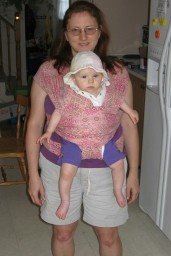 One benefit of babywearing that I don't think NINO or Dr. Sears promotes is weight loss. At delivery, you instantly lose about 11-13 lbs of baby, placenta, and fluids. So that leaves another 10-15lbs of increased blood supply, edema, increased uterine muscle and pregnancy fluff. But...strap on a 7lb baby, and your body says "Oh, we suddenly weigh more. We've got to burn more calories!" A couple weeks later, you might have 8 lbs of pregnancy fluff to lose. You put the baby on, and suddenly you weigh 10lbs more and your body says "BURN those calories!". As the weeks go on, you might carry her a little less as she gets more adjusted to the world, so your body is surprised one morning when you strap on an extra 14lbs. You keep surprising your body with an increased weight load, even as your own body mass goes down. Add to that the need for perfect posture when picking things up while you babywear...squats galore! Lunge to the side instead of up and down! Step back and lunge! Feel the burn as you work that butt that usually just provides your cushion as you surf or nurse! Before you know it, you're at pre-pregnancy weight with great buns! But don't stop there....babywearing while exercising (or just babywearing FOR exercise) is fun, socializing, and incredibly effective!!
Has Megan adjusted calmly and favourably to the outside world? All I want is to curl up and not join the outside world for a few more months, LOL. But until I can knit while I sleep, I guess I'll get by somehow.
Thursday, July 7, 2011
Hazardous Television
Is anyone else annoyed with "Bringing Home Baby" and "Baby Story" on TLC?
They should come with a disclaimer: "Following any/all of the parenting activities in this episode might put your baby in danger and play havoc with their health".
My big pet peeve: car seat safety. I know 8 out of 10 car seats are installed incorrectly. But if you watch "Bringing Home Baby" you might see more than 8 out of 10. For the past two days, both episodes showed the infant car seat in wrong for the trip home from the hospital. Primarily, they left the handle up. Don't people read the instruction books? What about the stickers that are right there, ON the car seat: "The handle must be in the DOWN position when used in a vehicle" or "The arrow must point this way when used in a vehicle" and if it's that way, the handle is down. On Wednesday, the mother was sitting RIGHT beside her baby in the backseat. Didn't she wonder what all the different stickers say? The handle was UP. The scary thing is....this mother is a lawyer! DOH! I also see chest clips too low, babies in snowsuits or swaddled under the straps, and convertible seats facing the rear that are not reclined enough. Argh.
But my BIGGEST pet peeve....the bottle feeding! The new episodes show a baby being bottlefed in the opening title sequence. So you see it every episode. The statistics are now that just over 70% of newborns are breastfed. Bottle feeding is not only the un-normal, but the uncommon, way to feed an infant. I wish it was even more uncommon. So often the 'excuses' the mothers give are insane: "My milk hasn't come in" (no one's milk has come in by day 2), "He's got a bit of jaundice" (giving a bottle of bovine breastmilk isn't the cure--more nursing or bili blankets work better), "Daddy wants to feed him too" (if Daddy works full time, how many feedings does that mean he can actually do? Out of 10 feedings, he might be around for 4---mainly middle of the night--not the greatest bonding time. Ever heard of a breast pump?). "It's not easy to breastfeed" (but it's not easy having kids with allergies, ear infections, asthma, diabetes, lower IQ, and cancer---and don't forget the increased chances of SIDS). Not to mention the increased cancer risks and other health issues to mom by bottle feeding.
There is no substitution for human milk. Formula (bovine breast milk, or from soy plants...the same as what oil and margarine is made from) is more suited to feeding orphaned cows than it is for feeding human babies. Formula is so not the optional food for babies, that the World Health Organization lists it as the fourth option. It is better to have donated human milk than to use formula. There are human milk banks opening up in many places and mothers are willing to pay huge amounts to feed their babies with the food that the baby's body is designed to consume. There are Yahoo groups for women with milk to share, and parents looking for human milk. There are mothers that induce lactation to feed their adopted baby, or in one case I know--she induced lactation after nine years (that's years, not a typo) for her ex partner's newborn. Now that's love!
Now, I know there are some women who are going to cry "I tried, but it wasn't easy" or "I have to work" or "He didn't take to it" or "Bottles are more convenient". Those that get the most defensive about their position are usually suffering from hidden guilt. Having guilt means that you know, deep down, that you didn't do the right thing; make enough of an effort. And if you have that defensiveness/guilt and have any more children, then that guilt might be a good thing actually. If you really tried--consulted LCs, BF clinics, books, videos, used pumps, herbs, prescription medication, etc--and it still wasn't successful, then you shouldn't have any guilt, just sadness or disappointment (but unfortunately too many mothers have guilt about everything). For an awesome article on guilt and breastfeeding, check out 'Rev Jan's' website.
My personal opinion, through 11 years of research and practice: Newborns under 6 weeks should only receive formula if there is a medical issue (loss of mother, losing more than 10% of birthweight, or not regaining weight; not because of slight jaundice or elevated sugar levels). Infants under six months should only receive formula under the guidance of a doctor, perhaps with a prescription needed. Breast pumps should replace free formula samples at hospital discharge. Nestle and Enfamil (and any other company that has infractions) should be held accountable for breaking the WHO Breastfeeding protocol that they signed. Currently there is no punishment if a formula company signs and then does what they please anyway! Every workplace should have 'pumping rooms' like at Starbucks' head office. Doctors should go over the 100 reasons to breastfeed with a pregnant mom before delivery. The US program WIC (Women, Infants & Children) should not provide formula for babies under 2 months and should increase their support of breastfeeding. Over half of the formula sold in the United States is through the WIC program. Guess who pays for WIC? Taxpayers of course. Breastfeeding should be shown in advertising and other media aimed at new moms, (and not just formula ads) showing the natural, normal way to feed infants (how often do you see breastfeeding on a soap? Or other family drama/comedy show?!)
The 70%+ breastfeeding rate is better than it was 20 years ago. But it should be higher, to match the number of women that can actually breastfeed, not just the ones that 'want' to breastfeed. However, much improvement needs to be made in sustaining this number over the first 6 months. It is currently recommend that babies receive nothing but human milk for the first 6 months, but only about 17% of babies are still breastfed at 6 months. That's lousy. Even my LC was surprised when I said I 'only' made it to 9 months with my first two. She thought it was awesome; I was disappointed.
So, I guess I can't call myself a 'closet lactivist' now, LOL.
BTW---human milk is the best food for babies, but while the WHO indicates that breastfeeding maybe the preferred method of getting it in the baby, the second option is expressed human milk (and the third best infant food is donated human milk). So, I'm not trying to ignore those brave, dedicated women (Monkey!) who use mainly expressed human milk, it's just a lot to type, LOL.
They should come with a disclaimer: "Following any/all of the parenting activities in this episode might put your baby in danger and play havoc with their health".
My big pet peeve: car seat safety. I know 8 out of 10 car seats are installed incorrectly. But if you watch "Bringing Home Baby" you might see more than 8 out of 10. For the past two days, both episodes showed the infant car seat in wrong for the trip home from the hospital. Primarily, they left the handle up. Don't people read the instruction books? What about the stickers that are right there, ON the car seat: "The handle must be in the DOWN position when used in a vehicle" or "The arrow must point this way when used in a vehicle" and if it's that way, the handle is down. On Wednesday, the mother was sitting RIGHT beside her baby in the backseat. Didn't she wonder what all the different stickers say? The handle was UP. The scary thing is....this mother is a lawyer! DOH! I also see chest clips too low, babies in snowsuits or swaddled under the straps, and convertible seats facing the rear that are not reclined enough. Argh.
But my BIGGEST pet peeve....the bottle feeding! The new episodes show a baby being bottlefed in the opening title sequence. So you see it every episode. The statistics are now that just over 70% of newborns are breastfed. Bottle feeding is not only the un-normal, but the uncommon, way to feed an infant. I wish it was even more uncommon. So often the 'excuses' the mothers give are insane: "My milk hasn't come in" (no one's milk has come in by day 2), "He's got a bit of jaundice" (giving a bottle of bovine breastmilk isn't the cure--more nursing or bili blankets work better), "Daddy wants to feed him too" (if Daddy works full time, how many feedings does that mean he can actually do? Out of 10 feedings, he might be around for 4---mainly middle of the night--not the greatest bonding time. Ever heard of a breast pump?). "It's not easy to breastfeed" (but it's not easy having kids with allergies, ear infections, asthma, diabetes, lower IQ, and cancer---and don't forget the increased chances of SIDS). Not to mention the increased cancer risks and other health issues to mom by bottle feeding.
There is no substitution for human milk. Formula (bovine breast milk, or from soy plants...the same as what oil and margarine is made from) is more suited to feeding orphaned cows than it is for feeding human babies. Formula is so not the optional food for babies, that the World Health Organization lists it as the fourth option. It is better to have donated human milk than to use formula. There are human milk banks opening up in many places and mothers are willing to pay huge amounts to feed their babies with the food that the baby's body is designed to consume. There are Yahoo groups for women with milk to share, and parents looking for human milk. There are mothers that induce lactation to feed their adopted baby, or in one case I know--she induced lactation after nine years (that's years, not a typo) for her ex partner's newborn. Now that's love!
Now, I know there are some women who are going to cry "I tried, but it wasn't easy" or "I have to work" or "He didn't take to it" or "Bottles are more convenient". Those that get the most defensive about their position are usually suffering from hidden guilt. Having guilt means that you know, deep down, that you didn't do the right thing; make enough of an effort. And if you have that defensiveness/guilt and have any more children, then that guilt might be a good thing actually. If you really tried--consulted LCs, BF clinics, books, videos, used pumps, herbs, prescription medication, etc--and it still wasn't successful, then you shouldn't have any guilt, just sadness or disappointment (but unfortunately too many mothers have guilt about everything). For an awesome article on guilt and breastfeeding, check out 'Rev Jan's' website.
My personal opinion, through 11 years of research and practice: Newborns under 6 weeks should only receive formula if there is a medical issue (loss of mother, losing more than 10% of birthweight, or not regaining weight; not because of slight jaundice or elevated sugar levels). Infants under six months should only receive formula under the guidance of a doctor, perhaps with a prescription needed. Breast pumps should replace free formula samples at hospital discharge. Nestle and Enfamil (and any other company that has infractions) should be held accountable for breaking the WHO Breastfeeding protocol that they signed. Currently there is no punishment if a formula company signs and then does what they please anyway! Every workplace should have 'pumping rooms' like at Starbucks' head office. Doctors should go over the 100 reasons to breastfeed with a pregnant mom before delivery. The US program WIC (Women, Infants & Children) should not provide formula for babies under 2 months and should increase their support of breastfeeding. Over half of the formula sold in the United States is through the WIC program. Guess who pays for WIC? Taxpayers of course. Breastfeeding should be shown in advertising and other media aimed at new moms, (and not just formula ads) showing the natural, normal way to feed infants (how often do you see breastfeeding on a soap? Or other family drama/comedy show?!)
The 70%+ breastfeeding rate is better than it was 20 years ago. But it should be higher, to match the number of women that can actually breastfeed, not just the ones that 'want' to breastfeed. However, much improvement needs to be made in sustaining this number over the first 6 months. It is currently recommend that babies receive nothing but human milk for the first 6 months, but only about 17% of babies are still breastfed at 6 months. That's lousy. Even my LC was surprised when I said I 'only' made it to 9 months with my first two. She thought it was awesome; I was disappointed.
So, I guess I can't call myself a 'closet lactivist' now, LOL.
BTW---human milk is the best food for babies, but while the WHO indicates that breastfeeding maybe the preferred method of getting it in the baby, the second option is expressed human milk (and the third best infant food is donated human milk). So, I'm not trying to ignore those brave, dedicated women (Monkey!) who use mainly expressed human milk, it's just a lot to type, LOL.
Thursday, March 24, 2011
It's Okay to Sometimes Ignore the Doctor
Hugh and Lucy are home sick, so while they veg upstairs, I'm relegated to the basement. This means I'm forced to watch TV as it happens....which includes commercials (rather than watching what I record on the DVR). So, I'm flipping between Mighty Ships and Bringing Home Baby.
It's a first time mom. Her best friend visits, she has a toddler. You hear her ask the new mom if she can hear the baby swallow, which is answered with a yes, and the friend replies that that means he's getting milk. The next day, the mom goes for the baby's check up, and comes home with instructions to supplement "a little, 20z" because her milk is slow in coming in.
WAIT!! Giving a bottle will mean your body isn't going to be told that it NEEDS to make milk! Your body is going to think "oh, I should slow down a little, there's no demand". Nursing MORE will increase your milk. You might say "oh, but baby is still hungry an hour after I nursed". Then nurse again! You might say "I nursed for 15 minutes and he's still fussy". Then burp, and change breasts and nurse some more! If, after that, baby still seems hungry, then offer supplementation, but by finger feeding or, even better, by a supplemental nursing system so baby is still nursing and the body gets the message it's got to step it up. Leaving baby with grandma and a bottle while you go to do laundry is NOT going to increase your milk supply. Why is it so hard for doctors to understand that? Oh yeah....a pediatrician is not an expert in normal infant feeding needs, or breastfeeding. Duh. That's like going to see the dentist because you have a stomach ache, and gee, the food starts off in your mouth.
See a lactation consultant for lactating troubles. They're the experts.
It's a first time mom. Her best friend visits, she has a toddler. You hear her ask the new mom if she can hear the baby swallow, which is answered with a yes, and the friend replies that that means he's getting milk. The next day, the mom goes for the baby's check up, and comes home with instructions to supplement "a little, 20z" because her milk is slow in coming in.
WAIT!! Giving a bottle will mean your body isn't going to be told that it NEEDS to make milk! Your body is going to think "oh, I should slow down a little, there's no demand". Nursing MORE will increase your milk. You might say "oh, but baby is still hungry an hour after I nursed". Then nurse again! You might say "I nursed for 15 minutes and he's still fussy". Then burp, and change breasts and nurse some more! If, after that, baby still seems hungry, then offer supplementation, but by finger feeding or, even better, by a supplemental nursing system so baby is still nursing and the body gets the message it's got to step it up. Leaving baby with grandma and a bottle while you go to do laundry is NOT going to increase your milk supply. Why is it so hard for doctors to understand that? Oh yeah....a pediatrician is not an expert in normal infant feeding needs, or breastfeeding. Duh. That's like going to see the dentist because you have a stomach ache, and gee, the food starts off in your mouth.
See a lactation consultant for lactating troubles. They're the experts.
Monday, March 21, 2011
Robin!
Yes, we saw a robin last week. But that's not what this is about!
When Rob and I moved to Orangeville, Dec. 1997, we figured we'd be there 5 years. Most people in similar jobs where Rob worked left (or were asked to leave) by five years. We thought Orangeville was a nice town, but worried that there wouldn't be the same opportunities for our children as back in our larger home town/city. We were very wrong---it was the small townness that gave our children the opportunities to have the best start in life they could have.
Hugh was born June 3 2000 and it was a hot, sticky summer. I knew early on that there was something "different" about Hugh. He always wanted to be held, and to be moving, and he rarely slept. During that first frustrating summer, I visited the breastfeeding clinic, not so much for breastfeeding help, but thinking maybe I was doing something wrong that made it hard for him to sleep. We stripped him down, weighed him, and I sat in one of the comfy chairs. He didn't want to nurse, but within minutes he was asleep. And stayed asleep for over an hour. The nurses were great, and suggested that it might be the heat bothering him and I could come back anytime I wanted to get relief from the heat and let him nap.
In December 2002, I had six week old Lucy and was running on empty. I called Public Health asking for a home visit by a LC to get help with nursing laying down. An angel named Robin Berger came to my home just before Christmas. Hugh was 2 1/2 at the time and tried desperately to get some attention from Robin, LOL. Near the end of the visit, she said something that changed the course of our lives. She noted that although it wasn't her area of expertise, she felt that Hugh wasn't meeting speech milestones for a 2 1/2 year old. She suggested we call "Wee Talk" and get him assessed. We had been on the fence for a few months, as he comes from a family of late talkers. I think Robin saw my hesitation and lack of energy, because the next week, I got a call from Wee Talk! But that's not the end of Robin's involvement in our life!
Over the next 8 months we went for many assessments. At some point, one of his check ups was done by a young, pregnant, SLP. I wish I knew her name! At the end of the visit, she asked me about some of Hugh's behaviours, and asked me if I knew about Sensory Integration Dysfunction. I nearly kissed her! I told her that I had heard of it, and felt that it was the issue, but got no help from the doctor. She got in touch with the community agency that deals with this sort of thing and before long, a caseworker came to see us. She agreed that he'd benefit by seeing an occupational therapist and we got that started. After several months of visits by the OT, she recommended that we get in touch with Family and Children Services and see if Hugh qualified for "Infant and Child Development" program. Our caseworker for that was the wonderful Nina Little. Within a few months, Nina recommended that I come take a workshop at the Ontario Early Years Center, called "Raising Children with Challenging Temperments". And her co-coach was none other than Robin Berger! But in this small town, life doesn't just go in circles, it's more like figure eights, LOL.
At some point, probably while going for the Wee Talk assessments, I ran into Robin at the public health unit. I mentioned to her that I was disappointed that I hadn't met my "one year" goal of breastfeeding the two kids. She was compassionate and understanding, and expressed to me that ANY amount of breastfeeding should be celebrated, rather than feeling bad about the amount that wasn't spent breastfeeding. And that maybe, if there's a next time, it might be different. I felt validated and supported, even though I thought I would have "let her down" by not reaching "industry" goals. That left a good impression on me, much more than the moms who said I "should have" kept nursing if I had "wanted" to make it to a year.
My third child, Meg, was born in November 2005, and like while I was in labour with Lucy, I visited the breastfeeding clinic. It was great to see familiar faces there. I would see much more of Robin over the next year, as Meg had reflux and slow weight gain. Despite being an experienced nurser, LOL, I always felt welcomed in the clinic, and GREATLY appreciated Robin's home visits with the scale as Lucy was not always the most co-operative big sister while at the clinic, LOL. When I felt like giving up, Robin gently pushed me to keep going, reminding me that while reflux is messy, it's not nearly as bad as formula reflux, and there'd be no guarantee that formula would "fix" her. She might have been small (compared to the other kids), but she was still benefiting.
Robin is a great example of how friendliness, compassion, empathy and real support can work much better than the techniques used by "nipple nazis". I hope she gets celebrated hugely at her retirement tea, as hugely as she celebrated nursing moms (and parents of kids with challenging temperments too!).
When Rob and I moved to Orangeville, Dec. 1997, we figured we'd be there 5 years. Most people in similar jobs where Rob worked left (or were asked to leave) by five years. We thought Orangeville was a nice town, but worried that there wouldn't be the same opportunities for our children as back in our larger home town/city. We were very wrong---it was the small townness that gave our children the opportunities to have the best start in life they could have.
Hugh was born June 3 2000 and it was a hot, sticky summer. I knew early on that there was something "different" about Hugh. He always wanted to be held, and to be moving, and he rarely slept. During that first frustrating summer, I visited the breastfeeding clinic, not so much for breastfeeding help, but thinking maybe I was doing something wrong that made it hard for him to sleep. We stripped him down, weighed him, and I sat in one of the comfy chairs. He didn't want to nurse, but within minutes he was asleep. And stayed asleep for over an hour. The nurses were great, and suggested that it might be the heat bothering him and I could come back anytime I wanted to get relief from the heat and let him nap.
In December 2002, I had six week old Lucy and was running on empty. I called Public Health asking for a home visit by a LC to get help with nursing laying down. An angel named Robin Berger came to my home just before Christmas. Hugh was 2 1/2 at the time and tried desperately to get some attention from Robin, LOL. Near the end of the visit, she said something that changed the course of our lives. She noted that although it wasn't her area of expertise, she felt that Hugh wasn't meeting speech milestones for a 2 1/2 year old. She suggested we call "Wee Talk" and get him assessed. We had been on the fence for a few months, as he comes from a family of late talkers. I think Robin saw my hesitation and lack of energy, because the next week, I got a call from Wee Talk! But that's not the end of Robin's involvement in our life!
Over the next 8 months we went for many assessments. At some point, one of his check ups was done by a young, pregnant, SLP. I wish I knew her name! At the end of the visit, she asked me about some of Hugh's behaviours, and asked me if I knew about Sensory Integration Dysfunction. I nearly kissed her! I told her that I had heard of it, and felt that it was the issue, but got no help from the doctor. She got in touch with the community agency that deals with this sort of thing and before long, a caseworker came to see us. She agreed that he'd benefit by seeing an occupational therapist and we got that started. After several months of visits by the OT, she recommended that we get in touch with Family and Children Services and see if Hugh qualified for "Infant and Child Development" program. Our caseworker for that was the wonderful Nina Little. Within a few months, Nina recommended that I come take a workshop at the Ontario Early Years Center, called "Raising Children with Challenging Temperments". And her co-coach was none other than Robin Berger! But in this small town, life doesn't just go in circles, it's more like figure eights, LOL.
At some point, probably while going for the Wee Talk assessments, I ran into Robin at the public health unit. I mentioned to her that I was disappointed that I hadn't met my "one year" goal of breastfeeding the two kids. She was compassionate and understanding, and expressed to me that ANY amount of breastfeeding should be celebrated, rather than feeling bad about the amount that wasn't spent breastfeeding. And that maybe, if there's a next time, it might be different. I felt validated and supported, even though I thought I would have "let her down" by not reaching "industry" goals. That left a good impression on me, much more than the moms who said I "should have" kept nursing if I had "wanted" to make it to a year.
My third child, Meg, was born in November 2005, and like while I was in labour with Lucy, I visited the breastfeeding clinic. It was great to see familiar faces there. I would see much more of Robin over the next year, as Meg had reflux and slow weight gain. Despite being an experienced nurser, LOL, I always felt welcomed in the clinic, and GREATLY appreciated Robin's home visits with the scale as Lucy was not always the most co-operative big sister while at the clinic, LOL. When I felt like giving up, Robin gently pushed me to keep going, reminding me that while reflux is messy, it's not nearly as bad as formula reflux, and there'd be no guarantee that formula would "fix" her. She might have been small (compared to the other kids), but she was still benefiting.
Robin is a great example of how friendliness, compassion, empathy and real support can work much better than the techniques used by "nipple nazis". I hope she gets celebrated hugely at her retirement tea, as hugely as she celebrated nursing moms (and parents of kids with challenging temperments too!).
Tuesday, December 14, 2010
Using Babies for Activism
I think it's great to parent with intention. Whatever your philosophy is, it's great to have a basis for your actions. I've talked about being a lazy parent---breastfeeding, babywearing, co-sleeping, etc. Those are principals of "Attachment Parenting" as well. I love to let other parents know that there is a name for this parenting, and all the ways that being a 'lazy' parent is actually good for your children. I know I've sort of brainwashed Meg about babywearing as she often mentions about seeing sad children in strollers and wants me to make a sling every time she sees a pregnant woman! LOL.
But I don't use my children to further the "AP" movement. Nor do I go around pushing it on others, I just try to let moms know there are other options out there. I have been reading a blog lately called "Peaceful Parenting" (I don't want to link directly to it, because I'm not interested in starting any sort of 'war'). I agree with most of her ideology....it's all good for our babies. Recently (Fri. Nov 12 2010), she posted pictures of clothes for babies and adults that they sell, with parenting activism slogans. Now, some of them I did think were funny! "Eat Local" with a graphic of a baby breastfeeding (graphic, as in drawing, not graphic as in real and up close).
But some of the shirts I just don't think are appropriate for children to wear. This one says : Breastfeeding, Sling-riding, sleep-sharing, intact Lucky Boy
This one says : Breastfeeding, Sling-riding, sleep-sharing, intact Lucky BoyReally. Why do you need to advertise all that on your child's shirt? Why isn't he IN a sling? If he were, you wouldn't be able to read all that. And what happens when he gets to be oh, 12 or 14 and his girlfriend is looking at his baby book....
Oh, wait. Here's one for older boys!
I don't need to know this about your child! As a teacher, what would I say if he came to school in this shirt? I know, nothing here is offensive, or perverted, or sexual....but still. It's one thing to share your beliefs when someone asks for them, but it's another thing to use your children to spread the word. How is another little boy who was formula fed, stroller stuffed, solitary slept, and circumcised going to feel? Unlucky? How will his mother feel? That might depend on if she cared about those things, but even if she hadn't cared one way or the other about co-sleeping or formula, etc, she still did what she felt was the right thing for her and this shirt implies that all other types of parenting are wrong and perhaps even damaging.
What I would love to see is a shirt that says "Ask my Momma why I'm so lucky" or "Ask my Momma how you can have a great babe like me!"
Wednesday, August 5, 2009
Not Sure Why We Still Need to Learn This
Is it crazy that World Breastfeeding Week was chosen as the week to introduce the first disposible, pre-filled, baby bottle? (I'm not 100% sure it was intro-ed last week, but it connects well). Hathor has a series of great articles and comics about it.
And to those that say no baby has died because they weren't breastfed? The WHO estimates that 1.5 MILLION children die each year because they were not adequately breastfed. How does Nestle think SELLING disposible bottles to already impoverished mothers is going to 'fix' that?
Human milk for human babies. It's so simple.
And to those that say no baby has died because they weren't breastfed? The WHO estimates that 1.5 MILLION children die each year because they were not adequately breastfed. How does Nestle think SELLING disposible bottles to already impoverished mothers is going to 'fix' that?
Human milk for human babies. It's so simple.
Friday, October 17, 2008
Breastfeeding Humour

Last year, while at Dairy Queen, I ripped a comic out of the Toronto newspaper. Click on it to make it bigger :)
LOL. Breastfeeding (once established and going well) really IS more convinient and easier than bottle feeding!!
Monday, April 7, 2008
If it's got "Cow" in it's Name....
....and it's marketed for babies....that can't be a good thing. There is now a formula specifically designed to help your 6 month old and older sleep better. Because, heaven forbid, your baby has a growth spurt and gets hungry and disturbs your sleep. Imagine the size of a 6 month old's fist. That's the size of their tummy. Do you really think it's designed to hold 8oz; a common bottle size? Do you really want to give your baby's tender tummy a liquid that is thickened enough so it will take ALL night to be digested?
Monday, January 7, 2008
Semantics
Hey, I really didn't mean to have two pro-breastmilk posts in a row, but I find Hathor very refreshing! Her take on semantics and breastmilk is too the point, LOL.
And her post about the top 5 horrifying birth stories of the year? OMG. Birth is a normal event, common interventions in the name of 'safety' often does more harm than good.
And I wish I had known that Boxing Day was the Action Day for Normal Births!
And her post about the top 5 horrifying birth stories of the year? OMG. Birth is a normal event, common interventions in the name of 'safety' often does more harm than good.
And I wish I had known that Boxing Day was the Action Day for Normal Births!
Subscribe to:
Posts (Atom)